
Tapered Leg Drop Leaf Table
A tapered leg drop leaf table offers folding flaps and slender supports that transform compact spaces into functional dining or writing surfaces.
Tapered Leg Drop Leaf Table
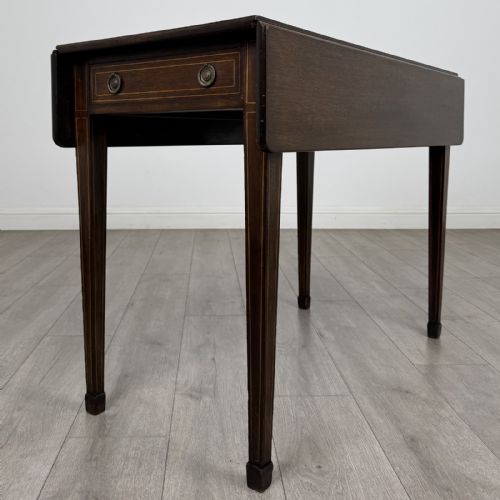
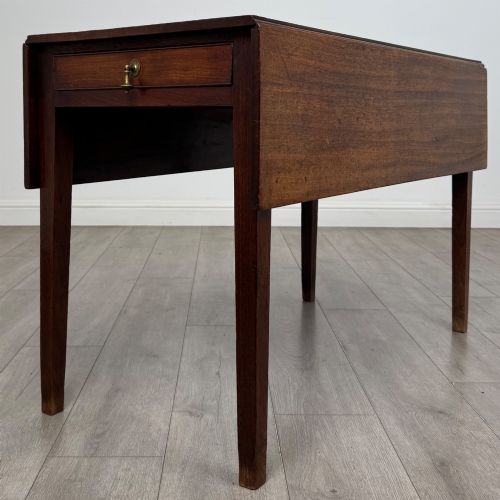
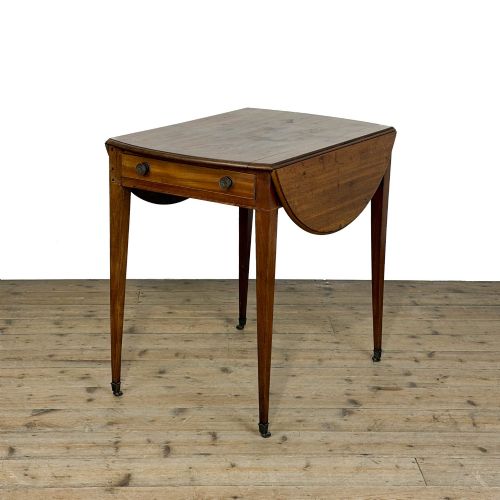
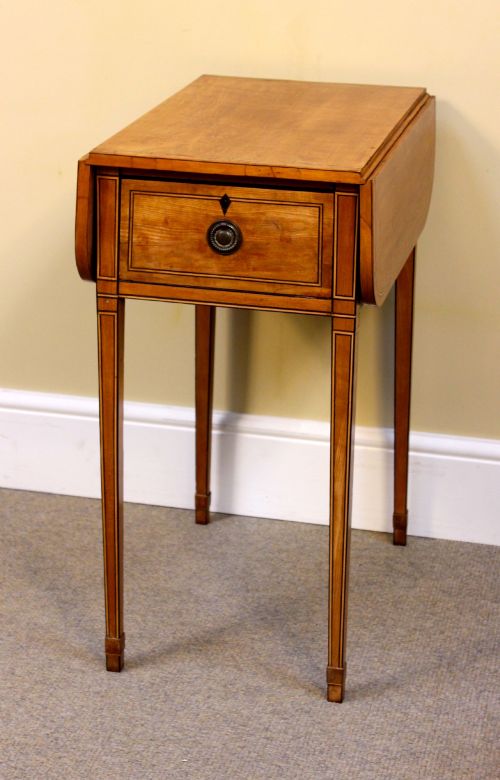
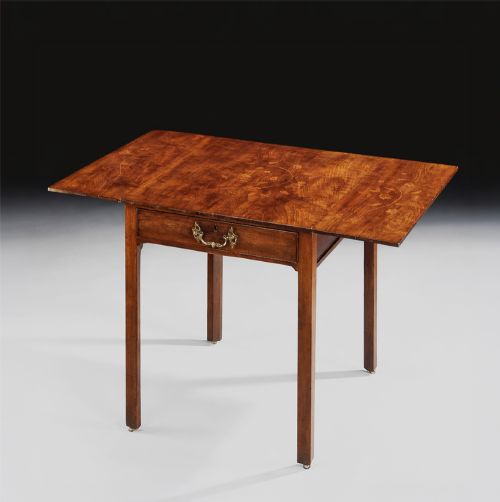
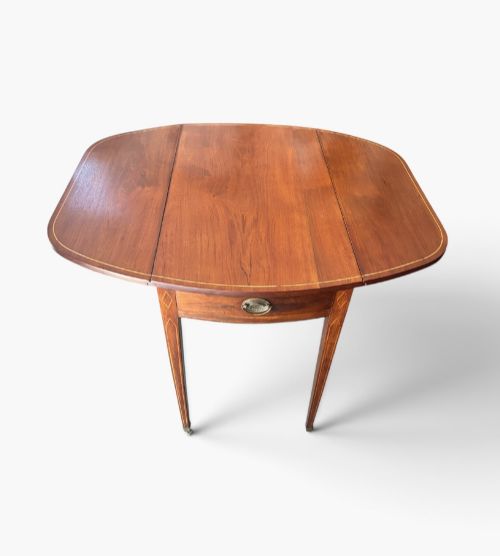
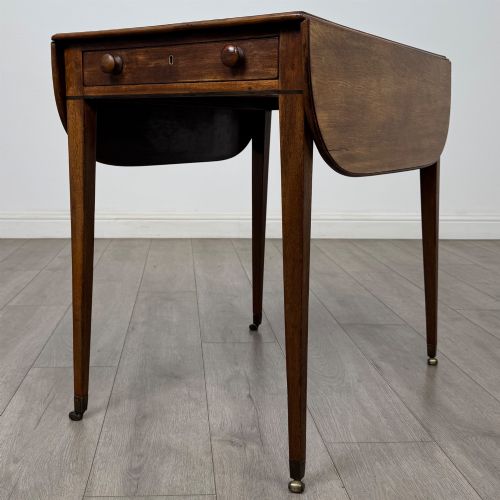
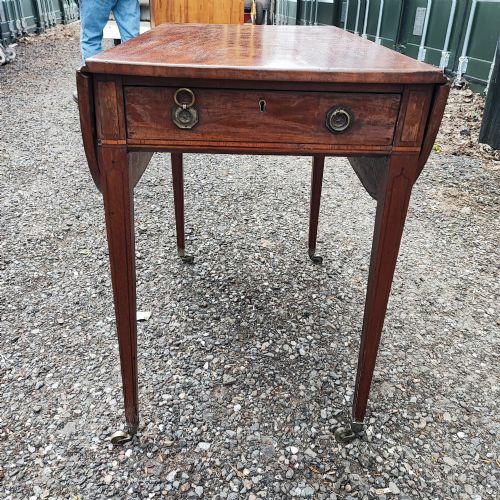
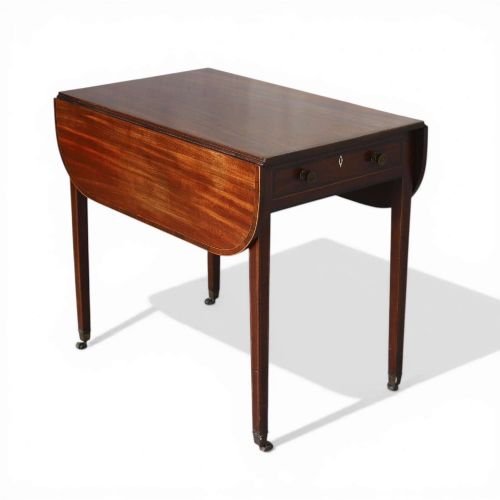
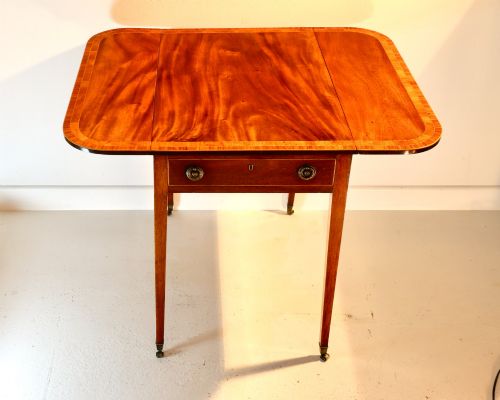
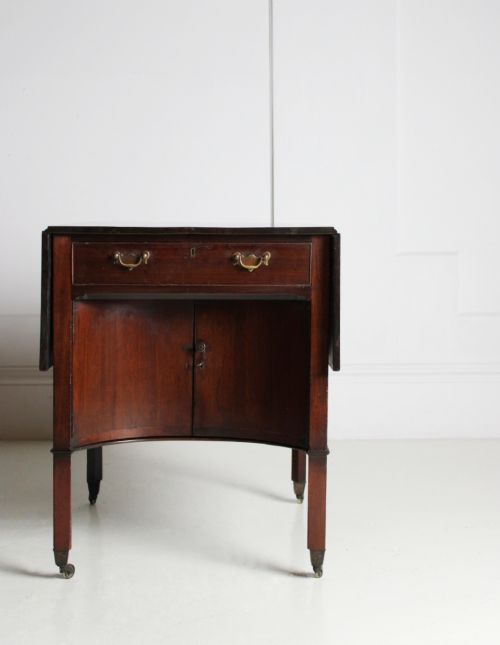
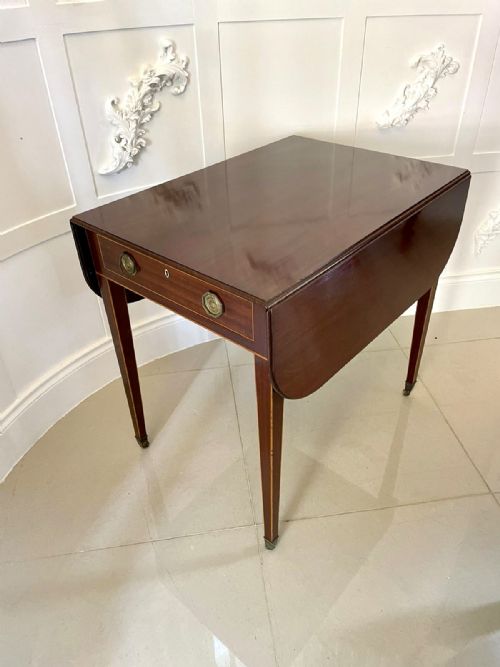
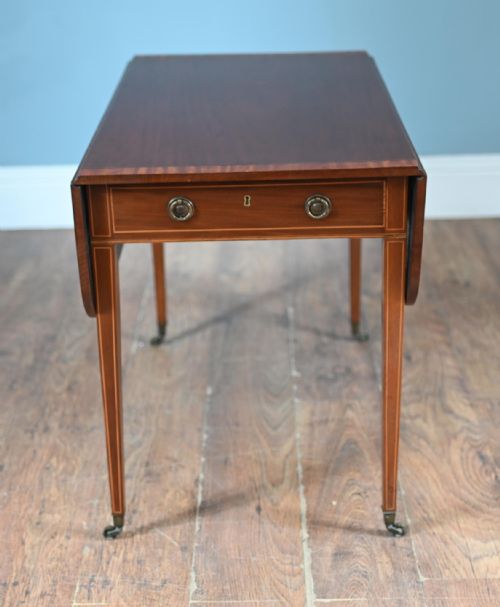
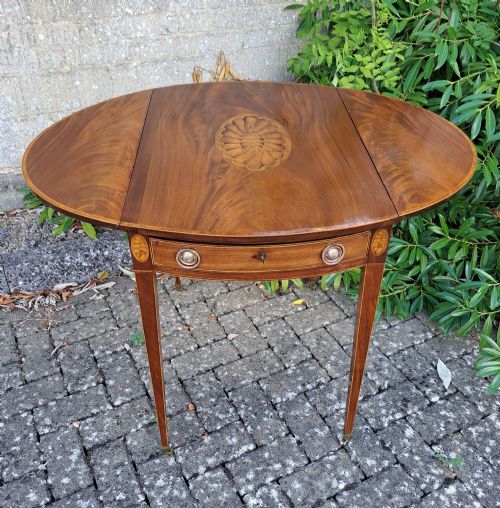
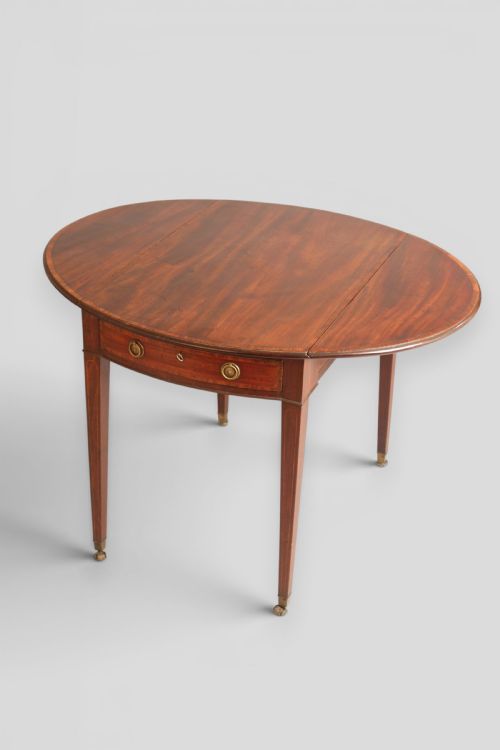
A tapered leg drop leaf table is most commonly encountered on this page as an antique Pembroke table dating from the eighteenth and nineteenth centuries. These versatile pieces combine hinged drop flaps with slender legs, functioning as side tables, occasional tables, or dining tables depending on their scale.
The selections span Georgian, Regency, and Victorian periods, with many pieces reflecting specific design idioms such as Sheraton and Hepplewhite styles. Oval and rectangular tops appear frequently among the listings, often featuring drop leaves supported by pivoting brackets.
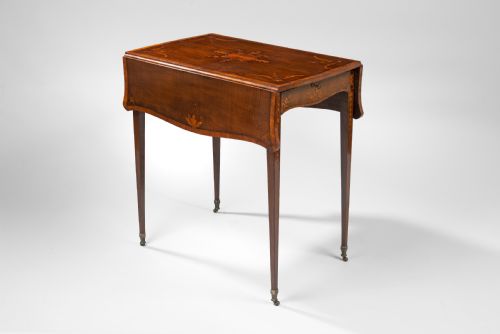
Makers and cabinetmakers from the Georgian era onwards utilised these formats to maximise flexibility in smaller rooms. Buyers will find both rectangular and serpentine forms designed for writing, breakfast, or informal dining.
Materials and construction
Craftsmen built these tables primarily using solid mahogany and mahogany veneers, occasionally incorporating secondary timbers like satinwood, rosewood, harewood, and partridge wood for contrasting panels. Timber selection dictated both the structural integrity and the visual warmth of the finished surface.
Decorative detailing relied heavily on precise cabinetmaking techniques, including boxwood inlay, wood inlay, and cross banding to frame the tops and borders. Brass castors and fittings frequently appeared on the feet of nineteenth-century examples to aid mobility.
Listings feature mahogany, satinwood, and rosewood alongside boxwood inlay and delicate marquetry across eighteenth and nineteenth-century periods.
Assessing quality and craftsmanship
Quality in these tables rests on the crispness of the inlay work, the figuration of the mahogany or satinwood grain, and the subtlety of the leg taper. Superior examples display harmonious proportions between the central top and the folding leaves, with timber selected for depth and lustre.
The engineering of the drop-leaf action and the stability of the pivoting gate legs or brackets distinguish finer workshop production from standard utility pieces. Finer items integrate delicate stringing, cross banding, and marquetry without disrupting the clean lines of the tapered supports.
Williamson
The Tapered Leg Drop Leaf Table Glossary
- Pembroke table
- A small occasional or breakfast table featuring two hinged flaps and usually one or two small drawers. This form became popular during the eighteenth century for its versatility.
- Cross banding
- A border strip of veneer laid around the edge of a table top so that the grain runs perpendicular to the central panel. This technique frames the primary timber and adds visual contrast.
- Boxwood inlay
- Narrow lines or geometric motifs of pale boxwood set flush into a darker primary wood. It provides crisp linear definition on Georgian and Regency furniture.
- Drop flap
- A hinged leaf attached to the main table top that drops down when not in use. Brackets or swing legs support the flap when raised.
- Marquetry
- Decorative patterns created by fitting together thin veneers of various coloured woods. It transforms plain surfaces into pictorial or geometric designs.
Tapered Leg Drop Leaf Table: Frequently Asked Questions
What is a tapered leg drop leaf table used for?
These tables served primarily as versatile furniture for breakfast, writing, or side service in principal rooms. The folding flaps allowed them to sit compactly against a wall when floor space was required.
Raised leaves converted the piece into a functional surface for dining or writing. Their adaptable footprint made them essential for smaller chambers and parlours.
How do I identify a Georgian Pembroke table?
Georgian examples typically exhibit solid mahogany construction, elegant proportions, and fine details such as boxwood stringing or subtle cross banding. The legs show a characteristic gentle taper toward the foot.
Many period pieces include dummy drawer fronts opposite working drawers to maintain symmetry. Their overall restraint separates them from later, more heavily ornamented nineteenth-century revivals.
Where should I place a drop leaf table at home?
A drop leaf table fits comfortably behind a sofa or against an empty hallway wall with both flaps lowered. This configuration occupies minimal depth while providing a surface for lamps or decorative objects.
Lifting one or both flaps transforms the piece into a small dining or writing desk for daily use. Their mobility allows them to move easily between rooms as needed.
How do Sheraton and Hepplewhite styles differ?
Sheraton designs favour straight, rectilinear lines and delicate geometric inlays like satinwood and boxwood. The tapered legs are often round and reeded or fluted.
Hepplewhite pieces frequently incorporate graceful serpentine curves and elaborate marquetry motifs. Both styles reflect the refined neoclassical tastes of the late eighteenth century.