





Oval Cut Blue Sapphire Ring
An oval cut blue sapphire ring delivers deep colour and historic character, whether you seek a clean Edwardian cluster or a bold mid-century solitaire.
Oval Cut Blue Sapphire Ring
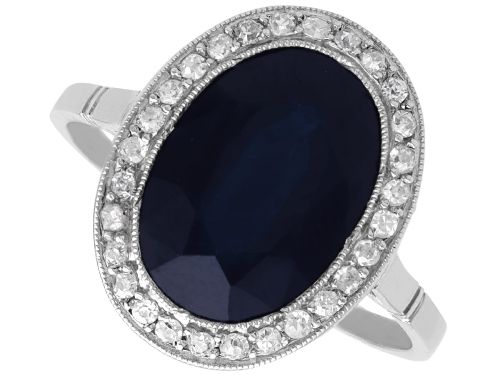
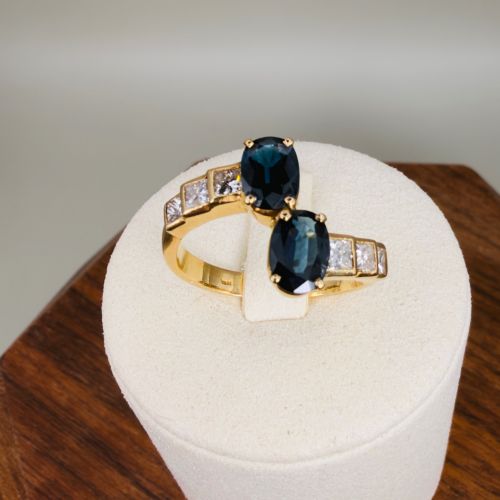
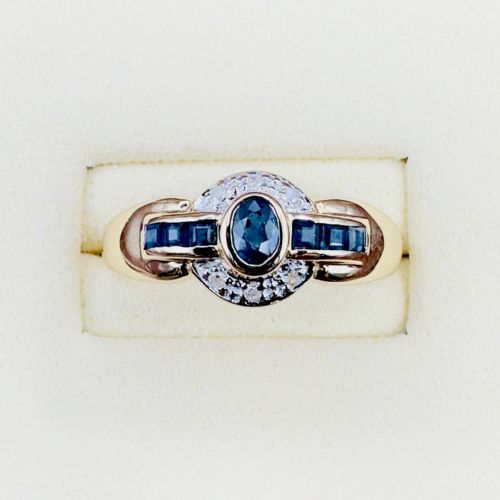
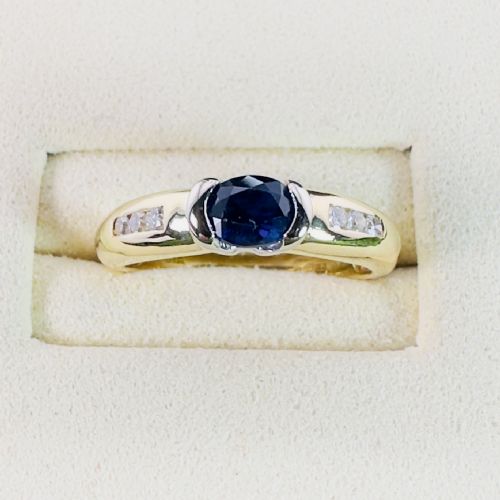
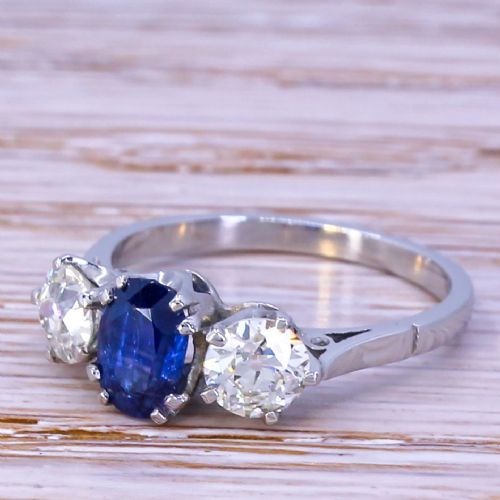
An oval cut blue sapphire ring centres on a distinctively shaped blue stone, frequently framed by diamonds in classic cluster, trilogy or solitaire settings. These pieces span several decades, reaching from the Edwardian era through the Art Deco period and into mid-century modern design.
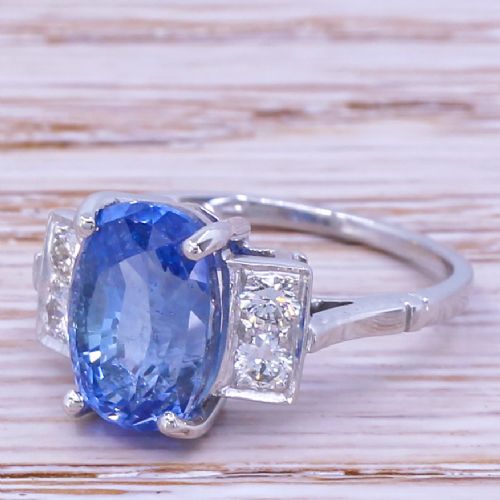
You will most commonly meet mid-century and Art Deco examples featuring substantial stone weights mounted in yellow gold, white gold or platinum. The oval cut allows the deep blue tone of the gem to catch the light while offering a softer silhouette than a harsh rectangle.
How they were made
Goldsmiths constructed these rings using precious metals such as platinum, 18ct gold, 14ct gold and occasionally 9ct gold to securely house the central sapphire and surrounding stones. Platinum and white gold mountings provide a bright, durable border that enhances the crisp white sparkle of accompanying diamonds.
Gem cutters shaped the sapphires into smooth ovals to maximise visual weight and depth of colour, whilst setting styles ranged from elaborate multi-stone clusters to sleek solitaires. Artisans incorporated rose cut, old cut, princess cut and brilliant cut diamonds to accent the central blue gem.
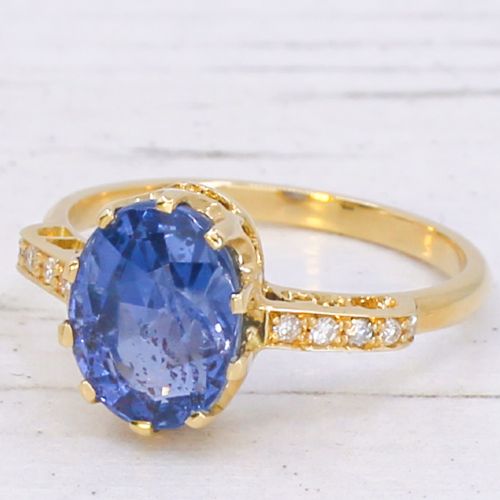
Cornflower blue sapphires bring a cheerful, sky-bright punch of colour that makes even a rainy Tuesday feel like a garden party.
What varies in quality
Quality rests significantly on the natural origin and thermal treatment of the sapphire itself, with unheated stones from sources like Ceylon or Burma commanding distinct interest. The saturation of the blue tone, whether a vibrant cornflower shade or a deeper velvety hue, dictates the visual impact of the ring.
The precision of the metalwork and the integration of the surrounding diamond accents also separate standard pieces from exceptional examples. Heavier carat weights combined with well-matched, high-clarity side stones elevate the overall execution of the mounting.
The Oval Cut Blue Sapphire Ring Glossary
- Sapphire
- A precious gemstone of the corundum mineral family, prized for its exceptional hardness and deep blue colour. It forms the central focal point of these historic rings.
- Ceylon Sapphire
- A sapphire originating from Sri Lanka, historically celebrated for its bright and vivid blue coloration. These stones are frequently documented in mid-century and Art Deco pieces.
- Cluster Ring
- A ring design featuring a prominent central stone encircled by a group of smaller gemstones, usually diamonds. This arrangement maximises overall sparkle and presence on the hand.
- Trilogy Ring
- A setting comprising three distinct stones arranged in a row, often symbolising the past, present and future. They frequently combine a central sapphire flanked by old cut diamonds.
- Cabochon
- A gemstone cut with a smooth, rounded, convex upper surface rather than faceted planes. This technique highlights the natural depth of specific sapphires.
Oval Cut Blue Sapphire Ring: Frequently Asked Questions
How do I style an oval cut blue sapphire ring?
These rings pair easily with both contemporary wardrobes and vintage attire due to their versatile geometric shape and rich colour. You can wear them alone as a striking solitaire or stack them carefully with plain bands.
Because many examples feature substantial diamond clusters or robust gold and platinum mountings, they work wonderfully as daily signature pieces or dedicated engagement rings.
What periods do these rings come from?
The selection spans several distinct eras, including Edwardian, Art Deco, Art Deco Revival and mid-century designs. Each period brings specific metal choices and stone-setting techniques to the jewellery.
Edwardian pieces often utilise platinum and yellow gold with delicate details, whereas mid-century examples frequently showcase larger unheated stones and bold cluster configurations.
Are the sapphires treated?
Many listings specify whether a sapphire is unheated or natural, pointing to stones that have not undergone traditional thermal enhancement to improve their colour or clarity. Unheated Ceylon and Burmese stones are particularly noted in the historical record.
Reviewing the specific details for each ring will clarify the geological origin and any known thermal background of the central gem.
What diamond cuts accompany these sapphires?
You will encounter a variety of diamond cuts depending on the era of the ring, ranging from early 20th-century old cuts to mid-century rose cuts and geometric princess cuts. These stones are typically arranged in surrounds, shoulders or three-stone trilogy formations.
The choice of diamond cut interacts directly with the curved outline of the oval sapphire to create balanced contrast.