


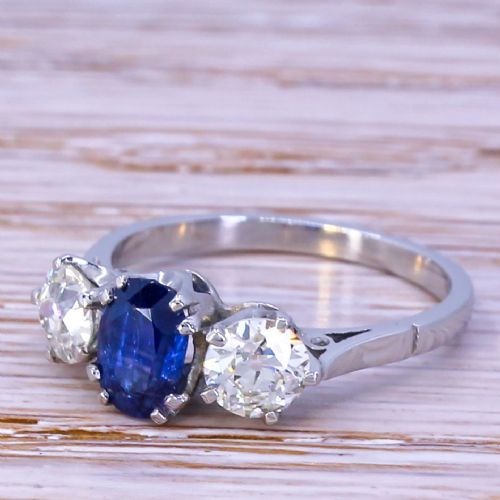

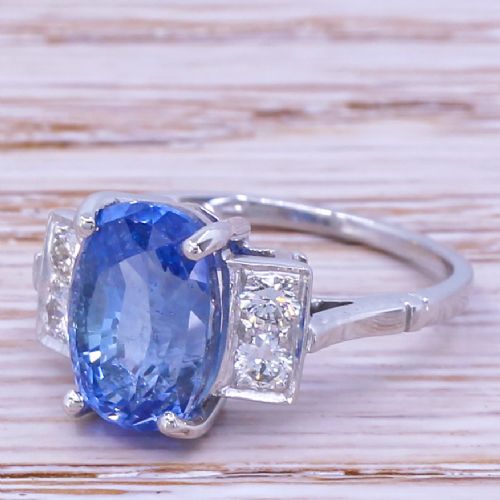


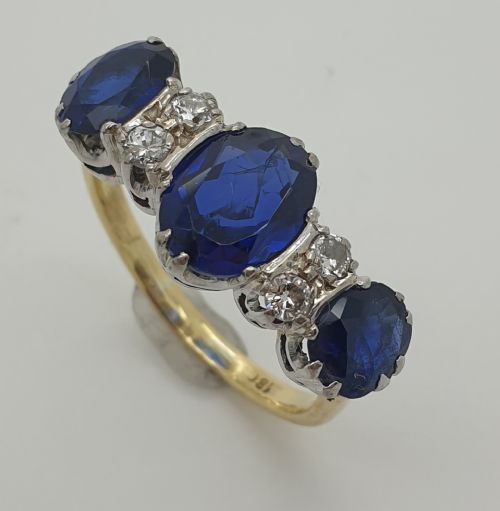
Oval Sapphire Trilogy Ring
An oval sapphire trilogy ring brings together three stones of distinction, offering a timeless arrangement that collectors value for its balance and presence on the hand.
Oval Sapphire Trilogy Ring
An oval sapphire trilogy ring presents three feature stones across the finger, most frequently pairing a central sapphire with flanking diamonds or pearls. This arrangement appears across several eras, including Victorian, Edwardian, Art Deco, and Mid-Century periods.
How they were made
Goldsmiths constructed these mountings utilising durable metals like platinum and 18ct yellow gold to secure the central sapphire and its supporting stones. Settings vary from precise claw arrangements to rubover techniques that encase the girdle of the gem.
Gemstones are shaped into oval cuts to maximise light return and colour saturation, accompanied by old cut diamonds or natural pearls. Metalwork often displays the refined geometric lines characteristic of Art Deco design or the heavier profiles of mid-century work.
Materials recur across platinum and various forms of gold, supporting sapphires, diamonds, and natural pearls.
What varies in quality
The primary distinction lies in the depth of hue and geographic origin of the sapphire itself, with Ceylon and Burmese stones commanding particular attention. Clarity, carat weight, and the cut proportion of both the central gem and surrounding diamonds further define the calibre of each piece.
The integrity of the metalwork and the crispness of period styling also dictate distinction, separating standard production from exceptional jeweller output. Settings that securely integrate the stones without excessive metal mass demonstrate superior craftsmanship.
The Oval Sapphire Trilogy Ring Glossary
- Trilogy ring
- A ring featuring three distinct stones set in a row across the finger, traditionally symbolising the past, present, and future.
- Ceylon sapphire
- A corundum gemstone originating from Sri Lanka, recognised for its vibrant and luminous blue colouration.
- Burmese sapphire
- A sapphire originating from Myanmar, historically prized for an intense and saturated hue.
- Rubover setting
- A mounting style where a thin collar of metal is pushed over the edge of the gemstone to hold it securely in place.
- Old cut diamond
- A diamond cut by hand before modern machinery, featuring a smaller table, higher crown, and deep pavilion that creates a distinctive candlelit sparkle.
Oval Sapphire Trilogy Ring: Frequently Asked Questions
What does a trilogy ring symbolise?
A trilogy ring carries a traditional meaning of the past, present, and future, making it a popular choice for romantic milestones and engagements.
The three stones represent this progression of time through a balanced display on the hand.
How do I care for my ring?
Regular maintenance involves gentle cleaning in warm soapy water with a soft brush to remove everyday oils from beneath the stones. Periodic checks by a specialist ensure the platinum or gold settings remain secure around the sapphire and diamonds.
Avoiding harsh chemicals and removing the piece during heavy manual tasks preserves the integrity of the metal and softer gems like pearls.
How do I identify Art Deco style?
Art Deco pieces display geometric precision, symmetrical layouts, and clean architectural lines that contrast with earlier decorative excess. Platinum is frequently utilised during this era to create strong, delicate-looking settings that maximise light.
This aesthetic flourished through the nineteen twenties and thirties, yielding sharp profiles and stylised motifs.
Are Ceylon and Burmese sapphires different?
Ceylon sapphires originate from Sri Lanka and generally display a bright, vivid blue tone with high internal clarity. Burmese sapphires come from Myanmar and are often noted for a deep, saturated velvety blue colouration.
Both origins are highly regarded by collectors for their natural beauty and geographic pedigree.