



1950s Sapphire Diamond Ring
A 1950s sapphire diamond ring brings together mid-century design and vibrant stones, offering a striking piece for daily wear or evening occasions.
1950s Sapphire Diamond Ring
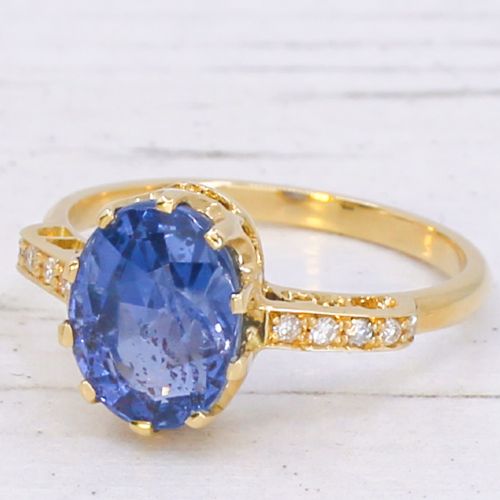
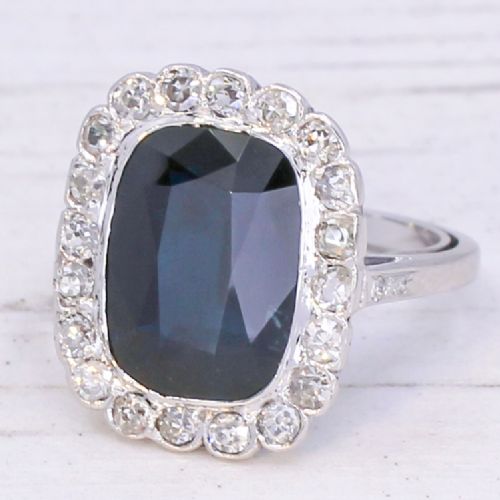
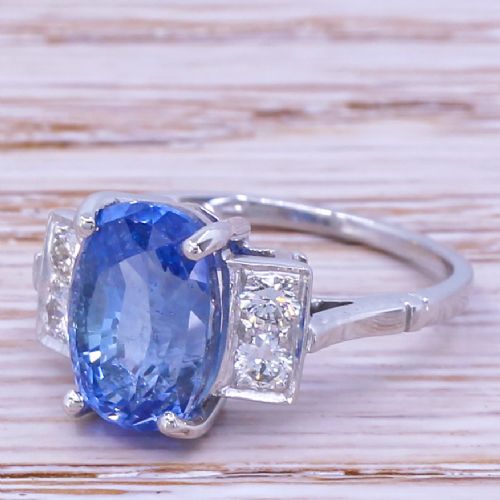
A 1950s sapphire diamond ring encompasses mid-century cocktail rings, cluster rings, and dress rings from the middle of the twentieth century. These pieces combine central sapphires with diamond accents, often set within platinum or gold mountings.
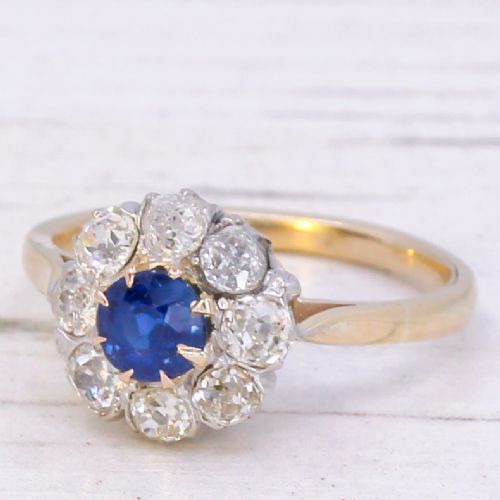
The version most commonly met on this page is the cluster ring featuring a substantial central Ceylon sapphire surrounded by diamonds. Alongside traditional blue stones, variations include star sapphires, yellow sapphires, and pink sapphires set in platinum or 18ct white gold.
How they were made
Goldsmiths utilised platinum and various grades of gold, including 18ct white gold, yellow gold, and 9ct gold, to mount the stones securely. Metalwork from this period often combined fine claw settings with detailed geometric or cluster arrangements.
The stones themselves show distinct cutting techniques, ranging from standard brilliant cuts to pear cuts and rose cut diamonds. Star sapphires are shaped as cabochons to display their optical phenomenon, while unheated Ceylon sapphires retain their natural colouration.
Listings feature platinum and gold mountings alongside Ceylon, star, yellow, and pink sapphires paired with diamonds.
What varies in quality
The distinction between the top of the range and the lower end rests on the origin and treatment of the sapphires, particularly unheated Ceylon stones of significant carat weight. Natural colour saturation and clarity without thermal enhancement elevate the standing of a piece.
Construction details also separate standard examples from finer works, notably the weight and purity of the platinum or gold housing, and the precision with which the surrounding diamonds are pavé-set or claw-set around the central gemstone.
The 1950s Sapphire Diamond Ring Glossary
- Ceylon sapphire
- A sapphire originating from Sri Lanka, historically known for a bright and luminous blue hue. These stones are frequently prized for their high transparency and vibrant colour.
- Star sapphire
- A variety of sapphire that exhibits a star-shaped phenomenon known as asterism when illuminated. This effect results from microscopic inclusion needle alignments within the cabochon-cut stone.
- Cluster ring
- A ring design featuring a central stone encircled by a cluster of smaller stones, typically diamonds framing a larger sapphire. This arrangement maximises visual impact and sparkle.
- Cabochon
- A gem polished to a smooth, rounded, convex top rather than faceted. This cut is utilised primarily for opaque or optical stones such as star sapphires.
- Rose cut
- An antique diamond cut featuring a flat base and a domed crown composed of triangular facets meeting at a point. It provides a soft, translucent gleam rather than modern brilliance.
1950s Sapphire Diamond Ring: Frequently Asked Questions
How do I care for a mid-century sapphire ring?
Sapphires are durable stones, but platinum and gold settings require gentle cleaning with warm soapy water and a soft brush to maintain their lustre.
Avoid exposing vintage rings to harsh chemicals or ultrasonic cleaners, especially if the sapphire is unheated or treated.
Are these rings suitable for everyday wear?
Many of these pieces feature robust platinum or gold bands designed for regular use, though substantial cocktail rings with high stone settings need care to avoid knocks.
Removing the ring during heavy manual tasks preserves the integrity of the claws holding the diamonds and sapphires.
What is the difference between an unheated sapphire and a standard one?
An unheated sapphire has undergone no artificial heat treatment to enhance its colour or clarity after being mined. This natural state is documented and often found in high-quality mid-century stones.
Heated stones are common in the trade, making unheated examples particularly sought after by collectors.
How can I tell if a ring is from the 1950s?
Stylistic markers include specific mid-century cluster formations, French hallmarks on white gold or platinum, and the integration of pear cut or star sapphires. Construction techniques typical of the decade also assist in dating.
Comparing the mount style with period examples helps confirm the manufacturing era.