




Blue Gem Engagement Ring
A blue gem engagement ring offers a colourful alternative to traditional diamonds, bringing character and deep history straight to the finger.

Blue Gem Engagement Ring
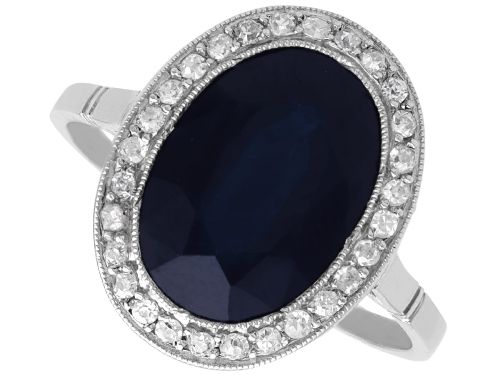
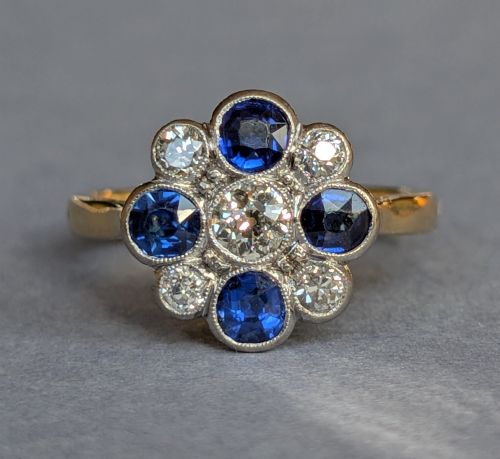
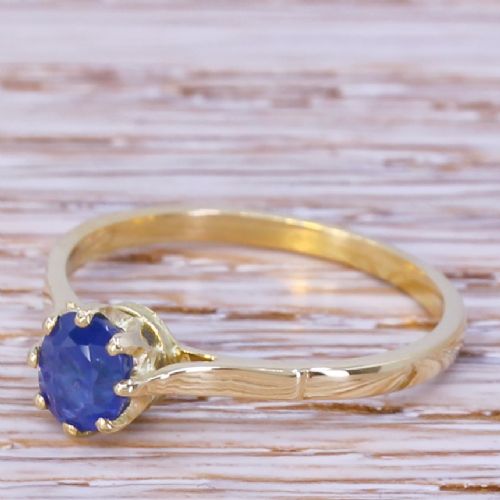
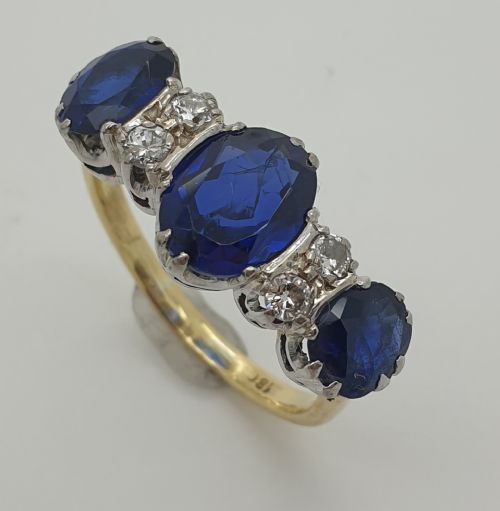
A blue gem engagement ring centres on striking blue stones, most commonly sapphires alongside tanzanite and opal, paired with sparkling diamonds. These pieces span distinct historical periods from the Victorian and Edwardian eras through the Art Deco years and into the mid-century.
The version most frequently met on this page is the cluster ring, where a central blue gemstone sits surrounded by smaller diamonds. Settings range from geometric platinum mountings to traditional gold bands in various carats.
How they were made
Goldsmiths utilised durable precious metals including platinum and several carats of gold to construct secure mountings for precious stones. Metalwork techniques accommodated both delicate rubover settings and raised cluster formations.
Gemstones underwent specialised cutting processes, yielding oval, pear, emerald and rose cuts designed to maximise light reflection and display natural colour variation.
Materials span platinum, gold, sapphire, diamond, opal, and tanzanite across Victorian, Edwardian, Art Deco, and mid-century periods.
What varies in quality
The standard of materials dictates the standing of each piece, distinguishing substantial platinum and higher carat gold mountings from lighter alternatives. Natural stone origin and carat weight significantly influence the presence and depth of the central blue hue.
Execution of the metalwork and precision in stone arrangement separate master jewellers from standard workshops. The harmony between the central blue gem and surrounding diamonds defines the overall visual balance.
The Blue Gem Engagement Ring Glossary
- Cluster ring
- A ring design featuring a prominent central gemstone encircled by a group of smaller stones, typically diamonds. This arrangement amplifies overall brilliance on the hand.
- Basaltic sapphire
- A sapphire originating from alkali basalt terrains, known for deep and saturated colour profiles. These stones often carry distinct geological inclusions.
- Cabochon
- A gemstone shaped and polished with a smooth, rounded top rather than faceted edges. This style is frequently utilised for opals and certain sapphires.
- Platinum
- A dense, strong and naturally white precious metal favoured for secure gemstone settings. It withstands decades of daily wear without losing integrity.
- Rose cut
- An antique diamond cut featuring a flat base and a domed crown consisting of triangular facets. This historic technique produces a soft, shimmering reflection.
Blue Gem Engagement Ring: Frequently Asked Questions
What metals are used?
Pieces incorporate platinum alongside various grades of gold, including nine-carat, fourteen-carat, fifteen-carat, eighteen-carat, and eighteen-karat varieties. These metals provide the structural foundation for mounting sapphires, diamonds, opals, and tanzanites.
Platinum offers exceptional strength for intricate historical settings, whilst gold provides warmer tones that complement specific gem colours.
Are these engagement rings original?
The selection includes genuine antique and vintage rings originating from the Victorian, Edwardian, Art Deco, and mid-century periods. Each piece reflects the distinct design characteristics and manufacturing techniques of its specific era.
Jewellery from these past decades carries authentic historical provenance rather than modern reproduction styling.
How do I care for my ring?
Precious metals and durable gemstones require gentle cleaning with warm soapy water and a soft brush to maintain their brilliance. Regular professional checks ensure that settings and claws remain secure.
Avoiding harsh chemical exposure protects softer stones like opals from sustaining surface damage during everyday wear.
What stone shapes appear most?
Designs feature a variety of gemstone cuts including oval, pear, emerald, and round configurations. Gemstones are also shaped into smooth cabochons or rose-cut profiles depending on the period style.
These diverse cuts dictate how light interacts with the blue gem and its accompanying diamonds.