
Sapphire Diamond Engagement Ring
A sapphire diamond engagement ring brings together vivid blue stones and brilliant diamonds in enduring platinum and gold settings.

Sapphire Diamond Engagement Ring
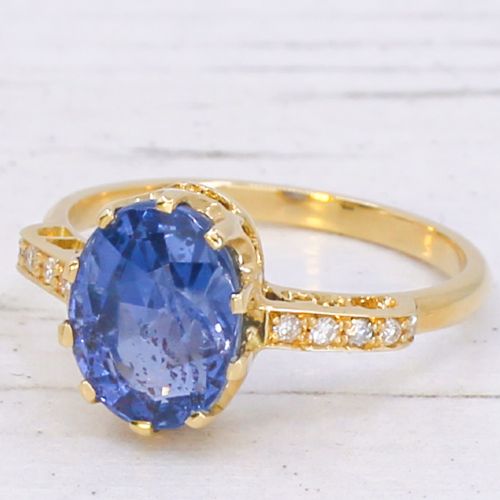
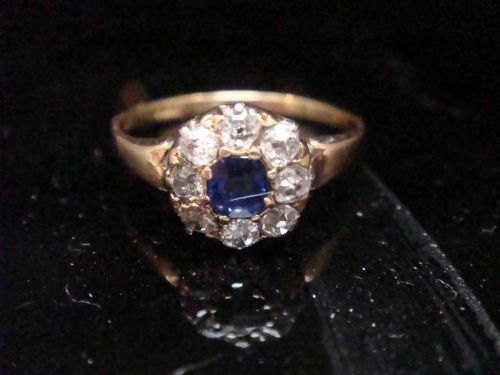
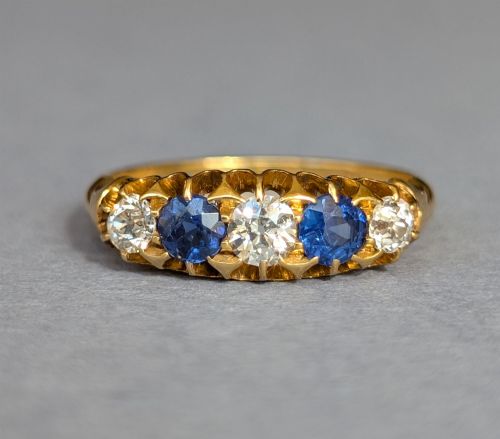
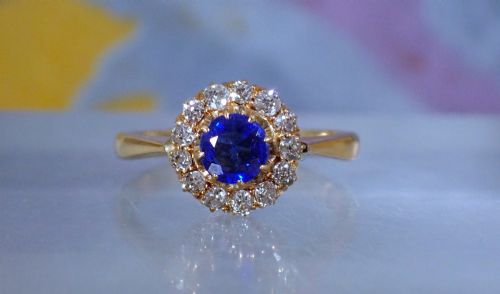
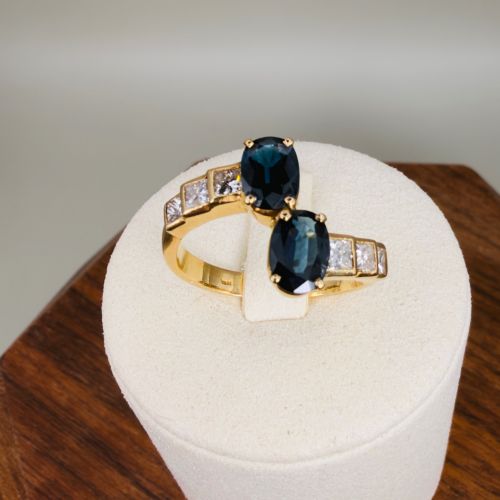
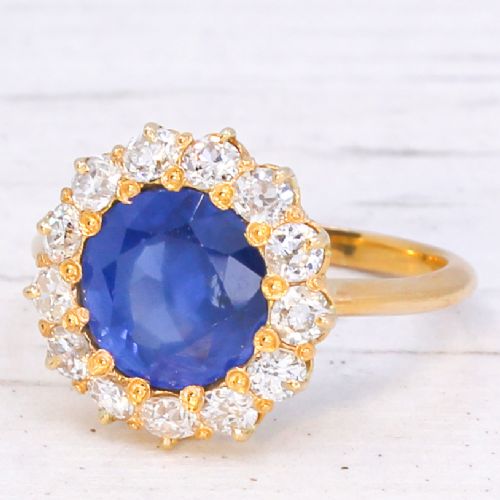
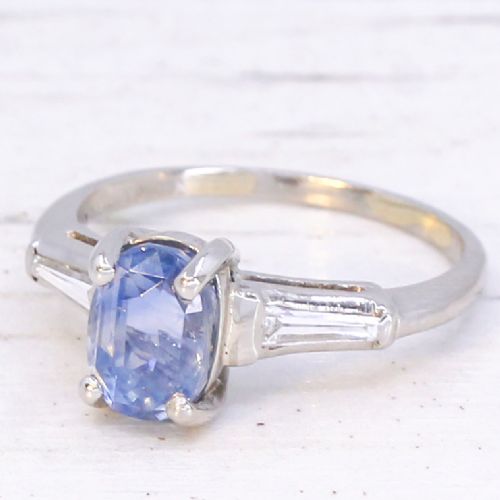
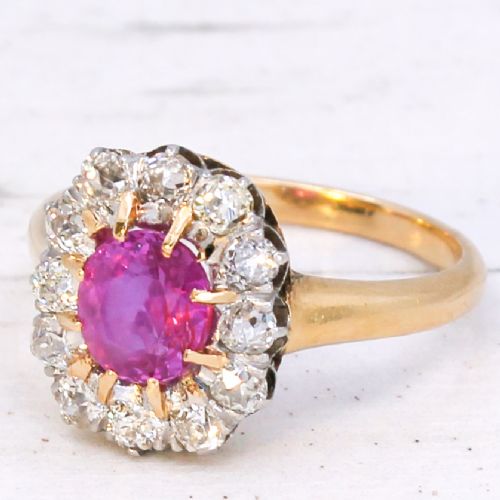
A sapphire diamond engagement ring represents a classic choice for betrothal jewellery, combining rich blue or pink corundum with sparkling diamonds. Buyers searching for a sapphire diamond engagement ring encounter historic designs spanning the Victorian, Edwardian, Art Deco, and Mid-Century periods.
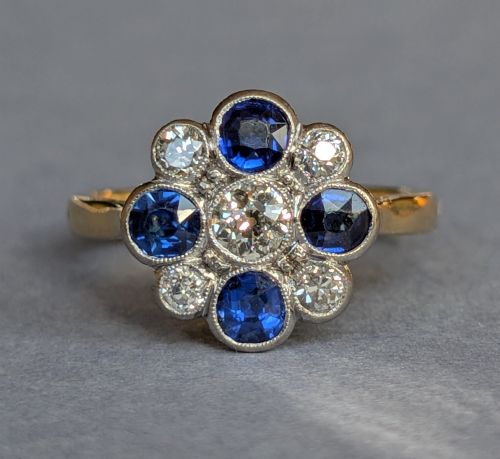
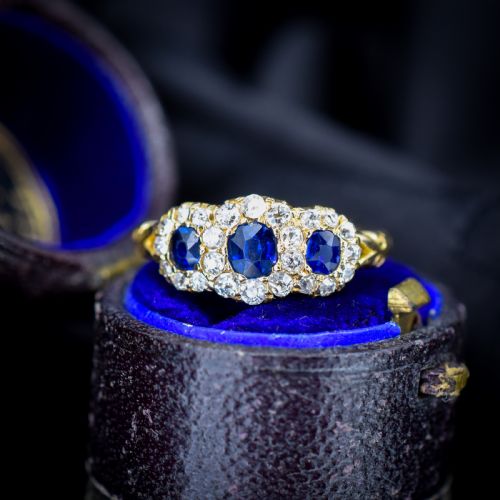
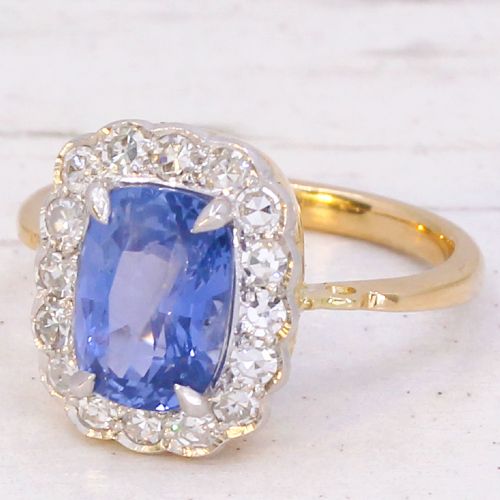
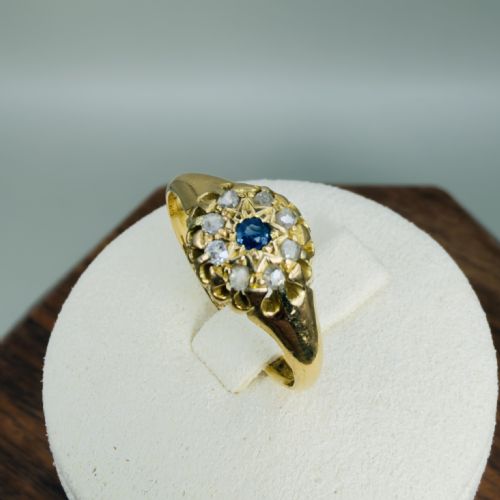
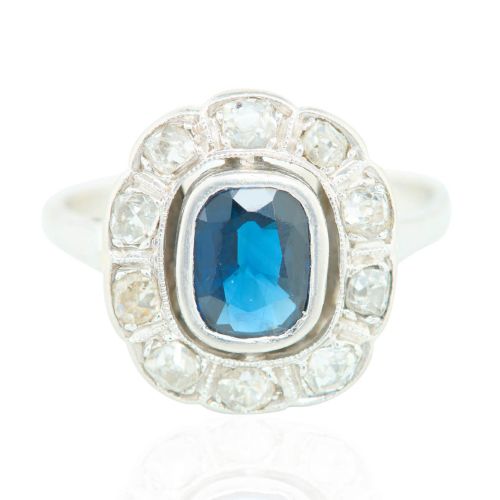
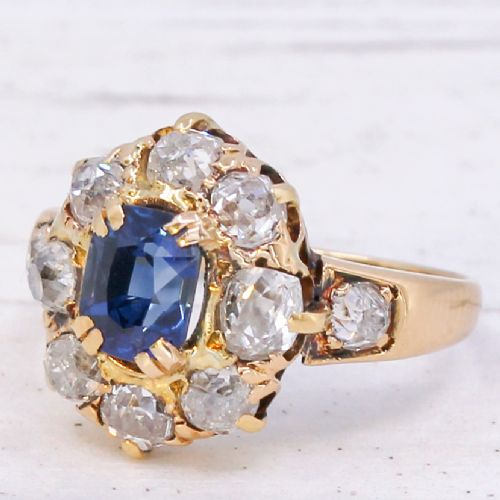
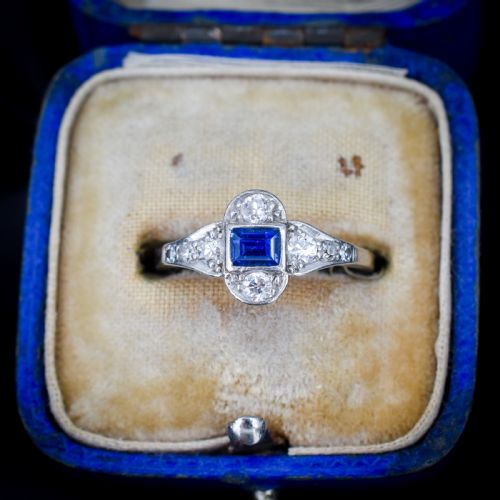
Cluster and daisy formations dominate the available selection, where a central sapphire is encircled by a border of brilliant or old cut diamonds. Geometric Art Deco pieces in platinum and delicate yellow gold Edwardian mounts appear frequently across the inventory.
Materials and construction
Craftsmen set unheated and treated sapphires alongside old mined, princess, or baguette cut diamonds into mounts of platinum, 18ct white gold, and 18ct yellow gold. Metalworking techniques evolved from detailed hand-pierced gallery work in the Edwardian era to sharp geometric lines in 1920s platinum settings.
Calibre cut stones and tightly clustered settings required precise hand-fitting by period jewellers to secure each gem without modern machinery. The pairing of durable platinum with high-carat gold provided a robust foundation for daily wear.
Materials recorded across the inventory include platinum alongside traditional 18ct yellow and white gold.
Assessing quality
Quality in these rings rests upon the origin and optical characteristics of the sapphire, with unheated stones from sources such as Ceylon, Burma, and Kashmir commanding particular interest. Natural colour saturation and clarity without artificial enhancement distinguish superior specimens from standard commercial grades.
The precision of the diamond cutting and the integrity of the original metal mount further define the tier of a piece. Retaining crisp hallmarks, minimal wear to the setting claws, and untouched geometric shoulders indicates higher craftsmanship.
Le Vian
The Sapphire Diamond Engagement Ring Glossary
- Cluster ring
- A ring design featuring a central gemstone surrounded by a border of smaller stones, typically diamonds framing a sapphire.
- Old cut diamond
- A hand-faceted diamond cut before modern machine-rounding standards, characterised by a smaller table and high crown.
- Calibre cut
- Gemstones specifically shaped and cut to fit tightly together in a geometric channel or pattern without visible metal separating them.
- Navette
- A boat-shaped ring setting that tapers to pointed ends at either side of the finger, common in Art Deco design.
- Unheated sapphire
- A natural corundum gemstone that has not undergone thermal enhancement to improve its colour or clarity.
Sapphire Diamond Engagement Ring: Frequently Asked Questions
Are these rings suitable for everyday wear?
Sapphires score nine on the Mohs scale of hardness, making them exceptionally durable for daily use on the hand. Platinum and high-carat gold mountings provide robust settings when the prongs remain thick and secure.
Regular checks by a jeweller ensure that the claws holding the sapphire and diamonds do not thin over time. Gentle cleaning in warm soapy water restores the brilliance of the stones without harming the antique metal.
How do I tell an Art Deco ring from an Edwardian one?
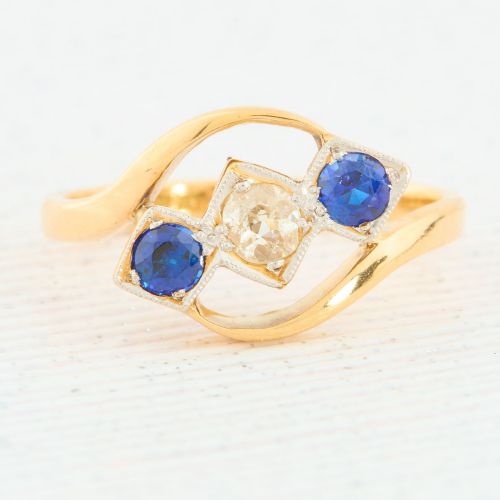
Edwardian rings utilise yellow gold and platinum-topped shoulders with delicate openwork, millegrain edging, and floral motifs like the daisy cluster. Art Deco pieces favour stark geometry, platinum settings, calibre cut stones, and sharp linear profiles.
Looking closely at the gallery and shank reveals the stylistic shift from romantic curved wirework to streamlined modernist design during the 1920s.
What does an unheated sapphire mean?
An unheated sapphire is a natural gemstone that has emerged from the earth with its colour and clarity entirely unaltered by artificial heat treatment. These stones rely solely on natural geological conditions for their vivid hue.
Gemmological certification often accompanies unheated stones from origins like Ceylon or Burma, confirming their natural state to collectors and buyers.
How can I identify the period of my ring?
Hallmarks stamped inside the shank provide the primary clue to a ring's origin, often indicating assay offices, metal purity, and date letters. Stylistic traits such as old cut diamonds, platinum usage, and specific cluster arrangements narrow down the decade.
Comparing the construction methods, such as hand-pierced galleries versus cast settings, helps distinguish Victorian and Edwardian work from later mid-century manufacturing.