




Natural Sapphire Cocktail Ring
A natural sapphire cocktail ring commands the hand with vivid colour and significant scale, offering a striking centrepiece for evening wear.
Natural Sapphire Cocktail Ring
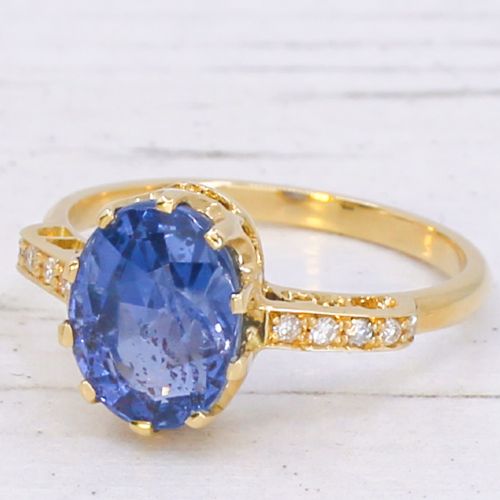
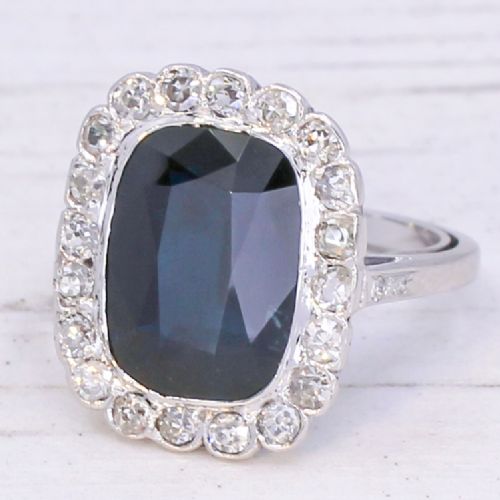
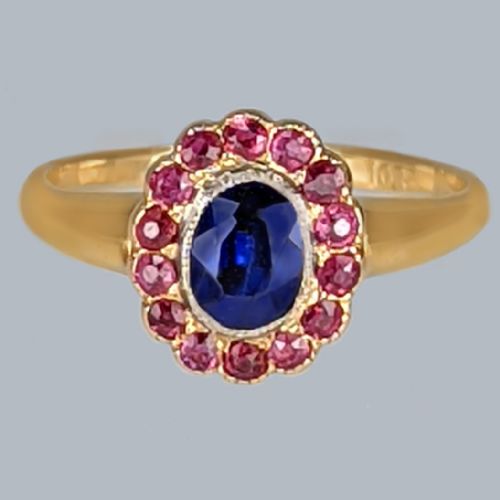
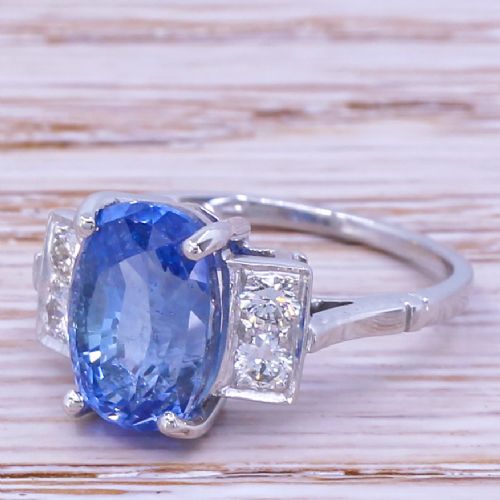
A natural sapphire cocktail ring is a bold statement jewel designed to draw the eye, most frequently appearing in cluster forms set with diamonds. These rings span periods from the Edwardian era through the Art Deco, Retro and Mid-Century decades, capturing distinct stylistic shifts in mounting and stone cut.
The sapphire serves as the undeniable focal point, often featuring substantial carat weights originating from Ceylon or Burma. Alongside these large unheated stones, buyers encounter cluster configurations that pair the blue sapphire with brilliant or rose-cut diamonds.
Mountings range from geometric platinum frameworks characteristic of the 1920s to sweeping 18ct white and yellow gold settings from the 1950s and 1960s. The cocktail ring prioritises visual impact, making it an assertive choice for social gatherings.
Materials and construction
These rings utilise precious metals such as platinum and 18ct gold, split between white and yellow varieties, to house the central gemstones. Platinum provides the structural strength required for delicate Edwardian and Art Deco filigree, while gold underpins the warmer tones of Mid-Century and Retro designs.
The construction relies on precise claw and cluster settings to secure large natural sapphires alongside brilliant and rose-cut diamonds. Goldsmiths balanced heavy carat weight with intricate metalwork to ensure the towering profiles of these evening jewels remained stable on the hand.
Listings feature natural sapphire cocktail rings spanning the Edwardian era, Art Deco period, Retro years and Mid-Century modern design.
Quality variations
The distinction between tiers rests upon the origin, saturation and thermal history of the sapphire itself, with unheated stones from sources like Ceylon or Burma commanding particular attention. Gemological reports often accompany superior examples to verify these natural characteristics.
Execution of the surrounding diamond work and the integrity of the metal mounting further define the grade of the piece. Fine antique and vintage specimens display crisp geometric geometry in Art Deco platinum or balanced proportions in later Mid-Century clusters.
The Natural Sapphire Cocktail Ring Glossary
- Ceylon sapphire
- A natural corundum originating from Sri Lanka, celebrated for its vibrant cornflower blue hue and high transparency. These stones often display exceptional brilliance even in large carat weights.
- Cabochon
- A gemstone cut with a smooth, rounded convex top rather than faceted planes. This style highlights the deep tone and internal silk of natural sapphires.
- Cluster ring
- A design featuring a prominent central stone encircled by a border of smaller gems, typically diamonds. This arrangement maximises overall visual presence on the finger.
- Rose-cut diamond
- An antique diamond cut characterised by a flat base and a domed crown consisting of triangular facets. It produces a soft, translucent shimmer distinct from modern brilliant cuts.
Natural Sapphire Cocktail Ring: Frequently Asked Questions
What defines a cocktail ring?
A cocktail ring is an oversized, decorative piece of jewellery traditionally worn to evening parties and social events. These rings prioritise bold designs and large central gemstones to catch the eye in dimly lit rooms.
Unlike everyday bands, they are built to stand out and sit high on the finger. The natural sapphire variant uses high carat stones and diamond surrounds to achieve this dramatic effect.
How do I care for a vintage sapphire ring?
Sapphire is a durable gemstone, ranking high on the Mohs hardness scale, but antique settings require gentle handling. Clean the piece using warm soapy water and a soft brush, avoiding harsh chemical dips that might damage older metals.
Store the ring separately from other jewellery to prevent scratching softer gold or platinum mountings. Periodic inspection by a specialist ensures the claws holding the large stones remain secure.
How can I tell an Art Deco ring from a Mid-Century one?
Art Deco rings, dating from the 1920s and 1930s, typically feature platinum settings with geometric lines, symmetrical patterns and intricate filigree work. The overall aesthetic leans toward architectural precision and sharp angles.
Mid-Century pieces, spanning the 1950s and 1960s, often utilise 18ct white or yellow gold with sweeping, organic contours. They frequently showcase massive unheated Ceylon or Burma sapphires in robust cluster arrangements.
What does unheated sapphire mean?
An unheated sapphire is a natural gemstone that has not undergone artificial thermal enhancement to improve its colour or clarity. Earth-formed stones retaining their original properties are scarcer and valued by collectors.
Gemological laboratories examine inclusions within the stone to certify whether heat treatment has occurred. Many fine vintage and antique sapphire rings feature these untreated gems.