




Oval Butler Serving Tray
An oval butler serving tray brings sturdy timber and polished metal together for carrying drinks or sitting on a folding stand.
Oval Butler Serving Tray
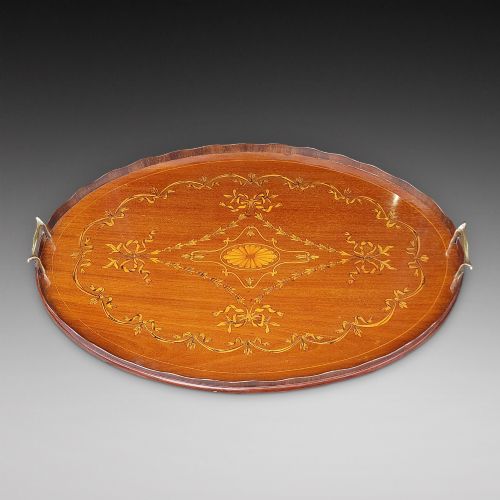
The oval butler serving tray appears in several historical guises, spanning timber serving boards and silver-plated cocktail pieces. You will most frequently meet mahogany variants with inlaid details or silver-plated designs dating from the Georgian, Victorian, and Edwardian eras.
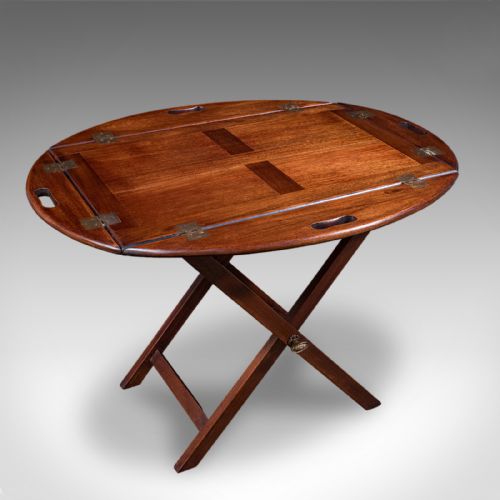
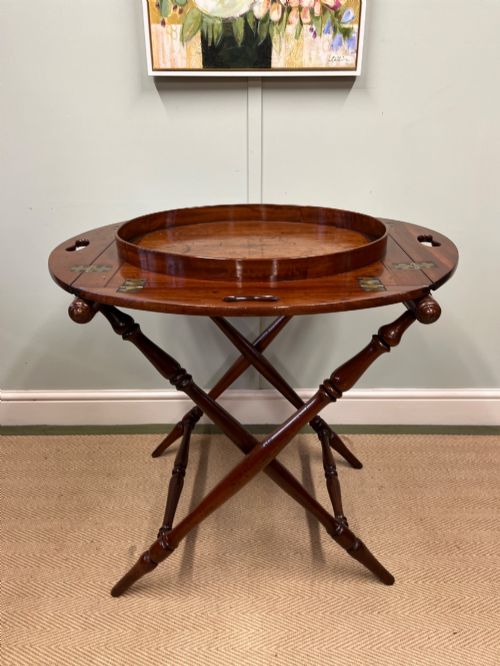
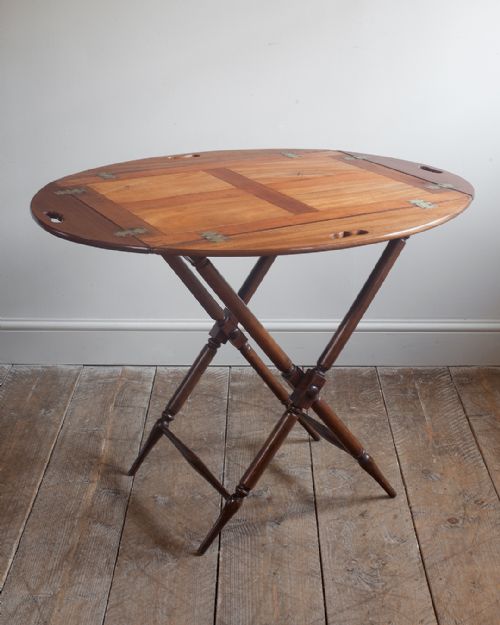
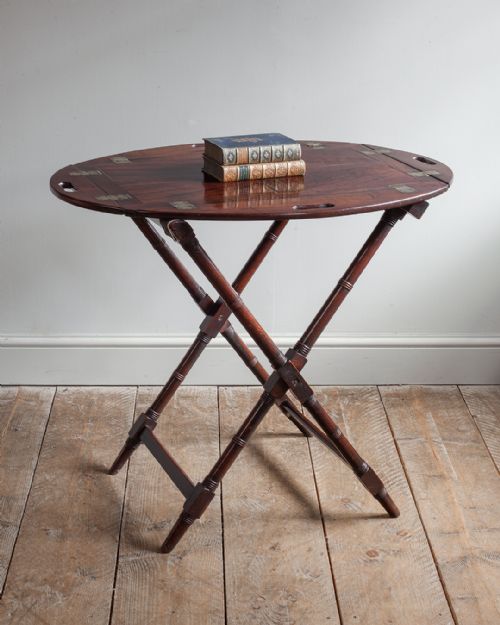
Many examples function as standalone serving vessels with handles, whilst others sit upon dedicated folding stands to form tray tables or occasional tables. The timber versions often utilise substantial mahogany, oak, or satinwood, while metal alternatives showcase silver plate and sterling silver.
Materials and Construction
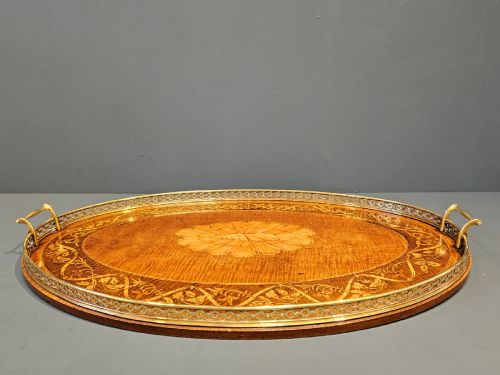
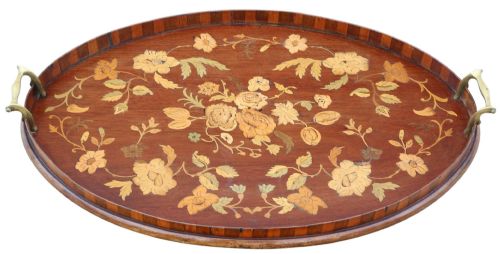
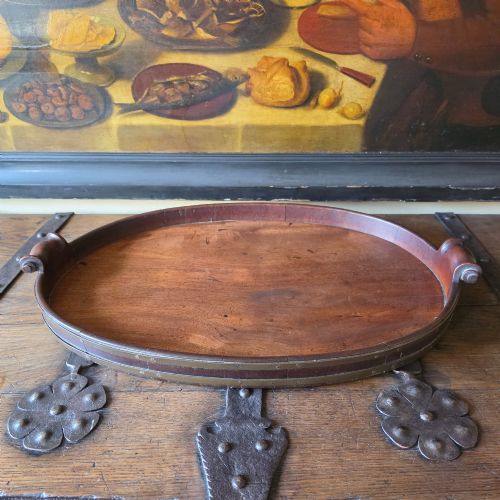
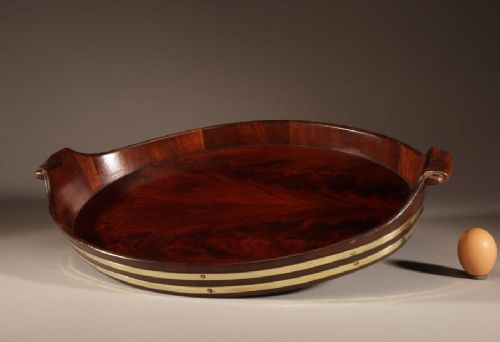
Cabinetmakers constructed timber trays using dense hardwoods like Cuban mahogany and oak, frequently incorporating contrasting satinwood stringing and marquetry. Surfaces often display careful joinery, raised wooden galleries, or coopered construction with integrated brass bands.
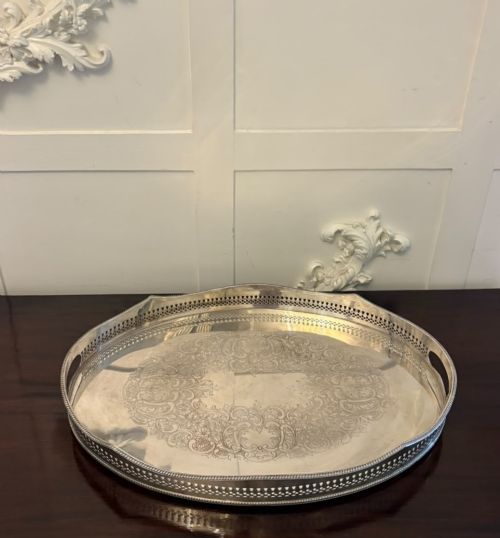
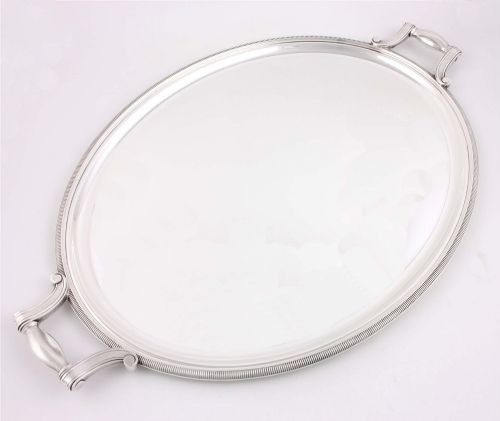
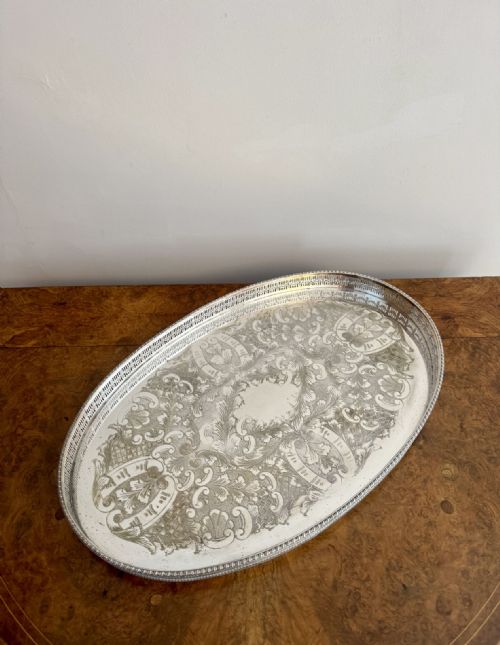
Metal iterations rely on silver plate, electroplated nickel silver, or sterling silver, shaped into heavy bases with pierced galleries and cast handles. Engravers added intricate scrollwork and armorial details by hand to the centre of the metal surfaces.
Listings for the oval butler serving tray span the Georgian, Victorian, and Edwardian periods, utilising mahogany, oak, silver plate, and brass.
Assessing the Pieces
Quality rests upon the crispness of the hand-engraving on metal surfaces and the precision of the marquetry and inlay on timber pieces. Substantial gauge silver plate and thick, well-figured mahogany indicate superior manufacture compared to lighter, plain alternatives.
The integrity of the handles, the snugness of any fitted stand, and the retention of original brass or wooden galleries dictate the overall standing of the object.
Mappin & Webb·Christofle·Harrison Bros·Elkington & Co
The Oval Butler Serving Tray Glossary
- Gallery
- A raised border around the edge of a tray designed to stop items sliding off. This rim can be pierced metal or shaped wood.
- Coopered
- Built from parallel staves of wood joined tightly together and secured with metal bands, similar to barrel construction.
- Marquetry
- Decorative patterns formed by fitting together thin veneers of different coloured woods into a timber surface.
- Salver
- A flat metal plate or tray used for serving food or drinks, often standing on small feet.
- Stringing
- A narrow strip of contrasting timber inlaid into the surface of a piece to form a decorative border.
Oval Butler Serving Tray: Frequently Asked Questions
How do I use a butler tray today?
These trays work well placed upon folding stands as cocktail tables or utilised directly on side tables for serving drinks.
Their raised edges and sturdy handles make them practical for carrying glassware between rooms.
Are these trays waterproof?
Timber trays feature polished wood finishes that resist minor spills, though standing liquid should be wiped away promptly.
Silver-plated and brass versions tolerate moisture better, but require careful drying to prevent water spots.
How do I distinguish Georgian from Edwardian trays?
Georgian timber trays typically rely on simpler, robust mahogany construction with minimal inlay and clean architectural lines.
Edwardian pieces often embrace lighter satinwood, intricate marquetry, or heavily pierced silver-plated galleries.
Do all trays come with stands?
Many serving trays were manufactured as standalone items intended for carrying objects by hand rather than resting on furniture.
Others were paired with folding wooden stands from the outset to create portable tables.