

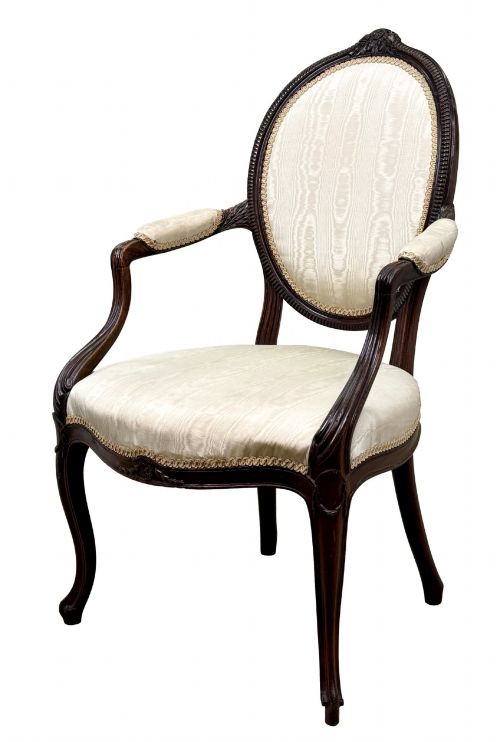
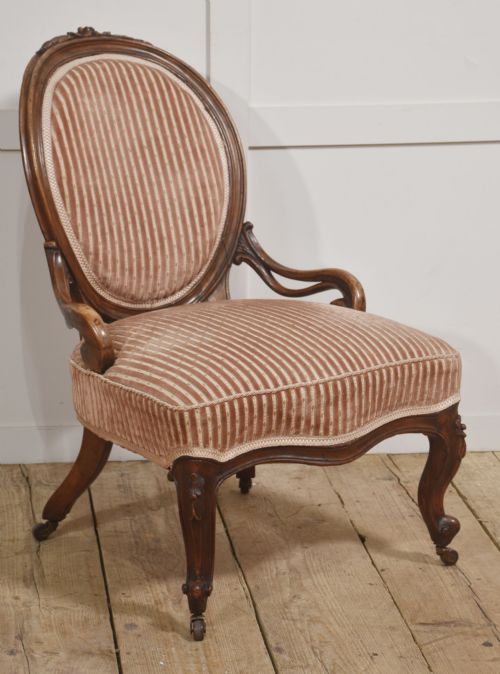


Oval Back Bedroom Chair
An oval back bedroom chair offers a distinct silhouette for a dressing room or parlour, drawing on classic French and English revival designs.
Oval Back Bedroom Chair
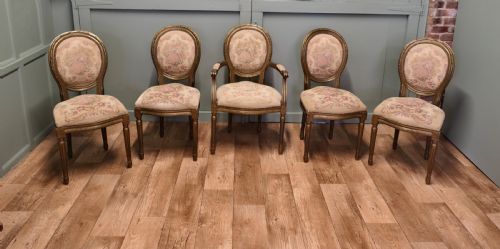
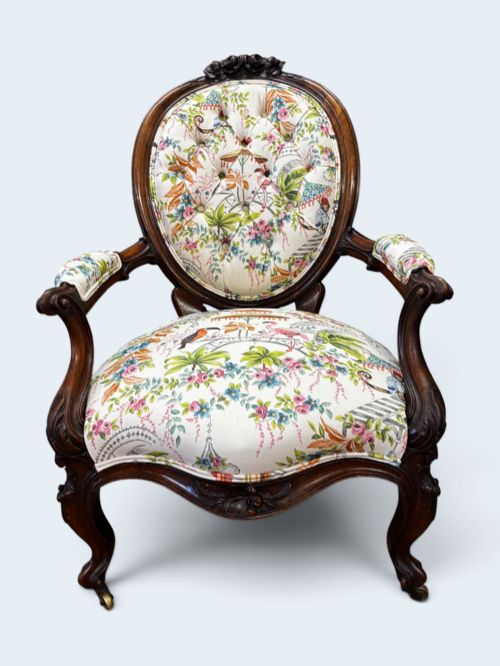
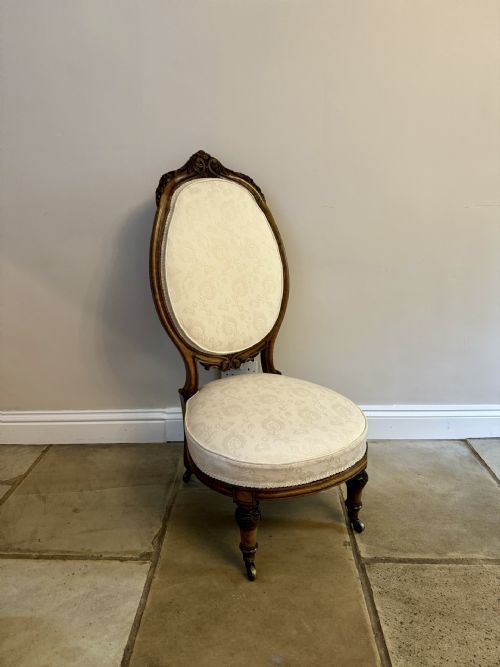
An oval back bedroom chair is a refined seating form found across the Victorian, Edwardian, and eighteenth-century revival periods. These pieces appear as nursing chairs, side chairs, and open armchairs designed for private rooms.
How they were made
Cabinetmakers shaped the characteristic oval back using solid hardwoods such as mahogany, walnut, beech, and satinwood, often employing steam bending or carved joinery for the curved frames. Show-frame armchairs and side chairs frequently utilised exposed wood finished with carving or paint.
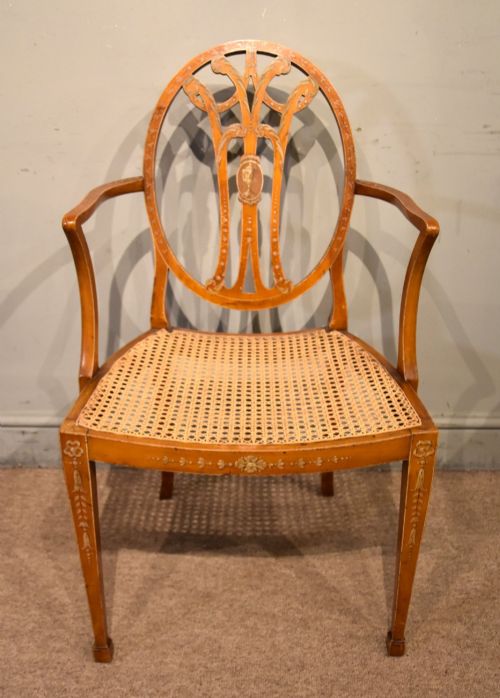
Upholstery techniques combined traditional stuffing methods with silk velvet, fabric, or split cane panels inserted into the backrests. Brass castors and decorative giltwood finishing completed the finer French and English salon suites.
Object forms span nursing chairs, salon armchairs, side chairs, and open armchairs with split cane or fabric backs.
What varies in quality
The crispness and depth of the hand-carved woodwork dictate the standard of the frame, separating simple production from finer workshop output. Walnut and mahogany frames with intricate floral or classical carving sit at the higher end of the range.
The integrity of the show frame and the retention of original finish, whether ebonised, giltwood, or painted, determine the character of the piece. Refined proportions in the oval backrest and arms distinguish better salon and bedroom chairs.
The Oval Back Bedroom Chair Glossary
- Nursing chair
- A low-seated chair historically used in bedrooms or nurseries for feeding infants. These typically feature an upholstered oval back and lack high arms to accommodate full skirts.
- Show frame
- A wooden chair frame where the polished or carved timber remains fully visible around the upholstered back and seat. This construction highlights the quality of the timber and carving.
- Giltwood
- Timber treated with a thin layer of gold leaf or gilt finish. It appears frequently on nineteenth-century French revival salon armchairs.
- Bergere
- An enclosed upholstered armchair with wooden framing and cane or wicker side and back panels. Examples often date from the Edwardian period or the early twentieth century.
- Louis XVI Revival
- A nineteenth-century decorative style emulating neoclassical French eighteenth-century design. Pieces display straight tapered legs, carved ribbon motifs, and oval upholstered backs.
Oval Back Bedroom Chair: Frequently Asked Questions
Where do I put an oval back bedroom chair?
These compact seats suit dressing rooms, bedrooms, and quiet corners of a drawing room. Their low profiles and decorative backs make them effective accent pieces.
They work well paired beside a dressing table or placed individually against a panelled wall.
How do I identify a Victorian nursing chair?
Victorian nursing chairs sit lower to the ground than standard dining or salon seats. They often feature an oval backrest designed to support the user without obstructive armrests.
Walnut and mahogany frames from this era frequently display carved details and traditional upholstery.
What is the difference between a salon chair and a bedroom chair?
Salon chairs were built for entertaining guests in formal reception rooms, often forming part of a larger matched suite. They prioritized decorative presence and delicate carved frames.
Bedroom chairs served private domestic spaces, balancing comfortable upholstery with portable proportions.
Are these chairs suitable for daily use?
Most antique seating benefits from careful placement and consideration of its age. Original joinery and delicate show frames require gentle treatment rather than heavy daily wear.
Upholstered panels can be maintained or re-webbed to support modern sitting habits while preserving the antique timber frame.