

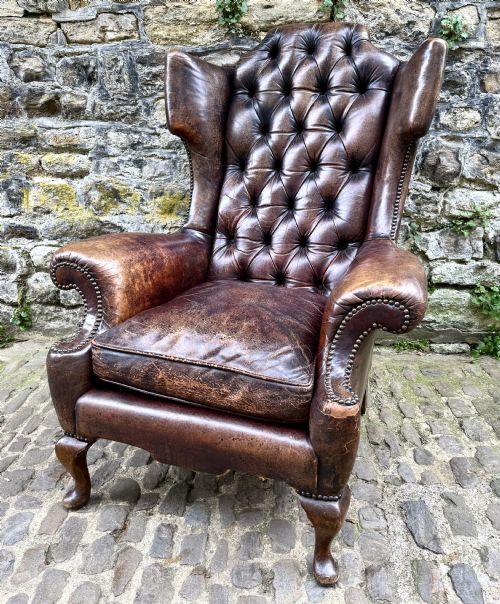
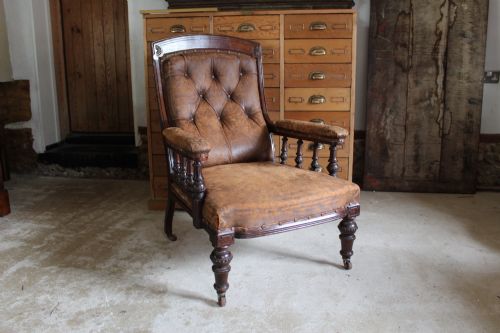


Late Victorian Fireside Chair
A late victorian fireside chair brings warmth and solid nineteenth-century comfort to a room, offering deep seating designed for sitting by the hearth.
Late Victorian Fireside Chair
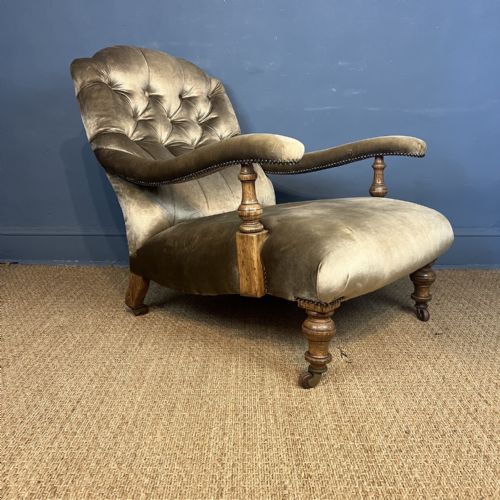
A late victorian fireside chair encompasses various forms built during the nineteenth century, most frequently appearing as wing armchairs, button back seating, and nursing chairs. These pieces emerge from periods spanning the 1880s to 1900, reflecting both formal parlor designs and simpler farmhouse aesthetics.
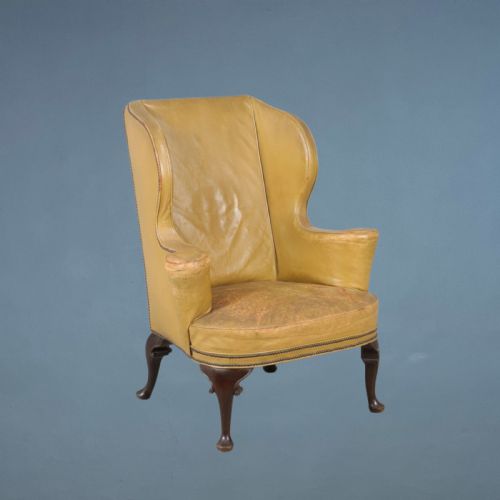
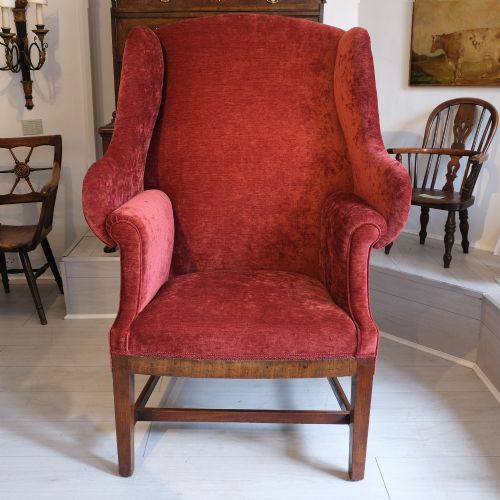
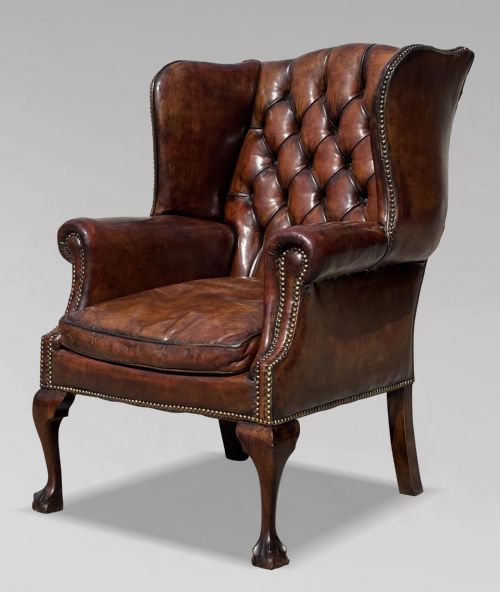
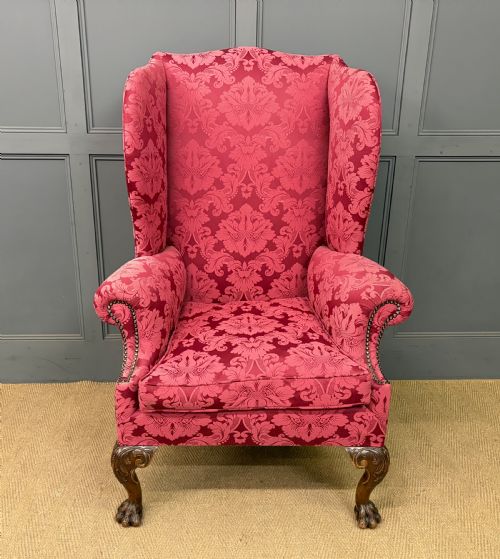
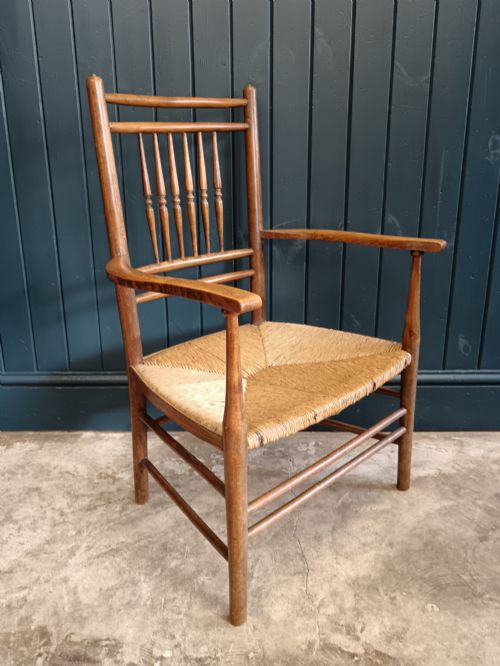
The selections visible here run from substantial leather wing armchairs down to lighter bedroom and nursing chairs, alongside spindle-backed Arts and Crafts models and Windsor designs. Walnut and mahogany frames dominate the formal groupings, while beech and elm appear in vernacular country seating.
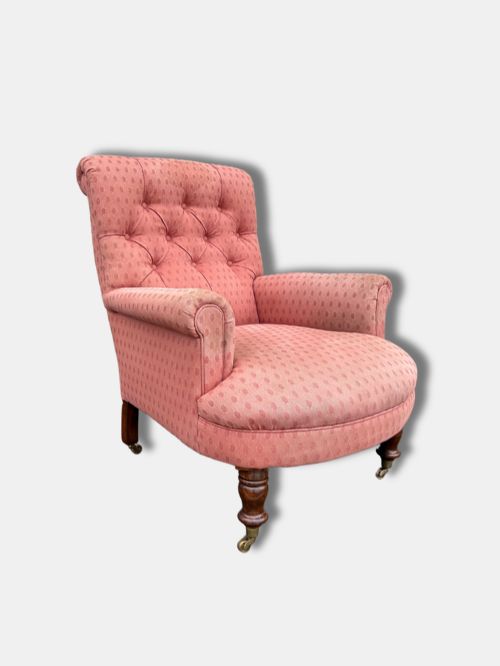
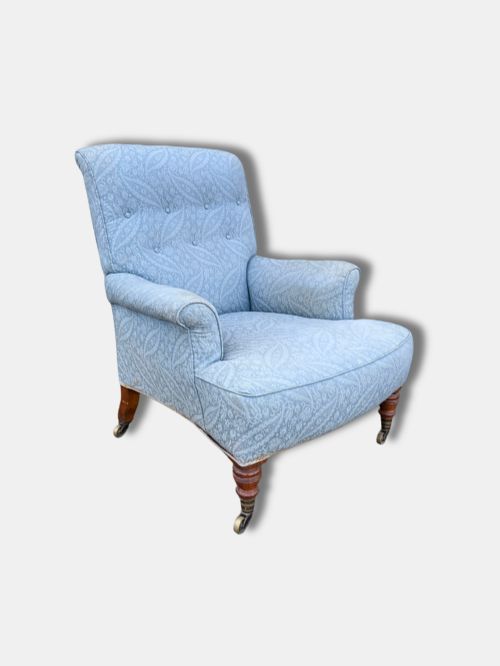
Buyers seeking a late victorian fireside chair typically encounter upholstered armchairs featuring traditional button backs, low seats, and supportive wings meant to block drafts from the hearth. Revival styles such as Queen Anne design and Howard and Sons aesthetics also surface frequently among the listings.
How they were made
Makers constructed the supportive frames of these chairs using hardwoods like mahogany, walnut, oak, beech, and elm. Joinery relied on traditional methods suited to heavy daily use by the fireside.
Upholstery involved materials such as leather, velvet, linen, and plain fabric, often secured with brass tacking. Sprung interiors and button-backed padding provided the characteristic deep comfort expected from nineteenth-century seating.
Details extended to carved mahogany and walnut frames, spindle backs, and rush seats found in specific Arts and Crafts and country variations. Craftspeople combined structural timber with tactile coverings to withstand decades of fireside heat and frequent use.
Listings span the 19th century, Victorian period, 1880, 1890, and 1900, utilising mahogany, walnut, brass, velvet, linen, leather, beech, and elm.
What varies in quality
The standard of timber selection sets the baseline for each piece, with finely figured walnut and dense mahogany framing sitting at the upper end compared to utility beech or standard pine framing. Carved elements demonstrate the maker's hand, where crisp relief work on a mahogany frame elevates the piece.
Upholstery materials dictate much of the tactile experience and visual weight, distinguishing supple brown leather or rich velvet from simpler linen and standard fabric. The complexity of the frame construction, such as button-backed springing versus simpler slat or spindle backs, marks the intended social sphere of the original commission.
Howard and Sons
The Late Victorian Fireside Chair Glossary
- Wing armchair
- A comfortable seat featuring protective side panels designed to shield the occupant from drafts near an open hearth. These upholstered pieces often feature deep button backs and substantial scroll arms.
- Nursing chair
- A low-seated Victorian chair originally designed for nurseries or bedrooms, allowing a person to sit comfortably while holding an infant. They frequently lack arms to accommodate voluminous nineteenth-century dresses.
- Button back
- An upholstery technique where depressions are created across the backrest by pulling buttons deep into the padding. This method secures the internal stuffing while producing a distinctive geometric pattern.
- Spindle back
- A chair back constructed from a series of thin, turned wooden rods arranged vertically. This lighter form appears frequently in Arts and Crafts and Windsor vernacular seating.
- Howard and Sons style
- A descriptor for upholstered seating reflecting the deep, comfortable proportions and high manufacturing standards associated with the famous Victorian London firm. Pieces in this aesthetic prioritize relaxed seating comfort.
Late Victorian Fireside Chair: Frequently Asked Questions
What defines a late victorian fireside chair?
A late victorian fireside chair is a nineteenth-century seat built for comfort near the hearth, typically featuring upholstered wings, low frames, or padded button backs. These pieces date primarily from the 1880s to 1900.
Makers utilised woods like walnut, mahogany, and beech, covering the frames in leather, velvet, or heavy fabric. The category includes everything from substantial gentleman's armchairs to low bedroom and nursing chairs.
How do I spot an 1880s chair?
Seating from the 1880s often displays robust Victorian proportions, dark mahogany or walnut frames, and formal revival details like Queen Anne curves or deep button-tufted upholstery. Construction methods rely on heavy timber framing.
These pieces reflect the height of nineteenth-century domestic comfort, frequently incorporating brass details and generous padding designed to withstand daily use by the fireplace.
Where were nursing chairs used?
Nursing chairs were placed in bedrooms and nurseries rather than the main formal parlor, built with low seats to make tending to children easier. Their armless or low-armed design accommodated the heavy skirts of the period.
Despite their original domestic purpose, these compact chairs work well in modern settings as occasional seating in bedrooms, studies, or beside smaller fireplaces where space is limited.
What is an Arts and Crafts fireside chair?
Arts and Crafts seating from this era emphasises honest construction, visible wood grain, and simpler vernacular forms over heavy Victorian upholstery. Examples include spindle backs and rush seats.
These chairs bring a lighter, more organic aesthetic to a room, moving away from button-backed leather toward exposed beech or oak frames inspired by traditional craftsmanship.