




Yellow Velvet Accent Chair
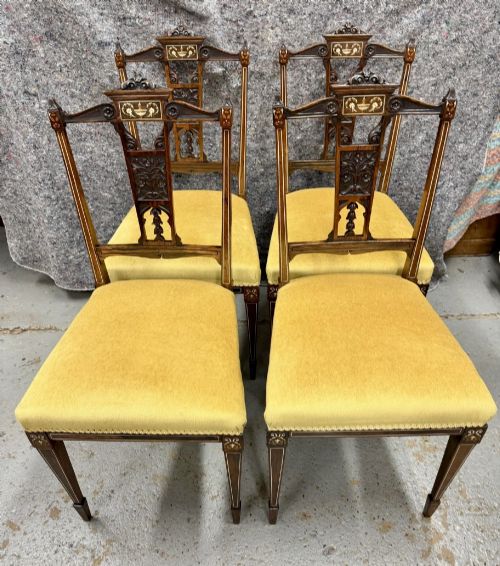
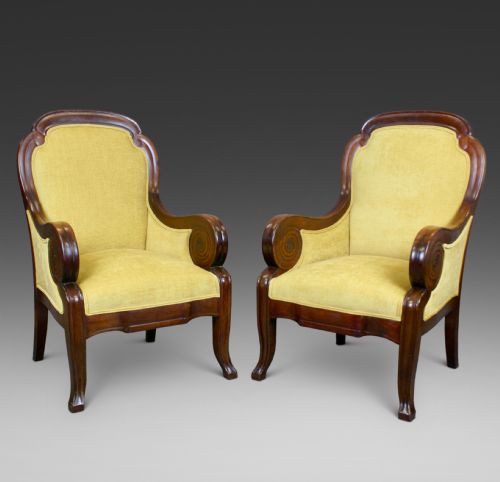
These yellow velvet accent chairs span the Victorian, Edwardian, and early twentieth-century periods, offering practical seating with period character.
Yellow Velvet Accent Chair
When you search for a yellow velvet accent chair, you encounter a selection of historic seating types including Victorian nursing chairs, Edwardian armchairs, and library chairs. These forms originate from periods such as the nineteenth century, the Edwardian era, and the 1920s.
The most common forms you meet on this page are Victorian and Edwardian armchairs, alongside nursing chairs and salon chairs. Makers utilised varied timbers like mahogany, walnut, rosewood, and oak to construct the frames.
Period variations include barrel back designs, winged library chairs, and button spoon backs. These chairs combine functional seating with distinct stylistic revivals such as Sheraton, Jacobean, and Italian Baroque.
Materials and construction
Frames are constructed from solid hardwoods including mahogany, walnut, rosewood, and oak, often shaped with turned front legs, castors, or barley twist supports. Boxwood and brass details frequently accent these timber structures.
Upholstery historically involved traditional stuffing methods, though contemporary listings note new velvet coverings in shades of gold and yellow. Show wood frames display carved ornamentation and button spoon back profiling.
Listings feature velvet upholstery across Victorian and Edwardian frames constructed from mahogany, walnut, rosewood, and oak.
Judging quality in period seating
Quality rests in the crispness of the timber carving and the integrity of the frame construction, particularly in the joinery of walnut and mahogany show wood. Finer examples display balanced proportions, such as well-turned legs and refined barrel or spoon backs.
The sophistication of the timber grain, whether rosewood or figured walnut, distinguishes standard production from finer pieces. Hardware components like original castors and inlay work further elevate the standing of an armchair.
Howard and Sons
The Yellow Velvet Accent Chair Glossary
- Nursing chair
- A low-seated Victorian chair designed originally for comfort and nursing infants. They typically feature open arms or no arms to accommodate voluminous period dresses.
- Spoon back
- A padded chair back shaped like the bowl of a spoon, popular in the Victorian era to support the spine. This style is often seen on walnut and mahogany salon chairs.
- Barley twist
- A form of woodturning resembling a spiralling rope, frequently found on the legs and stretchers of Edwardian and later chairs. It adds tactile texture to the wooden frame.
- Show wood
- Polished wooden framing left exposed around the upholstered portions of a chair. It highlights the quality of the timber, such as mahogany or rosewood.
- Castor
- A small wheel fitted to the base of chair legs for ease of movement. Brass fittings and ceramic wheels often accompany these period supports.
Yellow Velvet Accent Chair: Frequently Asked Questions
What periods do these chairs represent?
The selection spans the nineteenth century through the early twentieth century, encompassing Victorian, Edwardian, and 1920s examples.
You will find specific stylistic revivals ranging from Sheraton and Jacobean to Italian Baroque among the listed pieces.
What woods were used for the frames?
Framing materials primarily include hardwoods such as mahogany, walnut, rosewood, and oak. Some pieces also incorporate boxwood inlay and brass elements.
Makers selected these timbers for both structural durability and decorative grain patterns.
Are these chairs suitable for daily use?
These historic armchairs and nursing chairs function well as accent seating in contemporary interiors. Many listings feature updated velvet upholstery while retaining their original frames.
Consider the seat height and back support to ensure the piece matches your intended daily comfort.
How do I distinguish a nursing chair?
Nursing chairs are characterised by a lower seat height designed for nineteenth-century domestic use. They frequently feature spoon backs and open or absent arms.
This specific proportion distinguishes them from standard dining and salon armchairs.