


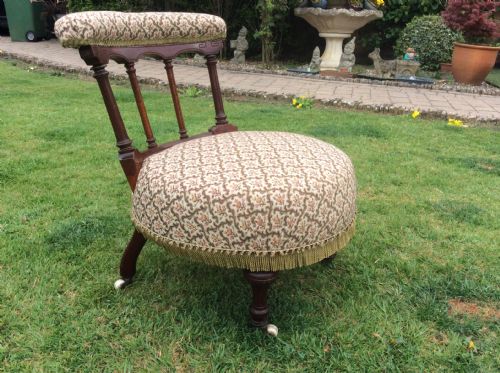
Spindle Back Nursing Chair
A spindle back nursing chair brings low seating and slender turned woodwork into the bedroom, offering the comfort and support collectors seek.
Spindle Back Nursing Chair
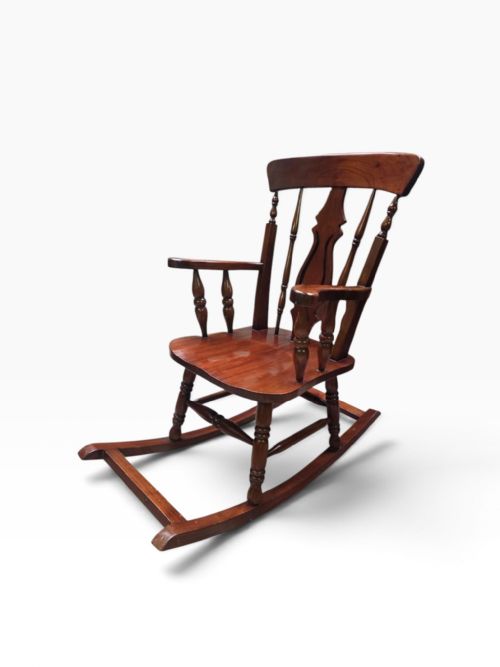
A spindle back nursing chair is a low-slung seat designed for comfort, commonly appearing across Victorian and 19th Century forms alongside Georgian Country examples. Buyers searching this phrase encounter bedroom chairs, slipper chairs, and occasional chairs featuring upright turned spindles that shape the backrest.
The pieces available combine traditional timber frames with upholstered seats or button back padding, ranging from compact Victorian bedroom chairs to larger rocking variants. Elm, ash, mahogany, and walnut provide the structural framework for these low seats, reflecting regional vernacular styles and nineteenth-century domestic habits.
Materials and construction methods
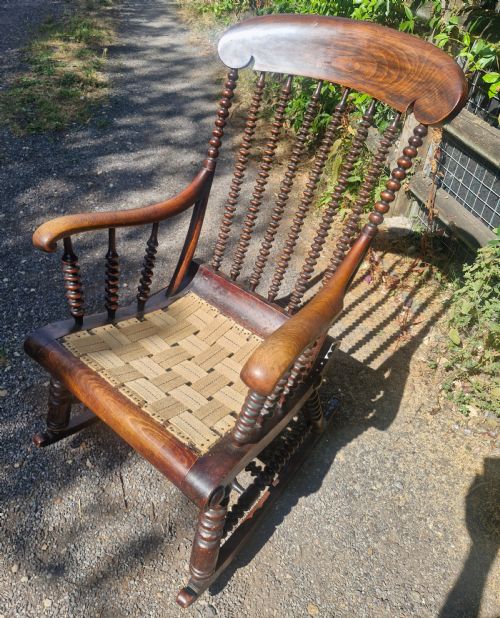
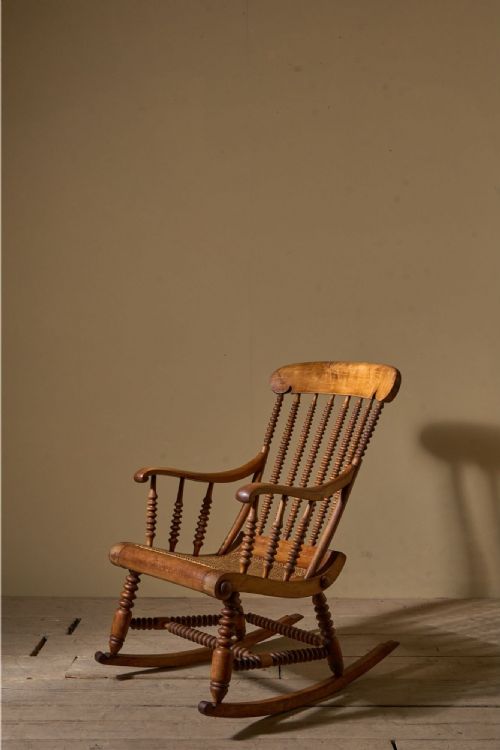
Cabinet makers utilised native hardwoods such as elm, ash, oak, and beech alongside imported mahogany and walnut to build these frames. Turned components like bobbin framing and slender spindles required a lathe, while seats were constructed using solid timber planks or upholstered pads covered in fabric and leather.
Joinery methods relied on traditional mortise and tenon joints to secure the upright spindles into the seat and top rail. Brass castors occasionally appeared on the feet of later Victorian examples to aid movement across carpets.
Victorian sitters appreciated low chairs because heavy indoor garments required seated dressing routines near the bedroom fireplace.
Distinguishing quality in construction and material
Quality rests in the crispness of the spindle turning and the selection of timber for the frame. Dense hardwoods like elm and well-figured mahogany show superior durability compared to softer secondary woods.
The proportion of the low seat relative to the backrest dictates the visual balance of the piece. Finer examples display meticulous attention to joint tightness and sympathetic restoration of original upholstery.
The Spindle Back Nursing Chair Glossary
- Spindle back
- A chair back constructed from a series of slender, turned wooden rods set vertically between the top rail and the seat. These elements provide lightweight support without bulk.
- Nursing chair
- A low-seated chair historically designed for feeding infants or personal grooming in the bedroom. The low profile allowed the sitter to tend to domestic tasks with ease.
- Bobbin turning
- A type of furniture decoration produced on a lathe to create a series of rounded, spool-like shapes along a wooden post. This decorative motif appears frequently on nineteenth-century frames.
- Windsor
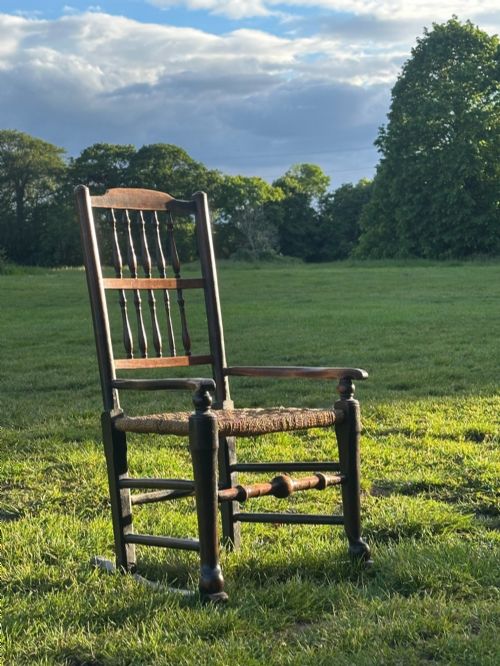
- A traditional chair construction method where legs and back spindles are wedged directly into a solid wooden seat. Country versions often combine elm seats with ash or yew spindles.
- Slipper chair
- An upholstered bedroom chair with short legs designed to sit low to the ground for changing shoes or dressing. They share a similar compact scale with nursing chairs.
Spindle Back Nursing Chair: Frequently Asked Questions
What is a spindle back nursing chair used for?
These low seats were originally designed for domestic use in bedrooms, specifically for nursing infants or assisting with dressing. Their compact proportions placed the sitter closer to the floor.
Today, buyers place them in bedrooms, studies, or small sitting rooms where standard-height armchairs would overwhelm the floor space. Their decorative turned backs make them visually appealing even when tucked into a corner.
How do I date a 19th century nursing chair?
Dating relies on examining the timber, turning style, and upholstery methods used in the frame. Mid-19th century pieces often feature simpler turned spindles and exposed timber.
Later Victorian examples introduce button back upholstery, walnut frames, and occasionally brass castors. Regional country pieces from the 18th century display heavier use of elm and ash with vernacular joinery.
Are rocking chairs the same as nursing chairs?
While some nursing chairs were built on rocking bases to soothe infants, many standard nursing chairs stood on fixed legs. The common link is the low seat height rather than the presence of rockers.
Catalogues and listings frequently group low rocking variants together with static bedroom chairs because both served similar private domestic functions in the Victorian home.
What woods were used for spindle back chairs?
Maker workshops selected timbers based on availability and regional traditions. Country makers in Lancashire and Cheshire favoured native woods like elm and ash for their strength and flexibility.
Finer urban pieces utilised imported mahogany and walnut to match formal bedroom suites. Secondary woods such as beech or birch frequently formed the hidden internal framing.