


Outdoor Marble Table
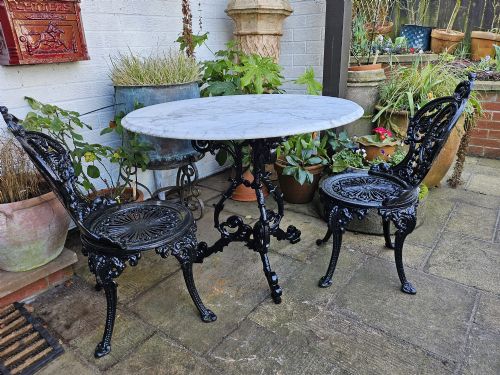
An outdoor marble table brings weight and steady utility to a terrace, pairing cool stone tops with robust iron bases.
Outdoor Marble Table
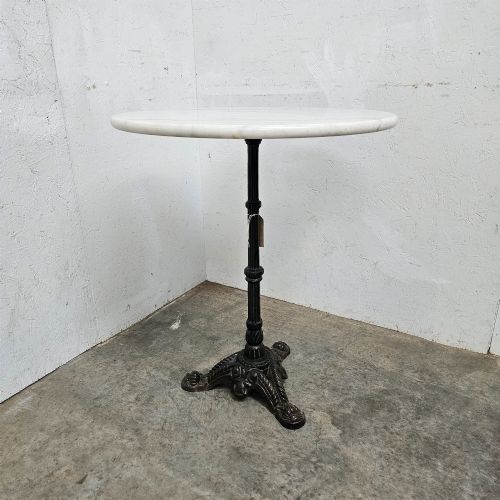
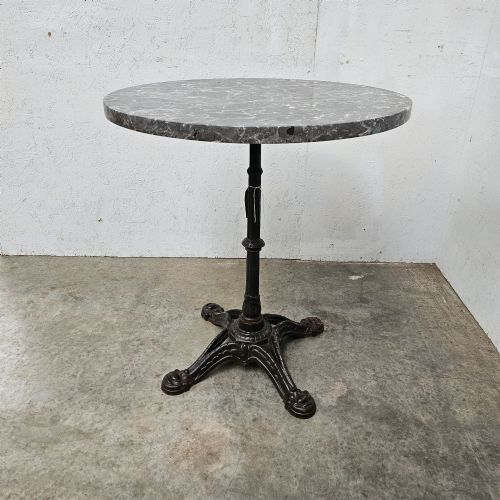
When you search for an outdoor marble table, you are looking at heavy garden furniture designed to withstand the elements while maintaining a decorative finish. The pieces gathered here span bistro tables, console tables, and plant stands dating from the nineteenth century up to the 1930s. Victorian, Edwardian, and French styles dominate the selection, showing how utilitarian metal frames were matched with durable stone.
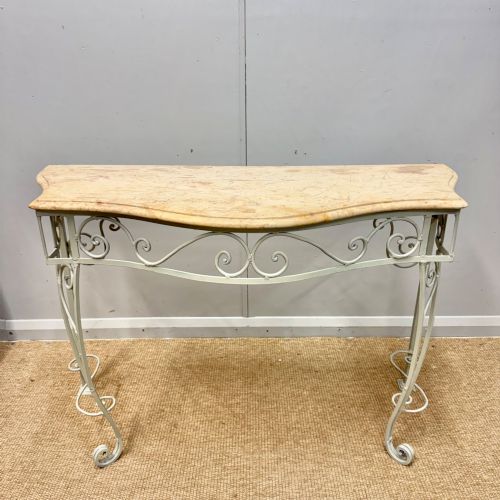
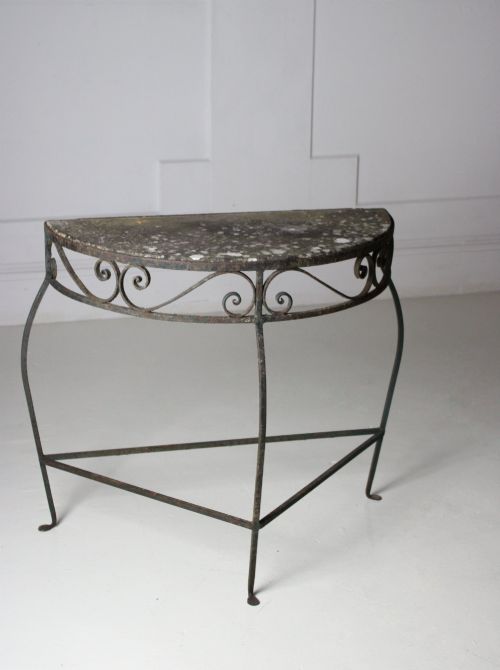
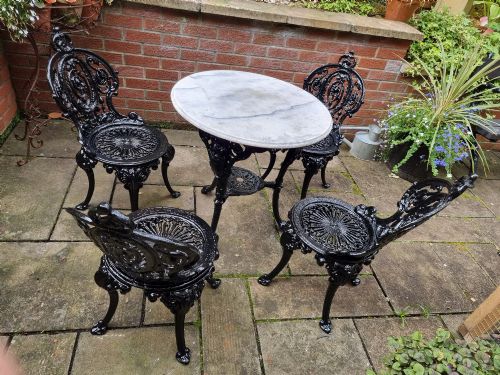
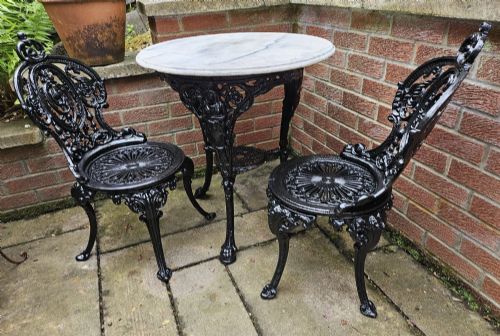
The most common formats you will meet are round bistro tables and rectangular console tables. These combine white or grey marble slabs with cast iron or wrought iron supports, often shaped for garden, conservatory, or café use. While many originate from French traditions, British Victorian examples also appear regularly across the inventory.
How they were made
The construction of these tables relies on the pairing of dense stone tops with heavy metal bases. Slabs of white marble or grey marble provide a smooth, flat surface that resists moisture, though the stone itself requires stable support. Iron foundries cast or wrought the metal frames into intricate scrollwork, tripod legs, or rigid console structures to carry the considerable weight of the marble.
Makers utilised brass fittings in certain joints, though iron and stone remain the primary materials throughout. Metal frames received protective dark finishes to endure outdoor conditions, while marble edges were often bevelled or moulded to soften the profile of the heavy slab.
Some nineteenth-century plant stands come ready to hold damp pots for decades without losing their balance.
What varies in quality
The quality of an outdoor marble table depends largely on the weight and thickness of the marble slab relative to the iron base. Superior examples feature well-balanced proportions where the cast iron or wrought iron frame supports the stone securely without visual bulk. Finer casting in the ironwork, such as crisp floral or geometric relief on the legs, distinguishes better-made workshop pieces from standard utility furniture.
The integration between the top and the base also indicates standard of manufacture. Better tables feature correctly fitted marble tops that sit flush within retaining iron rims or rest stably upon engineered support brackets, rather than relying on crude adhesives or unstable shims.
The Outdoor Marble Table Glossary
- Bistro table
- A small table designed for cafes or tight spaces, typically featuring a single central iron column or four legs supporting a round marble top.
- Console table
- A narrow table intended to stand against a wall, frequently utilised in hallways, conservatories, or sheltered garden alcoves.
- Cast iron
- Iron poured into a mould while molten to create detailed structural frames and decorative garden furniture bases.
- Wrought iron
- Iron beaten and worked by hand into durable structural shapes and curved decorative supports.
- Conservatory stand
- A specialised elevated table or plant stand built for enclosed glass rooms to display horticulture.
Outdoor Marble Table: Frequently Asked Questions
Can I leave my marble table outside all winter?
Marble is porous and vulnerable to frost damage if water freezes within its microscopic fissures. It is wise to store the top indoors or cover it securely during freezing weather.
The iron bases tolerate winter conditions well if painted, but protecting the entire piece prolongs the life of both stone and metal.
How do I clean an old marble top?
Wash the surface using warm water and a soft cloth, avoiding acidic cleaners or harsh detergents that etch the stone. Gentle soap removes general garden grime without harming the polished finish.
Dry the marble thoroughly afterwards to prevent water marks from settling into the grain of the stone.
Are these tables genuinely antique?
The pieces listed date from the Victorian and Edwardian eras up through the 1930s, encompassing nineteenth-century French and British manufacture. Materials like heavy cast iron and natural marble reflect the production standards of those periods.
Examining the casting seams on the iron and the weathering on the stone helps confirm the age of each individual table.
How heavy is a typical marble garden table?
These tables are exceptionally heavy due to the solid stone slab and the iron frame beneath it. Two people are usually required to lift and position them safely on a patio or lawn.
This substantial weight ensures the furniture remains stable in high winds without needing permanent fixings to the ground.