


Painted Iron Console Table
A painted iron console table brings practical surface space and structural elegance to a hallway, conservatory, or garden room.

Painted Iron Console Table
A painted iron console table is typically found in styles ranging from Victorian British pieces to French Country and Industrial French designs. These tables combine robust metal frames with contrasting surfaces suited for display or practical utility.
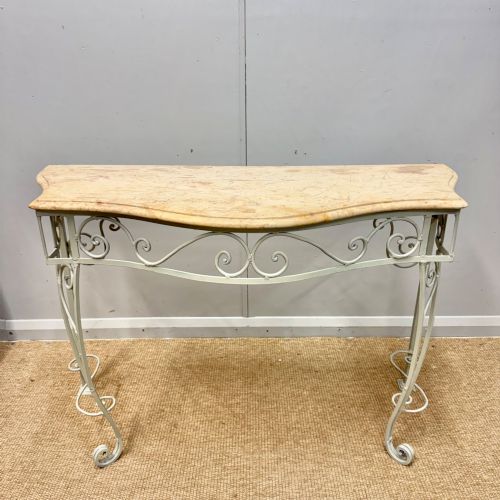
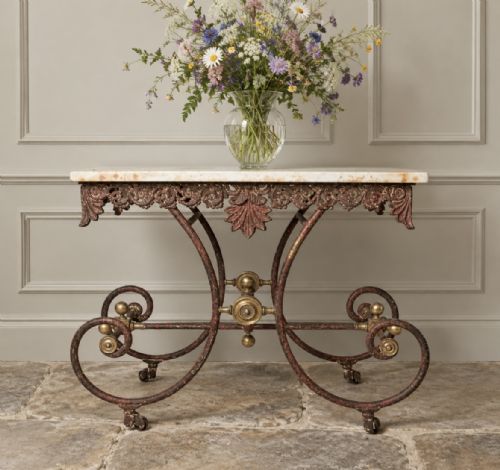
The version most commonly encountered on this page pairs a sturdy metal base with a smooth marble top. Examples from the nineteenth century often show the heavier cast iron construction associated with garden and pub use, while later pieces adopt lighter wrought iron or steel frameworks.
How they were made
Makers utilised durable metals such as cast iron, wrought iron, and steel to form the structural bases and decorative legs. These frames were frequently painted to protect the metal and to complement domestic or garden interiors.
Heavy marble slabs serve as the primary tabletop material across many of the listed examples, providing a cool and resilient surface. Wood, hardwood, brass, and glass also appear as supporting elements or secondary surfaces within the selection.
One cheerful green survivor brings the distinct charm of a French garden straight into the hallway.
What varies in quality
The distinction between standard and superior pieces rests largely on the fineness of the metalwork and the integration of the top. Finer examples display carefully shaped scrollwork or clean lines that reflect disciplined hand-forging or precise casting.
The quality of the fitted stone or timber top dictates the overall presence of the table. Thick, well-veined marble slabs and robustly joined hardwood components elevate the piece well beyond utilitarian garden furniture.
The Painted Iron Console Table Glossary
- Console table
- A table designed to stand against a wall, traditionally supported by wall brackets or decorative legs. These tables offer narrow surface space ideal for narrow hallways or reception rooms.
- Cast iron
- An iron-carbon alloy poured into moulds to create rigid, decorative components. This material provides substantial weight and intricate detailing for nineteenth-century bases.
- Wrought iron
- Iron beaten into shape with hammers while hot, allowing for flexible and curving structural designs. It yields lighter and more resilient frames than cast iron.
- Marble
- A metamorphic rock prized for its smooth texture and decorative veining. It remains the classic choice for tabletops due to its cool touch and hard-wearing nature.
Painted Iron Console Table: Frequently Asked Questions
Where should I place a painted iron console table?
These tables suit hallways, conservatories, and reception rooms where floor space is limited. Their narrow profile allows them to sit flat against a wall without obstructing movement.
They also function effectively in garden rooms or orangery settings, provided the materials are kept in appropriate environmental conditions.
How do I care for the marble top?
Marble requires gentle cleaning with warm water and mild soap to preserve the polished surface. Avoid abrasive scourers and acidic cleaners that can etch the stone.
Promptly wiping away spills prevents staining on older marble surfaces found on nineteenth-century pieces.
Are these tables suitable for outdoor use?
Many examples originate from garden or orangery contexts, utilising weather-resistant iron and stone. However, indoor placement helps preserve painted finishes and prevents moisture damage to joints.
Checking the specific material composition, such as steel versus cast iron, helps determine appropriate placement.
How do I identify a Victorian piece?
Victorian examples typically feature heavy cast iron frames with traditional decorative proportions. Archival dating often places these items in the nineteenth century.
Constructive details such as fixings and heavy marble slabs provide further clues to their nineteenth-century origins.