





French Cast Iron Table
A french cast iron table brings industrial strength and cafe elegance together, offering a sturdy base for marble or wood tops in gardens and kitchens alike.
French Cast Iron Table
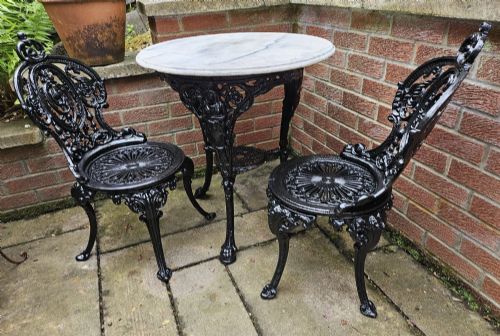
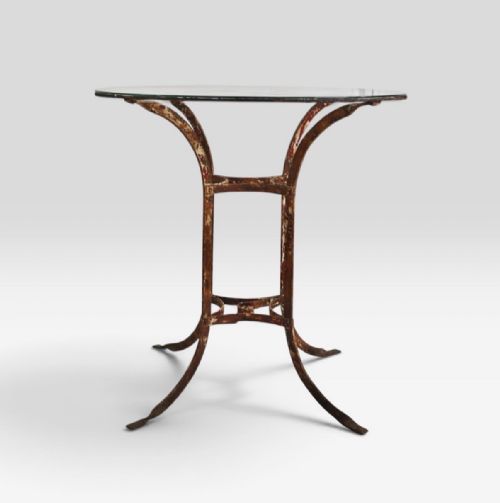
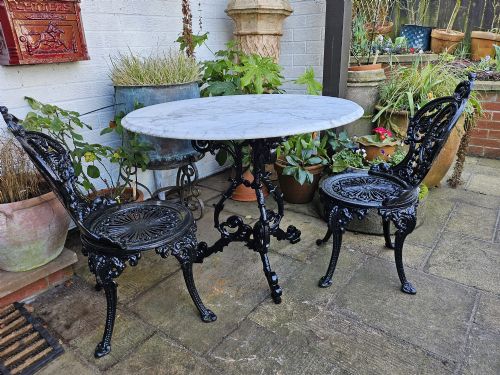
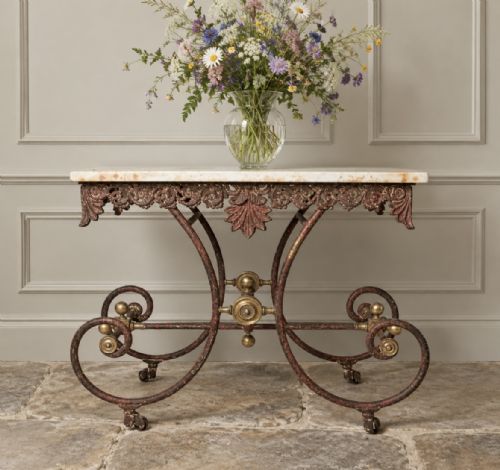
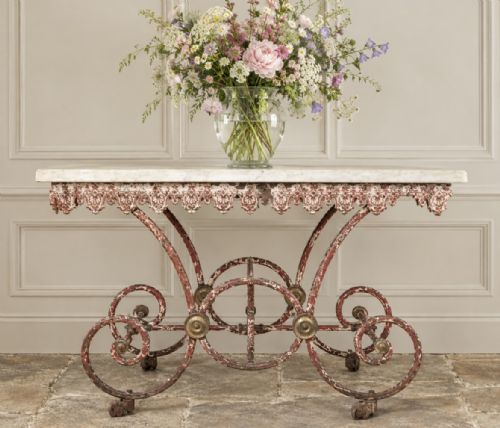
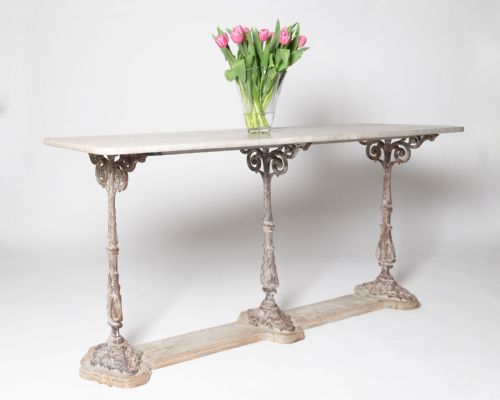
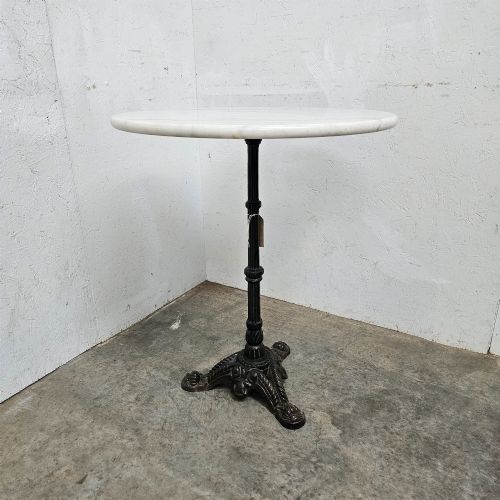
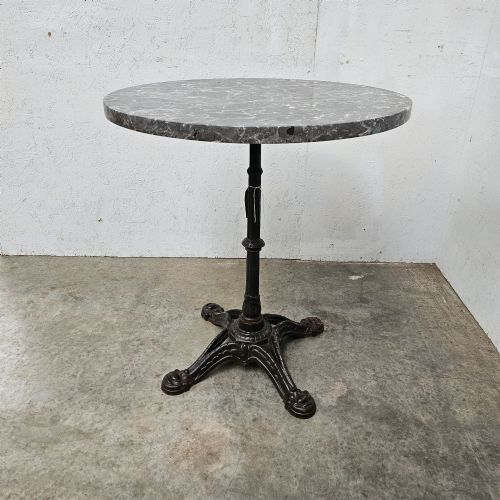
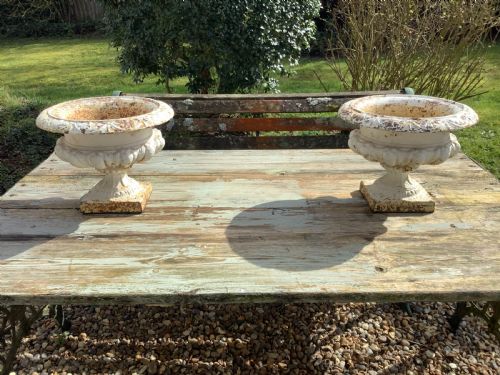
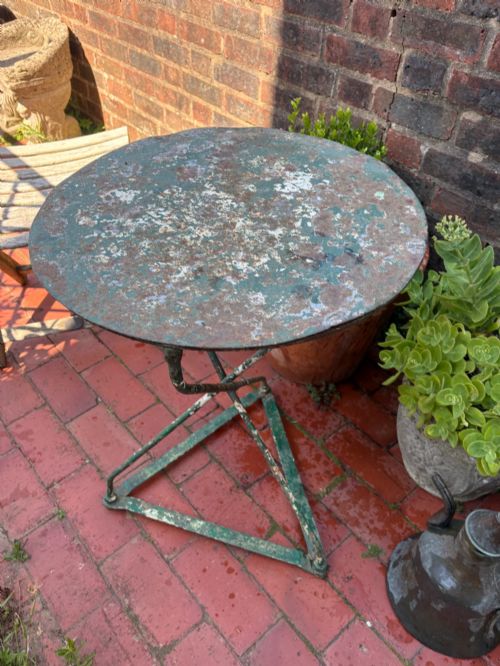
A french cast iron table combines heavy metal framing with tops of marble, oak, elm, or pine, appearing primarily in formats such as round bistro tables, console tables, and garden tables. These pieces trace back through the nineteenth century and into the early twentieth century, spanning styles from Victorian and French bistro to rustic country and industrial forms.
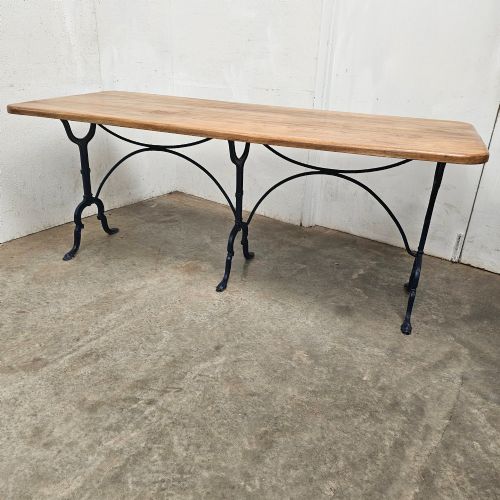
The pieces on this page lean heavily towards round cafe and bistro designs paired with white or green marble slabs, alongside longer utility formats like butchers and patisserie tables. Garden consoles, side tables, and occasional dining settings also emerge frequently across nineteenth-century and 1920s examples.
How they were made
Foundries cast molten iron into ornate pedestals, tripod bases, and strapp-work frames, often applying green or dark paint for protection against outdoor elements. These rigid metal bases support heavy stone and timber surfaces.
Tops consist predominantly of smooth marble or native timbers like oak, elm, pine, and wood, secured directly to the iron underframes. Brass details and painted finishes appear on select café and conservatory examples.
Period origins span the nineteenth century, Victorian eras, and early decades up to 1930.
What varies in quality
The crispness of the iron casting defines the upper tier, where decorative scrollwork and structural legs retain sharp relief rather than muddy outlines. Heavier, well-balanced bases provide stability that lighter utility castings lack.
The integrity of the top surface separates standard pieces from superior examples, particularly where original marble slabs show clean veining or timber tops retain genuine patina without excessive replacement parts.
The French Cast Iron Table Glossary
- Gueridon
- A small round table, usually supported by a single central pedestal or column. These often feature cast iron bases and marble tops.
- Bistro table
- A small dining or cafe table designed for commercial or domestic use. They typically pair heavy iron bases with marble or wooden tops.
- Strapp work
- Metalwork formed of flat strap-like bars arranged in geometric or open patterns. It appears frequently on nineteenth-century garden tables.
- Patisserie table
- A sturdy work table historically used in bakeries, featuring durable stone or wood surfaces. Surviving examples often combine iron bases with thick marble.
- Jardiniere stand
- An elevated stand designed to hold plants or flower pots. These utilise decorative cast iron and brass construction.
French Cast Iron Table: Frequently Asked Questions
Where were these tables used?
These tables served primarily in French cafes, bistros, patisseries, and domestic gardens or conservatories. They functioned as everyday dining surfaces, shop counters, and outdoor display stands.
Commercial hospitality and domestic utility drove their production across the nineteenth and early twentieth centuries. Their durable construction suited both indoor trade and outdoor weather.
Are the marble tops original?
Many tables retain their original marble tops, particularly those designed for cafes, butchers, and patisseries. White and green marble slabs were standard for hygiene and durability in commercial settings.
Some pieces have replacement stone or timber tops fitted later in their working lives. Examining the fit against the iron frame helps indicate originality.
Can I leave these tables outside?
Cast iron bases tolerate outdoor placement well, especially when protected with painted finishes. They frequently served as garden and patio furniture in nineteenth-century settings.
Wooden tops and certain marble varieties require more care if left exposed to harsh weather. Storing them under cover during winter preserves the timber and stone.
How do I date a cast iron table?
Dating relies on stylistic clues, foundry marks, and structural construction methods. Nineteenth-century examples often feature heavier, more ornate castings than later 1920s industrial versions.
Connected elements like brass fittings, strapp work, and timber types also point toward specific decades. Comparing form factors with known period pieces clarifies the age.