
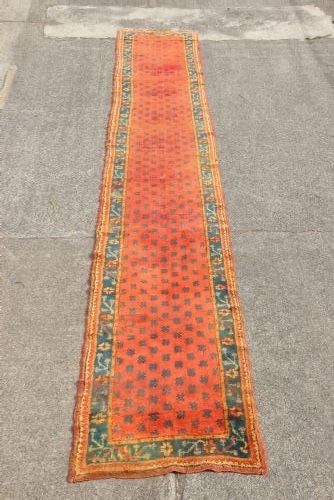
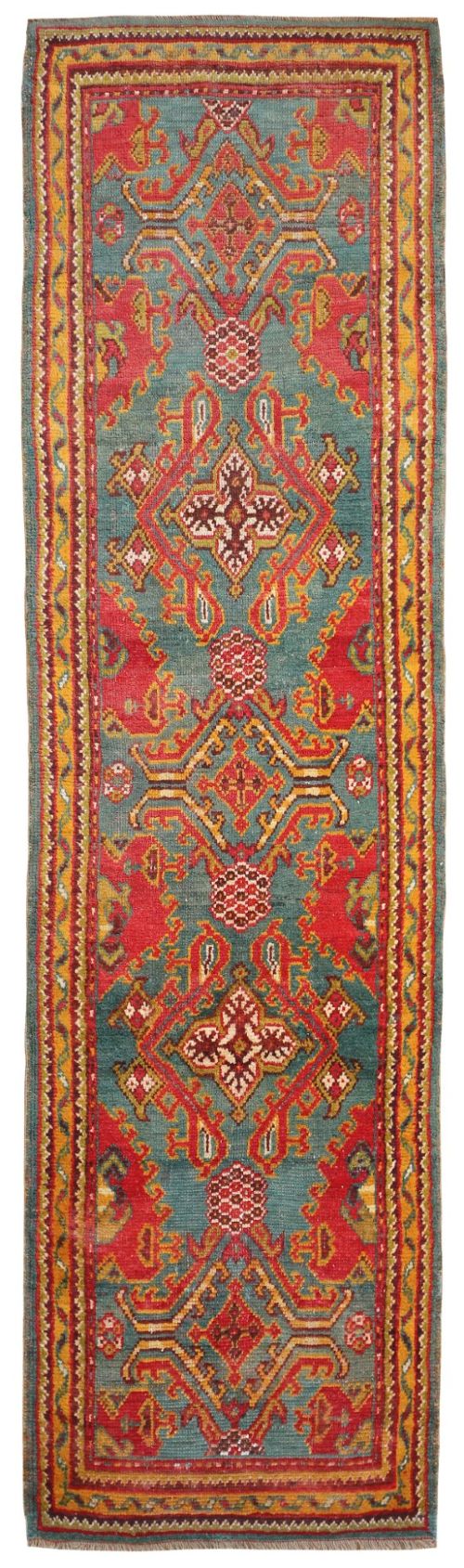



Oushak Carpet Runner
Oushak carpet runner pieces are hand-knotted floor coverings that bring soft geometric patterns and muted tones into long hallways.

Oushak Carpet Runner
An oushak carpet runner is a long, narrow floor covering originating from Turkish weaving traditions, designed specifically for corridors and narrow spaces. The pieces seen on this page span the late Victorian era through to the 1920s, showing traditional Anatolian and Ottoman design influences.
You will encounter various formats here, ranging from long narrow runners over five metres in length to smaller runner rugs and country house examples. The designs draw upon traditional Turkish and star ushak motifs executed in softer, more muted palettes than typical Persian counterparts.
Most items belong to the broader categories of runner rugs and carpets, produced in wool, cotton, and occasionally angora wool. These antique floor coverings bring historical character and warmth to modern interiors through their enduring craftsmanship.
How they were made
These carpets and runners are hand-knotted using wool pile on cotton foundations, utilising materials that ensure durability in high-traffic hallways. Certain examples incorporate angora wool, which provides a distinctive softer texture and subtle sheen to the surface pile.
Weavers employed traditional Turkish knots on vertical looms, building up geometric and medallion patterns passed down through generations. The organic dyes and regional wool preparation methods give each runner its characteristic mellow coloration.
Periods represented here span from the 1880s through to the 1920s, including Victorian examples.
What varies in quality
Quality in these runners depends heavily on the fineness of the hand-knotting and the precision of the wool preparation. Finer knots allow for sharper definition within the traditional Anatolian and star ushak motifs.
The choice of materials also elevates certain examples, particularly those utilising fine angora wool for a more lustrous pile. Overall structural integrity and the harmonious ageing of the vegetable dyes distinguish the finer pieces from standard production.
The Oushak Carpet Runner Glossary
- Oushak
- A style of rug originating from the town of Usak in western Turkey, known for larger scale motifs and softer colour palettes. These pieces often feature muted tones derived from natural dye sources.
- Anatolian
- Pertaining to the geographic region of Asia Minor, encompassing the traditional heartland of Turkish carpet weaving. This descriptor links the pieces to centuries of regional textile craftsmanship.
- Angora Wool
- A softer fleece material utilised in specific antique runners to impart a tactile handle and gentle sheen. It appears in select late nineteenth-century examples on this page.
- Kilim
- A flat-woven carpet or runner produced without a pile, offering a lighter weight alternative to knotted floor coverings. An antique ushak kilim represents this distinct weaving technique.
- Hand Knotted
- A method of production where individual strands of wool are tied by hand onto a cotton warp and weft foundation. This labor-intensive process defines the construction of all genuine runners listed here.
Oushak Carpet Runner: Frequently Asked Questions
Where should I place an oushak runner?
These narrow formats suit long hallways, entryways, and corridors where their elongated dimensions bridge connecting rooms.
Their subdued palette allows them to complement timber floors and neutral interiors without overwhelming the space.
How do I care for an antique wool runner?
Gentle, regular vacuuming without a rotating brush roll helps remove grit from the wool pile safely.
Professional specialist cleaning is recommended for antique textiles to preserve the natural dyes and delicate cotton foundations.
What is the difference between an oushak and a kula rug?
Oushak carpets generally feature larger, looser floral or geometric motifs with a softer overall aesthetic.
Kula pieces often display more structured prayer designs or distinct regional geometric borders characteristic of western Anatolia.
Are these runners suitable for heavy traffic?
Hand-knotted wool construction provides natural resilience, making these antique runners durable enough for everyday corridor use.
Using a quality underlay beneath the runner prevents slipping and cushions the wool pile against wear.
How can I tell the age of these pieces?
Dating relies on material characteristics, traditional design motifs, and the mellowing of natural wool and dyes.
Pieces on this page date from the late nineteenth century through to the 1920s, reflecting Victorian and early twentieth-century production.