
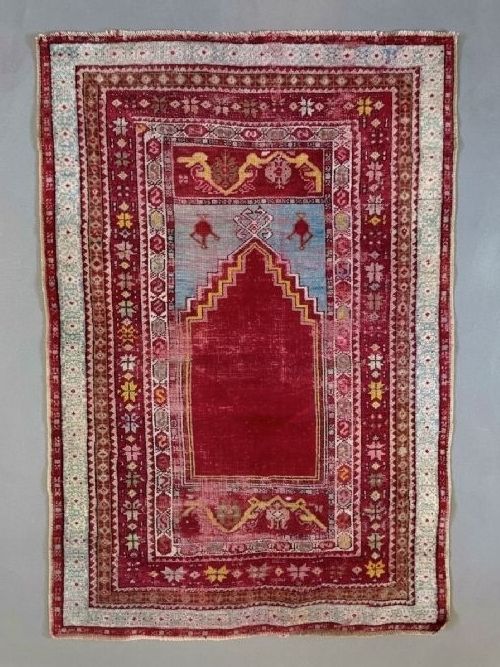


Ottoman Wool Rug
An ottoman wool rug brings centuries of Anatolian weaving tradition into a room through rich natural dyes and tactile pile.
Ottoman Wool Rug
An ottoman wool rug encompasses historic floor coverings and prayer rugs originating from Anatolia and wider Turkish regions. Buyers encounter diverse regional formats, including large decorative carpets alongside smaller village prayer rugs.
Regional styles dictate the visual structure, from repetitive tribal motifs to sophisticated medallion layouts. Prayer rugs remain particularly prominent, often displaying traditional architectural mihrab designs.
How they were made
Weavers relied principally on sheep wool and hand-spun wool, occasionally incorporating angora wool for added lustre and texture. Foundations often utilised sturdy cotton threads to support the dense hand-knotted pile.
Colours derived from natural dyes, which produced organic hues that age with considerable depth and variation. Artisans knotted individual strands tightly by hand across traditional vertical looms to ensure durability.
Listings feature nineteenth-century village weavings alongside urban carpets from nineteen-hundred.
What varies in quality
Quality depends upon the fineness of the knotting and the complexity of the design rendered by the weaver. Superior examples display precise drawing within medallions and borders, alongside a balanced handling of natural dye palettes.
The integrity of the wool pile and the survival of original outer edges and fringe areas significantly influence the overall standard. Pieces retaining strong, uncompromised pile exhibit greater structural resilience over decades of use.
The Ottoman Wool Rug Glossary
- Prayer rug
- A small format rug featuring a mihrab or niche design, historically used for individual daily prayers. These pieces often focus the decorative composition towards a pointed arch at one end.
- Mihrab
- The arched architectural niche depicted on prayer rugs, symbolising the direction of prayer. Its orientation guides the viewer through the primary design axis of the textile.
- Natural dye
- Colourants extracted from plants, insects and minerals rather than synthetic compounds. These substances yield organic tones that develop subtle patination over time.
- Yastic
- A small Turkish cushion cover or miniature rug traditionally utilised on raised seating platforms. Their compact dimensions often mirror the intricate border details found on larger carpets.
- Medallion
- A central ornamental motif dominating the field of a rug or carpet. It acts as the visual anchor for the surrounding geometric or floral patterns.
Ottoman Wool Rug: Frequently Asked Questions
How do I care for an antique wool rug?
Vacuum gently without a rotating brush to protect the delicate hand-knotted pile from excessive friction. Keep the textile away from prolonged direct sunlight to preserve the organic natural dyes.
Rotate the rug periodically to ensure even wear across high-traffic areas in your home. Consult a specialist familiar with historic textiles for periodic professional cleaning.
Where were these rugs historically woven?
Production centred across Anatolia, encompassing urban manufactories and rural villages alike. Specific towns such as Ushak, Ghiordes, and Ladik developed distinct local weaving traditions.
Nomadic and settled tribal groups also contributed specialised formats, ranging from village prayer rugs to expansive decorative floor carpets.
What is a prayer rug?
A prayer rug is a portable textile featuring a prominent niche or arch design known as a mihrab. This architectural motif was traditionally pointed towards Mecca during daily devotions.
These pieces were typically woven in smaller formats to facilitate easy placement and storage within domestic interiors.
How do I distinguish regional rug styles?
Regional attribution relies on examining specific border arrangements, colour combinations, and central medallion structures. Towns like Milas and Konya utilised distinct palettes and local geometric vocabularies.
Comparing knot density and foundation materials further clarifies whether a piece originated from an urban workshop or a village loom.