


Ottoman Side Table
An ottoman side table brings intricate geometry and warm wood into a room, offering a distinct surface for lamps and drinks.
Ottoman Side Table
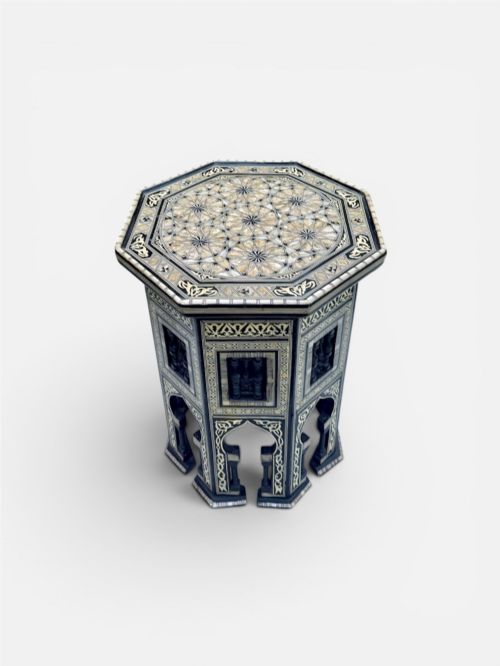
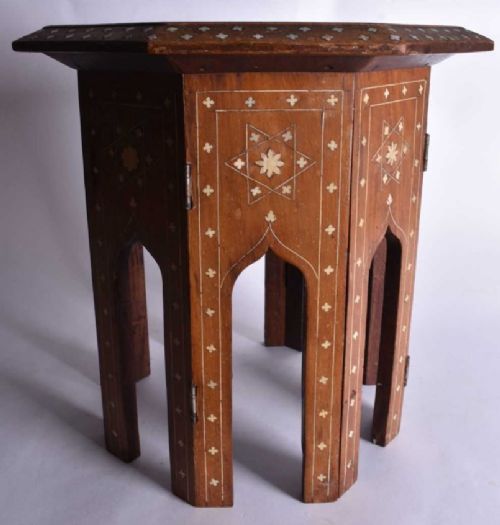
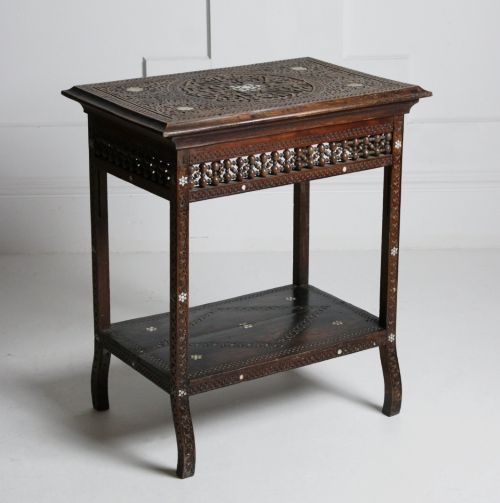
When you search for an ottoman side table, you encounter intricate occasional and games tables spanning the Victorian era through the early twentieth century. These pieces reflect Moorish Revival, Syrian, Levantine, and Ottoman design traditions.
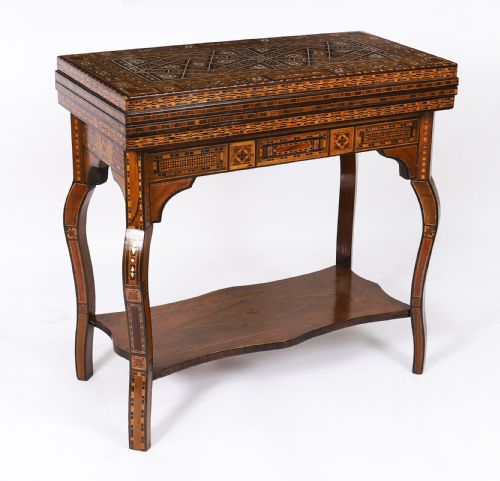
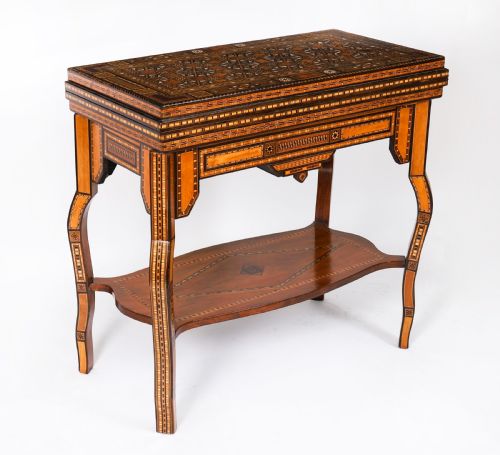
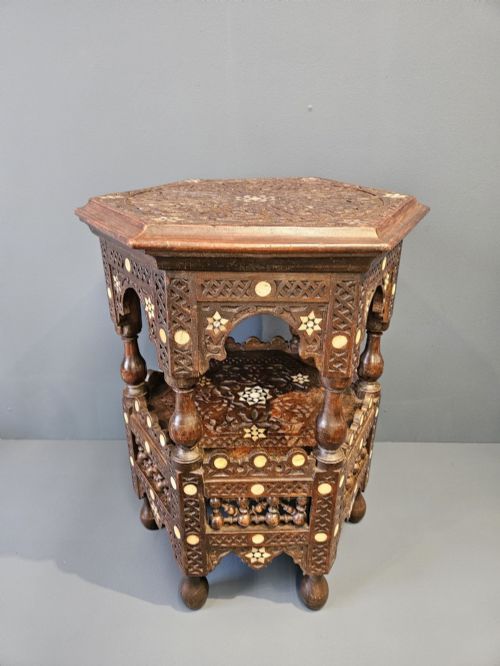
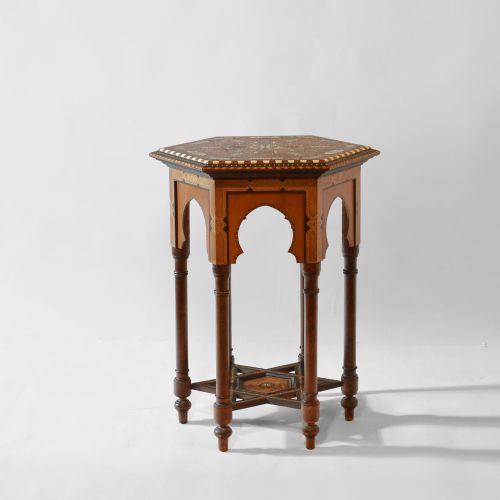
You are most likely to meet hexagonal and octagonal forms on this page, alongside folding Damascus tables and two-tier Syrian tables. Some examples include fitted cupboards or double-duty surfaces designed for cards, chess, and backgammon.
The aesthetic draws heavily on Islamic design vocabulary, incorporating geometric lattice work and low-slung proportions. These tables function easily beside armchairs and sofas as compact display surfaces.
How they were made
Carpenters utilised dense regional hardwoods such as walnut and fruitwood, alongside ebonised wood frames, to build stable geometric carcasses. These structures support hinged folding bases and rigid multi-sided tops.
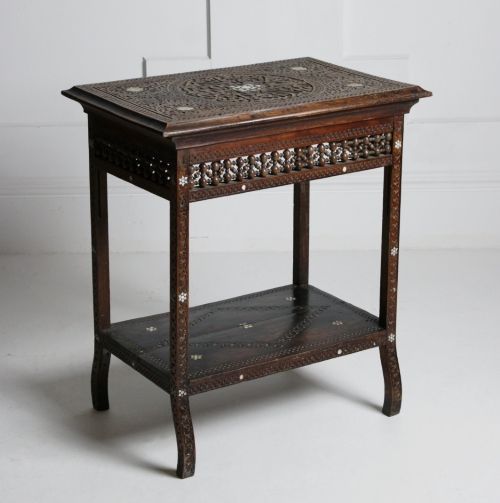
Craftsmen applied intricate geometric mosaics using small geometric pieces of bone and mother-of-pearl secured into the wood substrate. Deep hand-carving defines the Moorish and Syrian styles, creating textured surfaces across panels and aprons.
Listings span the nineteenth century through the 1930s, featuring walnut, hardwood, bone, and mother-of-pearl across Moorish Revival and Syrian styles.
What varies in quality
The precision of the surface geometry dictates the distinction between standard production and master craftsmanship. Tighter tessellation of bone and mother-of-pearl inlay shows greater control by the maker.
Depth and crispness of the hand-carved elements separate simpler tables from those with deeply undercut carving. Complete preservation of the delicate inlay pieces without noticeable replacements elevates the standing of a piece.
Liberty & Co
The Ottoman Side Table Glossary
- Moorish Revival
- A nineteenth-century western design movement imitating North African and Middle Eastern architecture and decorative arts. It heavily influenced British furniture production during the Victorian period.
- Damascus table
- A folding occasional table originating from Syria, typically featuring an octagonal or hexagonal top. These pieces fold flat on a clever spider-web lattice hinge.
- Mother-of-pearl
- The iridescent internal layer of mollusc shells used widely as veneer in Middle Eastern marquetry. Craftsmen cut it into tiny polygons to form star and polygon patterns.
- Levantine
- Pertaining to the historic region of the eastern Mediterranean, encompassing areas known for intricate woodwork and inlay. Levantine tables often combine walnut with bone elements.
- Ebonised wood
- Timber treated with chemical stains or dark finishes to imitate costly ebony. This dark ground provides high visual contrast for pale inlaid bone and shell.
Ottoman Side Table: Frequently Asked Questions
What is an ottoman side table?
An ottoman side table is a low, intricately decorated occasional surface drawing on Middle Eastern and Moorish design traditions. These tables typically feature multi-sided tops and dense geometric woodwork.
They serve as compact display stands or games surfaces beside seating, bringing distinctive regional character into domestic interiors.
How do I date an inlaid table?
Dating relies on examining the construction methods, timber choice, and the style of the inlay work. Pieces from the nineteenth century often show hand-cut joinery and varied walnut or fruitwood grains.
Later twentieth-century examples tend towards standardised geometric repeats and machine-cut elements. Comparing the ageing of the bone and mother-of-pearl against the wood helps confirm the era.
Where were these tables made?
These tables originate from workshops across Syria, the Levant, and broader Ottoman territories during the late nineteenth and early twentieth centuries. European firms also produced similar designs under the Moorish Revival banner.
Many travelled to Britain through trade channels, international exhibitions, and retailer imports during the Victorian and Edwardian periods.
How do I care for inlaid wood?
Maintain inlaid tables by keeping them away from direct heat sources and dramatic humidity fluctuations. These environmental changes cause the wood to expand, which loosens the delicate bone and mother-of-pearl pieces.
Dust gently with a dry, soft cloth and avoid liquid polishes that can seep beneath the tessellated veneer elements.