


Islamic Carved Table
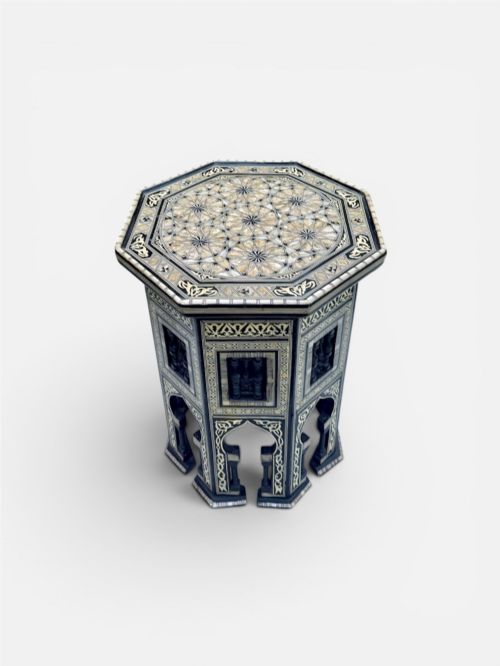
These Islamic carved table examples bring intricate geometric geometry and rich timberwork into a room.
Islamic Carved Table
An islamic carved table brings distinct regional craftsmanship into a modern interior, drawing on traditions from Syria, Morocco, Egypt, and wider Ottoman and Persian lands. You are looking at functional surfaces such as side tables, occasional tables, centre tables, and coffee tables that double as decorative focal points.
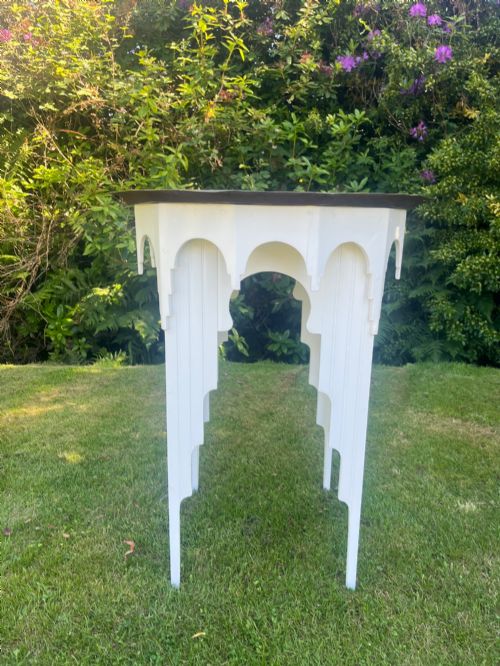
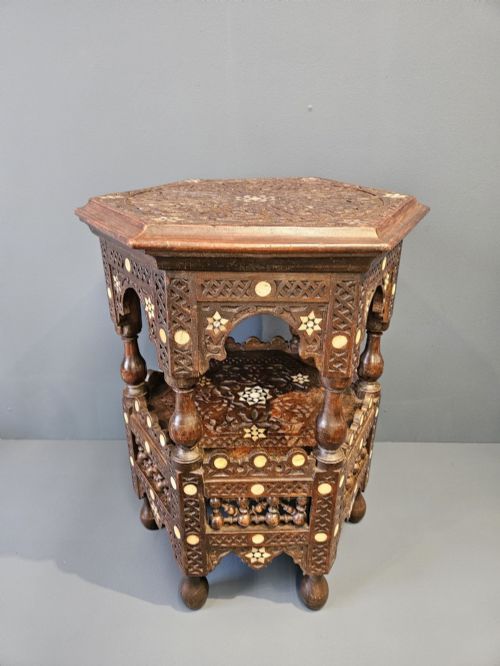
The most common form you will meet on this page is the octagonal or hexagonal side table, often designed with folding frames or intricate panel construction. These pieces span the Victorian era, the late nineteenth century, and into the early decades of the twentieth century.
Makers and workshops channel distinct revivals, including Moorish Revival, Mamluk Revival, and Syrian styles. Surfaces frequently integrate geometric lattice work with varied timber frameworks.
How they were made
Woodwork forms the core of these pieces, utilising hardwood, walnut, and painted wood shaped through detailed hand carving. Artisans build up the structure using interlocking geometric panels rather than simple nailed joints.
Surface ornamentation relies heavily on inlaid mother-of-pearl, bone, and brass elements set flush into the timber ground. Metalwork also appears independently as brass trays or brass top tables supported by folding wooden bases.
The documented pieces span from the Victorian era and the late nineteenth century through to the 1920s and 1930s.
What varies in quality
The distinction between standard and superior examples lies in the precision and depth of the hand carving on the wood. Crisp, deep geometric relief work demonstrates a higher standard of workshop output than shallow, machine-assisted stamping.
Quality also shows in the density and retention of the mother-of-pearl and bone inlay. Pieces where every tiny piece of shell sits tight and flush within the timber reveal meticulous hand assembly.
Liberty & Co
The Islamic Carved Table Glossary
- Moorish Revival
- A nineteenth-century architectural and decorative style that draws inspiration from North African and Spanish Islamic design. It heavily influences many tables through horseshoe arches and intricate geometric screenwork.
- Mamluk Revival
- A design movement referencing the historic art and metalwork of the Mamluk Sultanate in Egypt. Pieces in this style often incorporate heavy brass work and detailed Islamic script motifs.
- Cairoware
- Metalwork objects originating from Cairo, typically brass inlaid with silver and copper in complex Islamic patterns. These items range from lamps to table components.
- Mother-of-Pearl
- The iridescent inner layer of mollusc shells used extensively for decorative inlay. Small geometric pieces are cut and embedded into the wooden frames of tables.
Islamic Carved Table: Frequently Asked Questions
How do I style an Islamic carved table at home?
These tables work well as accent pieces next to sofas or armchairs, where their intricate patterns can be appreciated up close. Placing them in neutral spaces allows the carved woodwork and inlay to stand out.
Because many feature octagonal or hexagonal shapes, they fit easily into corners or smaller spaces without dominating the room. They also function effectively as lamp tables or display surfaces for ceramics.
How were these folding tables constructed?
The folding mechanism on these tables typically relies on a clever latticework frame that collapses flat without metal hinges. Artisans cut interlocking wooden slats that pivot on wooden pegs.
This portable design allowed for easy storage and transport in traditional domestic settings. When opened, the intricate fretwork forms a sturdy octagonal or hexagonal base for the top.
What is the difference between Moorish and Mamluk styles?
Moorish style draws primarily from North African and Spanish Islamic traditions, emphasising wooden fretwork, arches, and geometric bone or pearl inlay. It results in textured wooden surfaces.
Mamluk style references Egyptian metalwork and design traditions, often featuring heavy brass elements, engraved calligraphic bands, and star patterns. Tables in this category frequently incorporate brass tray tops.
How do I care for mother-of-pearl inlay?
Mother-of-pearl and bone inlay require consistent indoor humidity to prevent the surrounding wood from shrinking and loosening the small pieces. Dust the surface gently with a dry, soft cloth.
Avoid using harsh chemical polishes or excessive moisture, which can degrade the adhesive holding the inlay in place. Waxing the wood occasionally helps maintain the timber condition.