


Middle Eastern Side Table
A middle eastern side table brings intricate geometry and warm materials into a room, offering both practical surface space and distinct regional artistry.
Middle Eastern Side Table
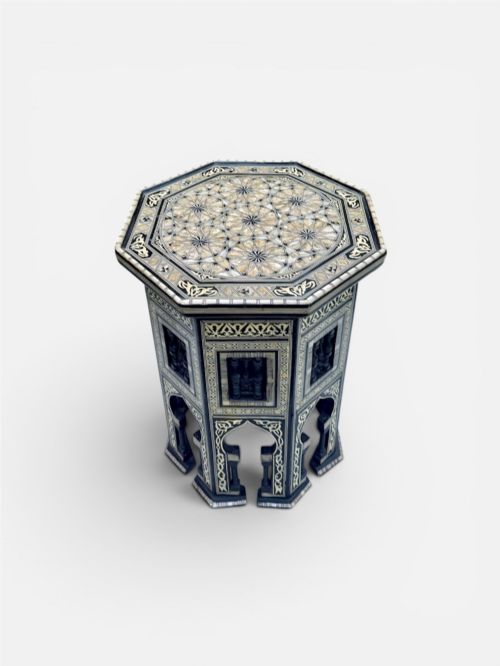
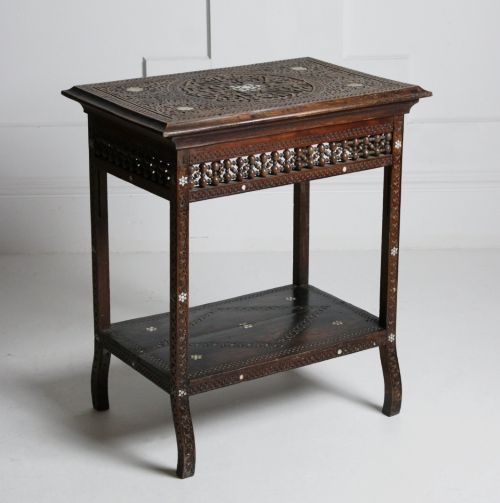
When searching for a middle eastern side table, buyers encounter a diverse selection of occasional tables, coffee tables, and games tables spanning the late nineteenth century and early decades of the twentieth century. These pieces encompass distinct regional traditions and revival movements, including Syrian, Levantine, Moorish, and Mamluk styles.
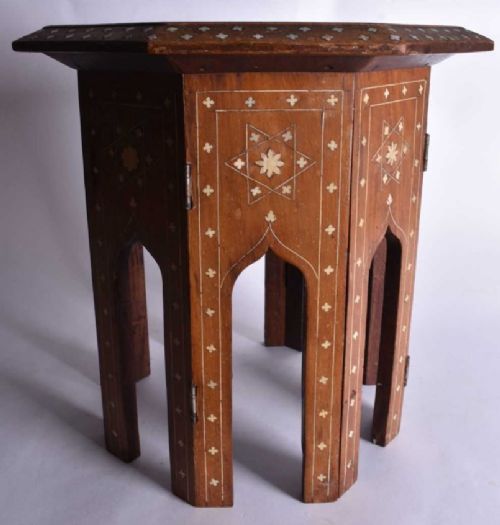
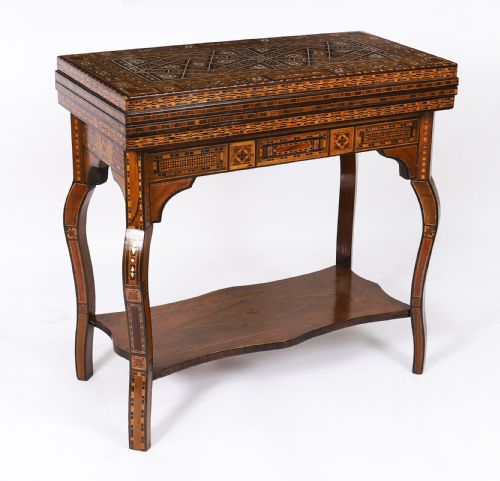
The octagonal and hexagonal folding table is the version most frequently met on this page, often designed with intricate geometric frames. Alongside these, two-tier formats and dedicated games tables for card, chess, and backgammon appear frequently in the selection.
Originating from periods such as the nineteenth century, 1900, and up to 1930, these tables reflect global tastes of their eras, sometimes incorporating Anglo-Indian or Bohemian stylistic influences while retaining traditional craft techniques.
How they were made
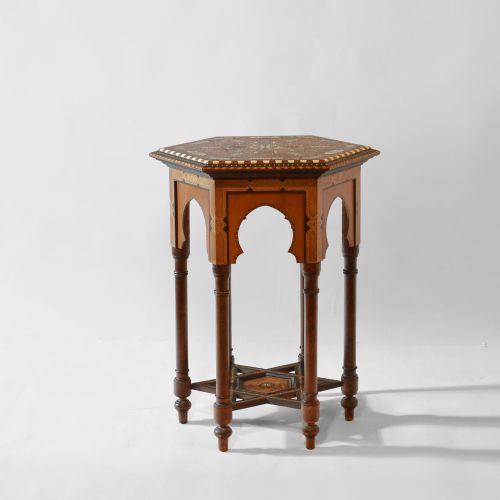
Woodwork forms the core structure of many pieces, utilising hardwoods, walnut, and mahogany combined with intricate bone and mother-of-pearl inlay. Artisans assemble folding frames and panelled sides using precise joinery that allows octagonal and hexagonal tops to rest securely upon collapsible bases.
Listings feature pieces spanning the 1880s to the 1930s, constructed from walnut, hardwood, brass, copper, bone, and mother-of-pearl.
What varies in quality
The refinement of the surface decoration largely determines the distinction between standard production and exceptional examples. Finer pieces display tightly fitted mother-of-pearl and bone tesserae with minimal filler, whereas simpler items show wider gaps in the inlay work.
Structural integrity and the precision of the joinery distinguish the superior items. Tables that retain crisp, deep carving in the timber and precise hand-chasing in the brass elements demonstrate a higher level of workshop skill.
The Middle Eastern Side Table Glossary
- Mamluk Revival
- A nineteenth-century design movement inspired by the art and architecture of the Mamluk Sultanate, characterised by elaborate brasswork and geometric strapwork. It draws heavily on medieval Egyptian and Syrian metalworking traditions.
- Cairoware
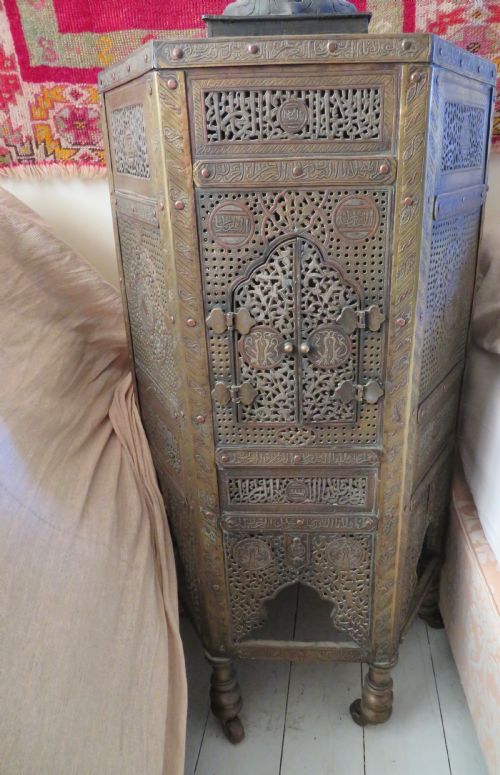
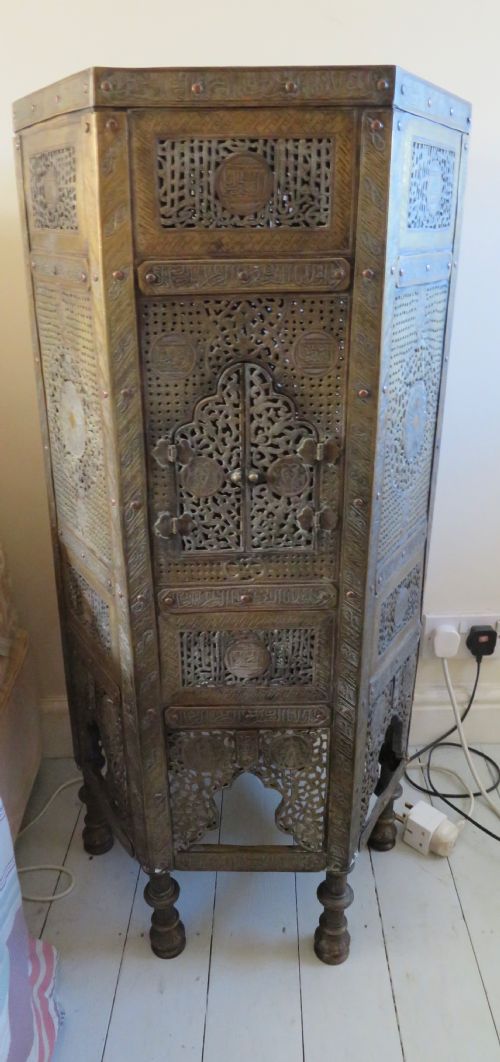
- A term for nineteenth and early twentieth-century metalware produced in Cairo, featuring brass inlaid with silver, copper, and white metal. These objects typically display dense Islamic scrollwork and inscriptions.
- Kursi
- A traditional low round or polygonal table or stand, often utilised as a Quran stand or coffee table. They are frequently constructed with openwork brass or heavily inlaid wood.
- Tesserae
- Small individual pieces of mother-of-pearl, bone, or wood utilised in mosaic inlay work. Artisans set these fragments into carved recesses to form intricate geometric patterns.
Middle Eastern Side Table: Frequently Asked Questions
How do I fold these tables?
Many octagonal and hexagonal tables utilise an ingenious hinged wooden lattice framework that collapses flat by lifting the top off its base. The interlocking wooden slats pivot on wooden pins or simple hinges.
Care must be taken when dismantling older folding tables to avoid straining the delicate inlay work along the pivot points.
What is cairoware?
Cairoware refers to brass vessels and occasional tables produced in Egypt during the late nineteenth and early twentieth centuries. These pieces feature contrasting metal inlays of copper and white metal.
They represent a revival of traditional Islamic metalworking techniques tailored for the European export market.
Are these tables fragile?
Due to the multitude of small bone and mother-of-pearl inlays, these tables require gentle handling and stable indoor humidity. Changes in temperature can cause the timber substrate to expand and release individual inlay pieces.
Routine dusting with a soft cloth keeps the intricate surfaces clean without moisture damaging the adhesives.
How do I date these tables?
Dating relies on material combinations, construction methods, and stylistic cues such as Mamluk Revival motifs or specific colonial influences. Pieces from the late nineteenth century often display denser hand-carved woodwork and heavier brass gauges.
Twentieth-century examples occasionally show standardised hinge mechanisms and machine-sawn timber elements.