


Ornate Wooden Accent Chairs
These ornate wooden accent chairs bring heavy hand-carved detail, gilt finishes and regional character directly into a room.
Ornate Wooden Accent Chairs
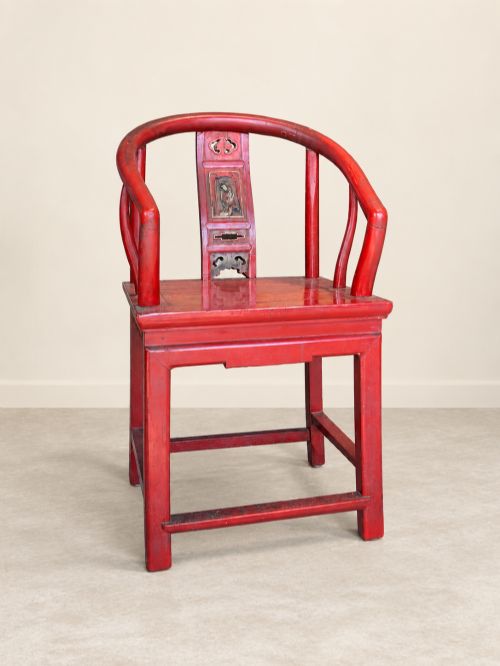
Ornate wooden accent chairs span the nineteenth century up to the early twentieth century, taking the form of armchairs, side chairs, hall chairs, and salon chairs. They emerge in various regional styles, including Italian Renaissance Revival, Anglo-Indian, Baroque Revival, and Chinese Export.
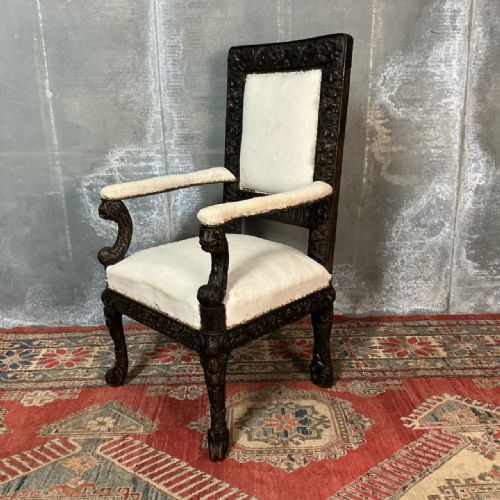
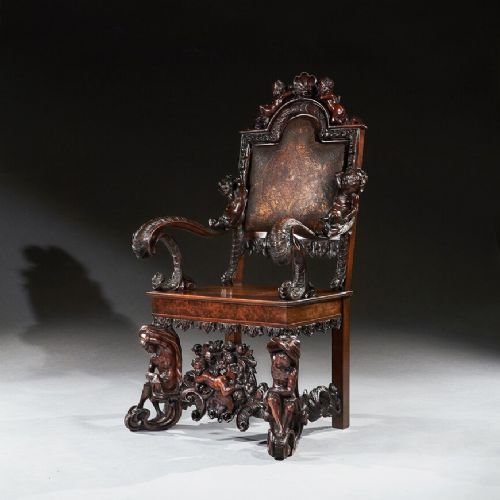
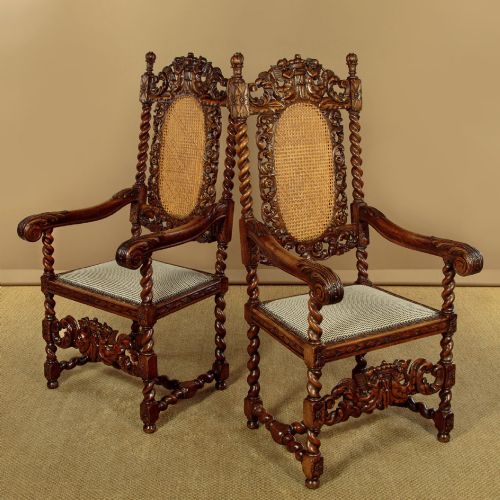
The version most commonly met on this page is the nineteenth-century walnut armchair, heavily carved with deep relief work and often paired. Alongside these, buyers encounter side chairs and hall chairs fashioned from oak, mahogany, and exotic hardwoods.
Makers and origins stretch across Europe and beyond, encompassing French revival pieces made in Paris, Swiss marquetry designs, Moroccan painted frames, and Burmese peacock armchairs. Each type functions primarily as a decorative seating statement rather than everyday utility.
Materials and technique
Solid timbers form the primary structure, with walnut, oak, mahogany, rosewood, and diverse oriental hardwoods selected for their density and carving capacity. Artisans shape these woods using hand tools, executing deep relief carving, pierced fretwork, and applied mouldings.
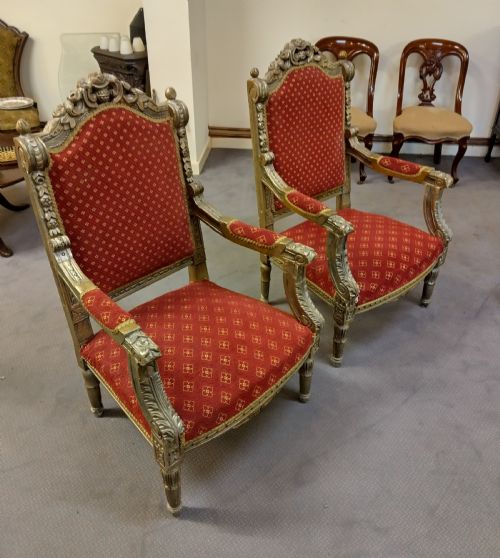
Surface enhancement often involves giltwood finishes, bone inlay, or marquetry panels set flush into the timber. Upholstered variants incorporate traditional textiles, velvet, leather, and fabric secured over supportive interior padding.
What separates the grades
Depth and crispness of the hand carving dictate the primary visual tier, where sharp undercut foliage and figural details outclass shallow, mechanical shaping. The choice and density of timber matter equally, with exhibition-grade walnut or figured hardwoods showing superior grain selection.
Execution and provenance elevate individual pieces, visible in signed Parisian workshop origins or complex bone and marquetry inlay work. Structural integrity in the joints and the preservation of original gilt or painted surfaces complete the upper echelon.
The Ornate Wooden Accent Chairs Glossary
- Giltwood
- Wood that has been coated with gold leaf or a gold-colored finish. This technique highlights carved details on frames and armchairs.
- Marquetry
- The art of applying pieces of veneer to a structure to form decorative patterns. Swiss and continental makers often utilised this on chair backs and seats.
- Sgabello
- A light wooden chair featuring a backrest and two flat board legs instead of traditional legs. Originating in the Italian Renaissance, these pieces served primarily as hall seats.
- Savonarola
- A folding chair constructed from multiple intersecting wooden curves. Named after the sixteenth-century friar, these chairs display intricate openwork frames.
Ornate Wooden Accent Chairs: Frequently Asked Questions
How do I place an ornate chair?
Position these chairs as standalone decorative pieces in hallways, drawing rooms, or bedrooms where their carved details remain visible. They function best away from heavy daily use to protect delicate frames and historical textiles.
Pair matching armchairs together in a formal seating arrangement or let a single high-backed salon chair stand alone against a neutral wall.
What periods do these chairs cover?
The listings span the nineteenth century, including specific decades from the eighteen-fifties through the eighteen-nineties, alongside Edwardian and nineteen-twenties pieces. Revival styles dominate, drawing inspiration from Italian Renaissance, Baroque, and French design.
Identifying a period relies on observing the combination of timber, carving style, and upholstery methods characteristic of nineteenth-century workshops.
Are these chairs comfortable?
Many of these pieces prioritize visual impact and elaborate carving over ergonomic seating comfort. High backs, rigid wooden seats, and upright postures reflect the formal etiquette of their original eras.
Upholstered armchairs with padded velvet or fabric offer a softer sit, while wooden hall chairs function primarily as decorative entryway seating.
How are different regional styles told apart?
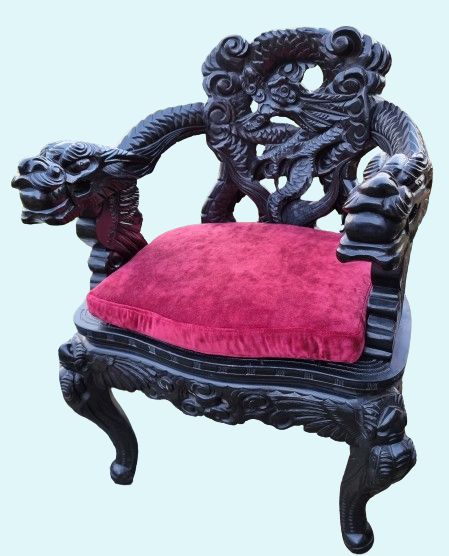
Regional styles reveal themselves through specific carving motifs and timber choices. Anglo-Indian and Burmese pieces display dense peacock or floral fretwork in heavy hardwoods, while Italian pieces often feature deep walnut Baroque revival relief.
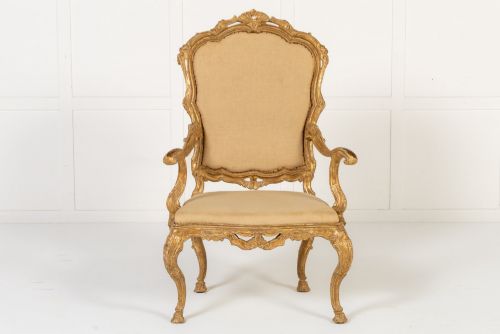
French revival chairs emphasise giltwood and curved cabriole lines, contrasting with the geometric bone inlay found on other continental pieces.