
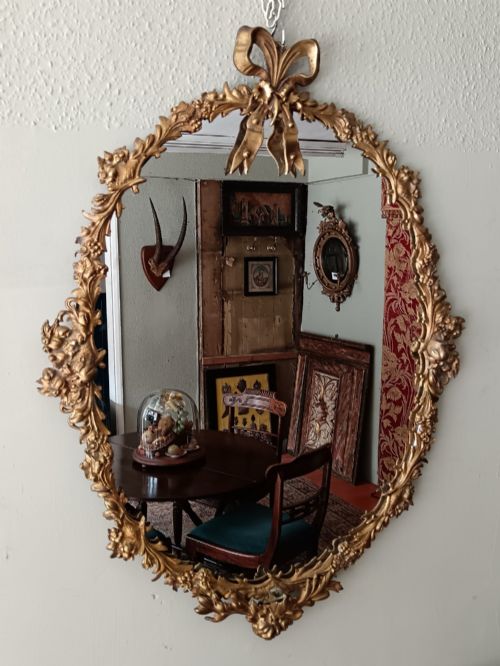
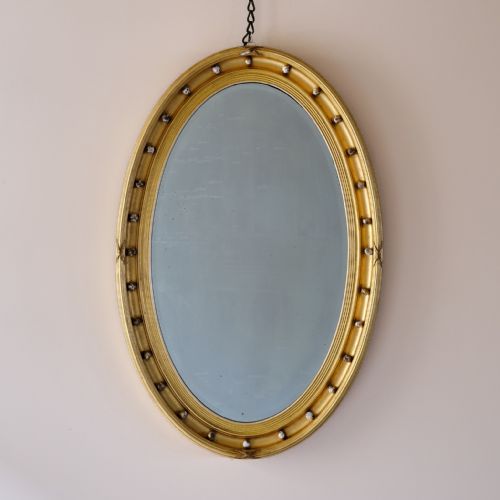
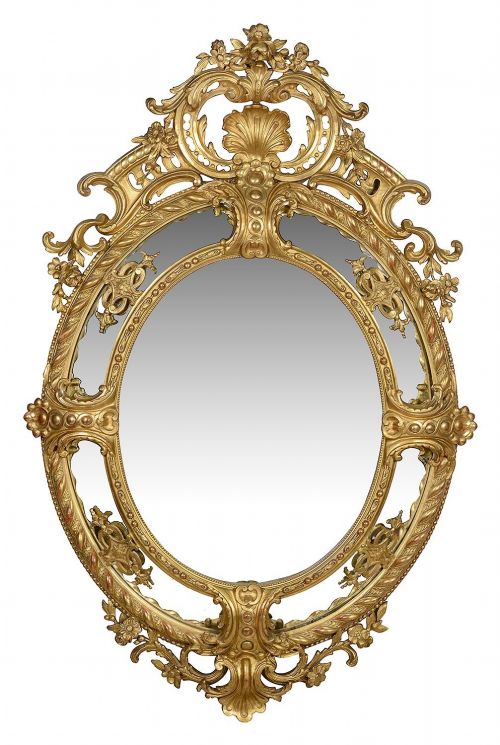

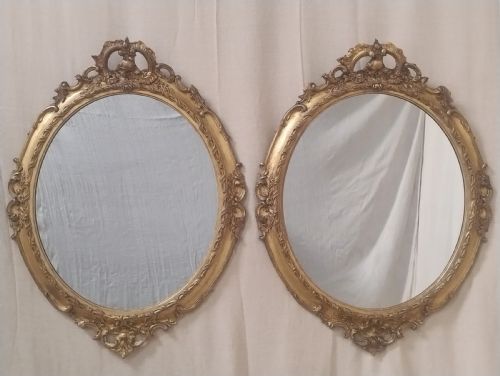


Ornate Oval Mirror Frame
An ornate oval mirror frame brings immediate depth and reflected light to a room, drawing the eye with its carved curves.
Ornate Oval Mirror Frame
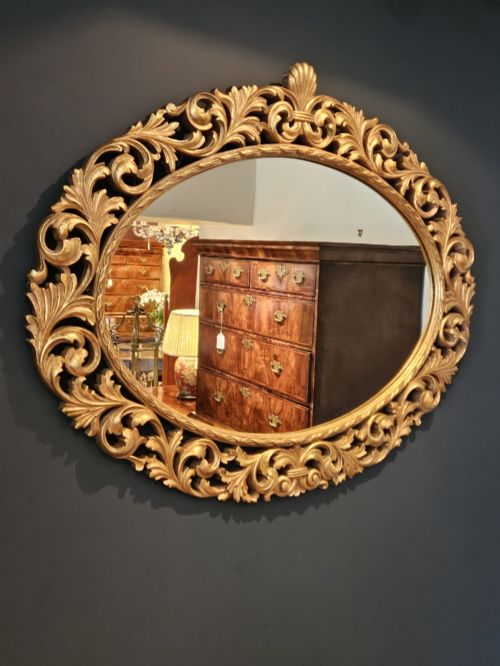
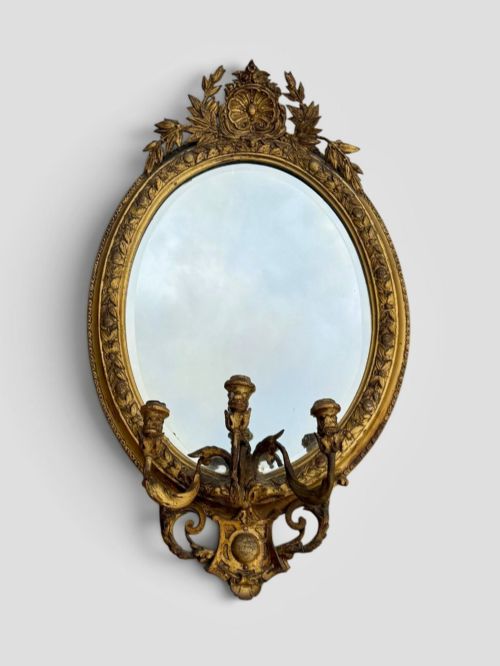
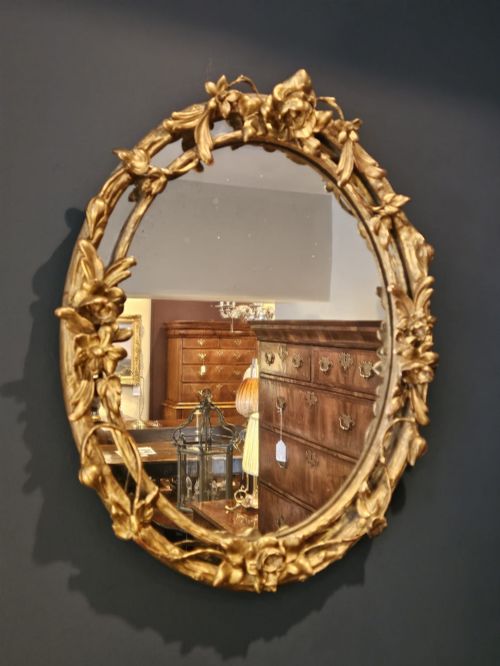
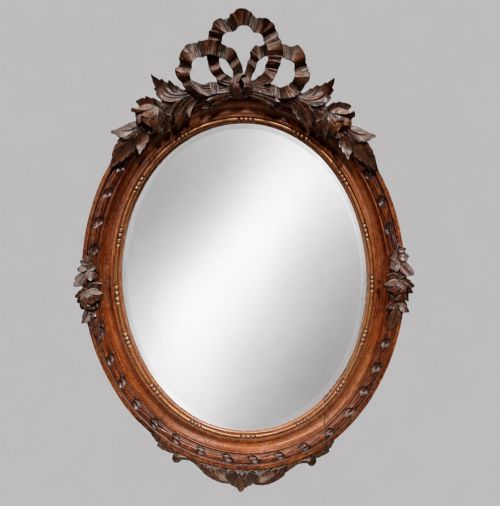
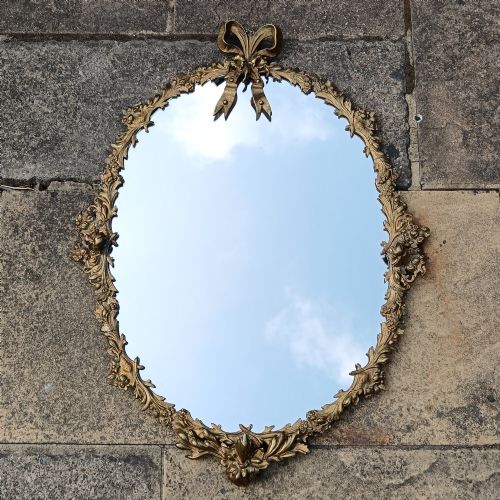
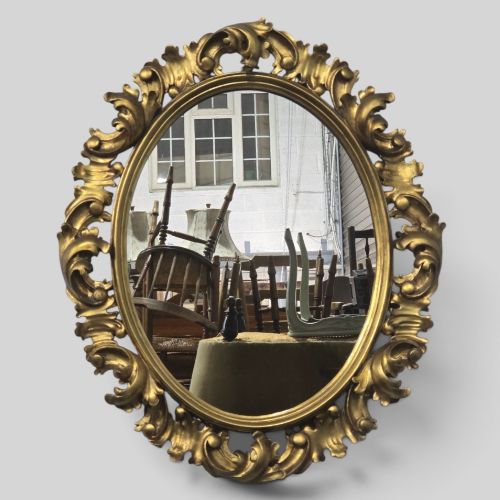
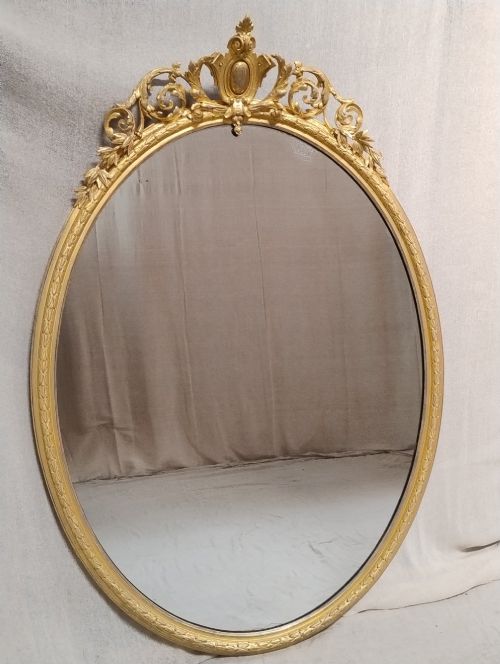
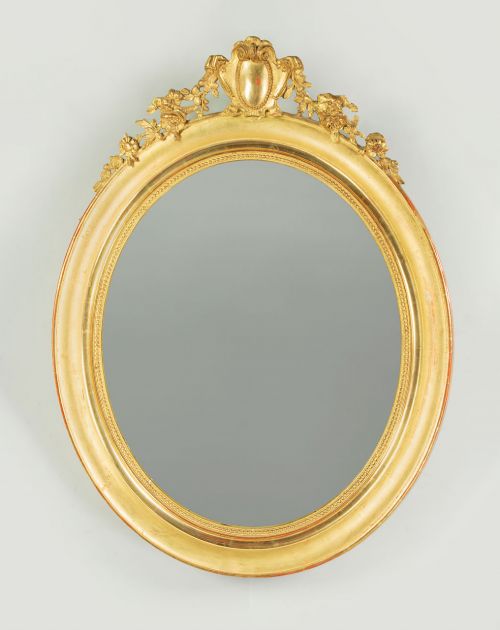
An ornate oval mirror frame encompasses wall mirrors, hall mirrors, and overmantle pieces designed to hang in principal rooms. The selection here leans heavily towards Victorian and nineteenth century examples, alongside French styles and earlier Georgian forms.
Makers and craftsmen shaped these surrounds as decorative focal points for halls and parlours, utilising the soft vertical curve of the oval to balance heavier rectangular furniture below.
How they were made
Carved wood and timber provide the foundational structure for many frames, offering a sturdy base for intricate detailing. Giltwood and gesso layers were then applied, allowing artisans to mould elaborate floral scrolls and leaf motifs before finishing the surface in gold leaf.
Composition material appears frequently alongside traditional carving, used to cast complex ornament quickly on nineteenth century frames.
Materials recorded across the inventory include glass, giltwood, gesso, gold leaf, timber, carved wood, and composition.
What varies in quality
Depth of carving separates standard production frames from finer examples, where every scroll and leaf possesses crisp undercut edges rather than soft, rounded moulding. The quality of the original gilding and the preservation of the underlying gesso layer dictate the visual richness of the surface.
Original mercury plates and early bevelled glass add considerable distinction to a piece, marking out frames that retain their authentic period components.
The Ornate Oval Mirror Frame Glossary
- Gesso
- A plaster mix applied to wood frames to create a smooth surface for gilding. This mixture holds crisp relief detail.
- Giltwood
- Timber coated with gold leaf or metallic powder. It catches candlelight and daylight alike.
- Mercury plate
- Early mirror glass backed with a tin and mercury amalgam. It produces a mottled, dark reflection.
- Girandole
- A decorative mirror fitted with candle branches attached to the frame. These added reflected illumination to dark rooms.
- Cushion mirror
- A frame profile curving outward like a pillow. This style creates a pronounced, convex border around the glass.
Ornate Oval Mirror Frame: Frequently Asked Questions
How do I hang a heavy gilt mirror?
These large frames require secure fixing directly into wall studs or masonry using substantial brackets. The weight of timber and gesso demands robust support.
Professional mirror hangers use french cleats to distribute the load evenly across the structure of the frame.
How do I clean an antique gilt frame?
Dust the carved surfaces gently with a soft dry brush to remove particles without disturbing fragile gesso. Avoid water and modern chemical cleaners entirely.
Moisture strips gold leaf and softens the historical composition ornament beneath the metallic finish.
What is a mercury glass plate?
Mercury plates use a metal backing rather than modern silver nitrate, resulting in a characteristic cloudy appearance. Small dark spots often develop across the surface over time.
This foxing effect proves the age of the glass and remains desirable among collectors.
Are these frames suitable for bathrooms?
High humidity causes gesso to swell and gilt surfaces to flake away from the timber base. Damp environments damage nineteenth century materials rapidly.
Keep these pieces in dry reception rooms, hallways, and bedrooms instead.