

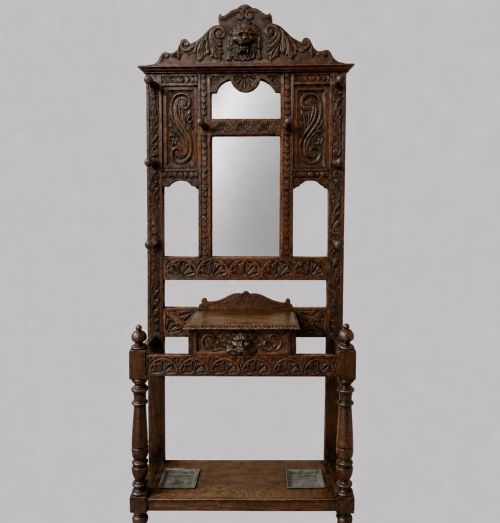


Vintage Carved Hall Mirror
A vintage carved hall mirror brings immediate depth to an entryway, offering both practical reflection and rich historic character.
Vintage Carved Hall Mirror
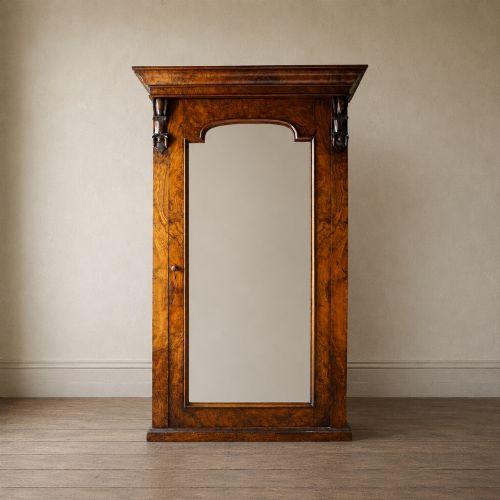
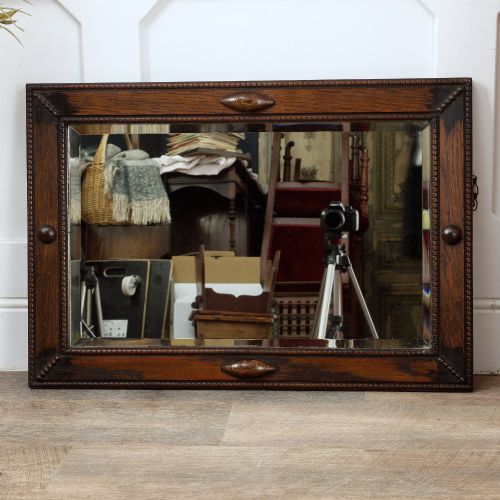
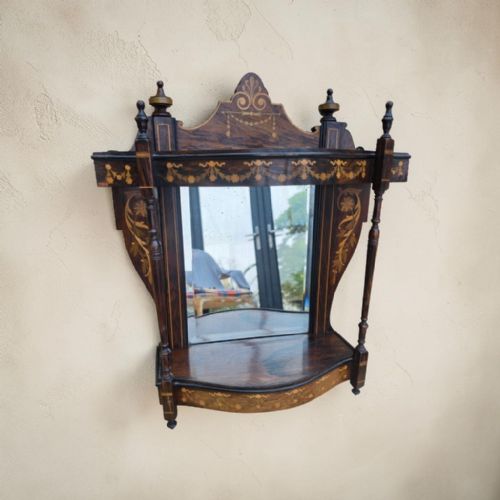
A vintage carved hall mirror is a functional furnishing designed for entryways, reception areas and corridors. These pieces serve to brighten dark spaces while providing a final check before leaving the house.
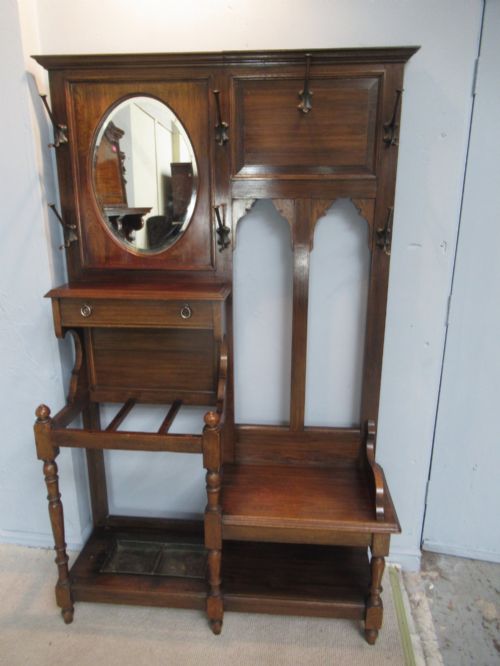
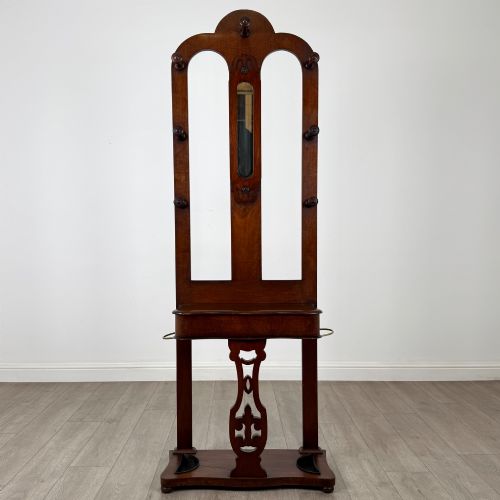
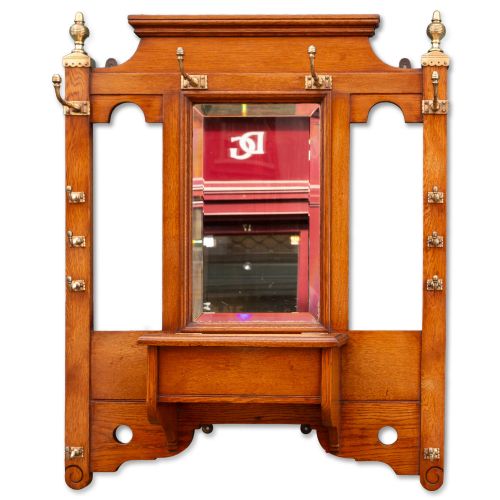
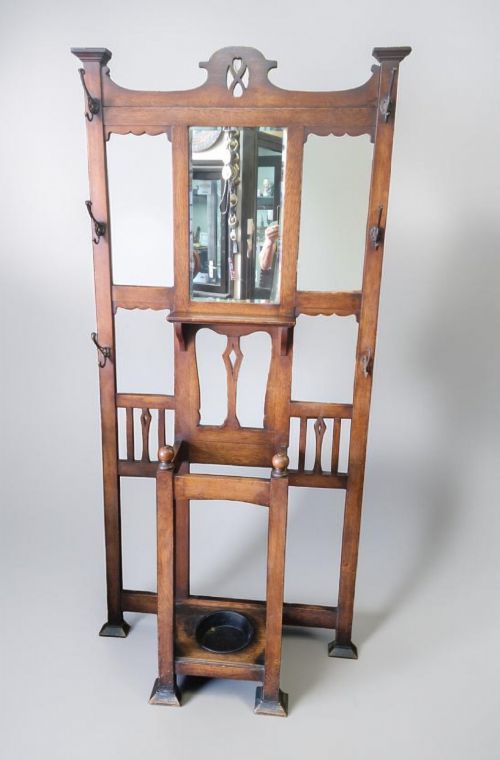
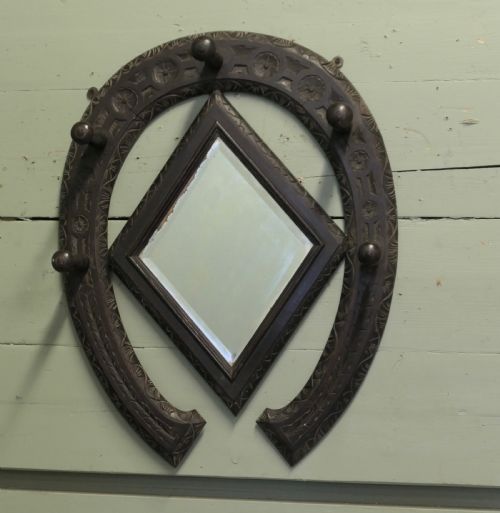
The versions most commonly met on this page span the nineteenth and early twentieth centuries. They appear as standalone wall-hanging frames or integrated into larger hall stands featuring coat hooks and umbrella slots.
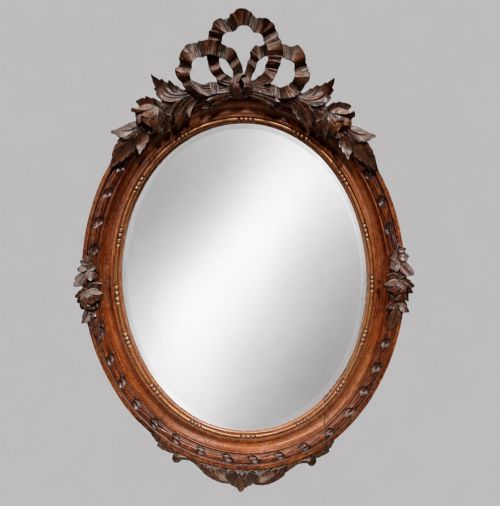
Stiles range from Victorian and Edwardian iterations to French Rococo Revival and Arts and Crafts examples. Timber frames dominate the selection, predominantly fashioned from oak, mahogany and walnut.
Materials and construction
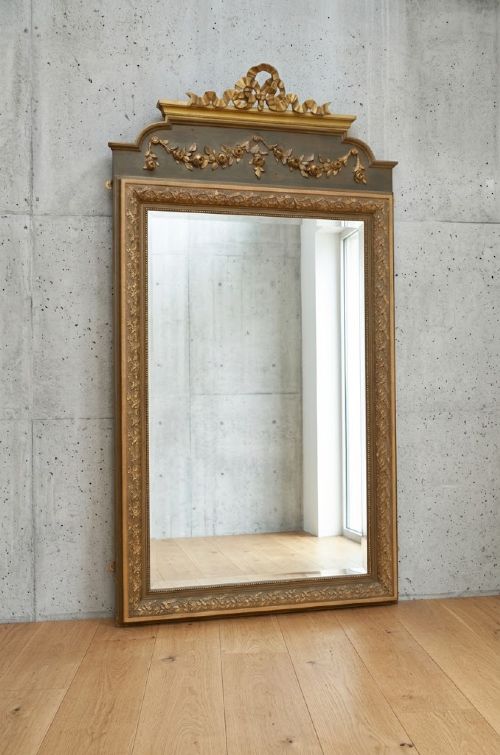
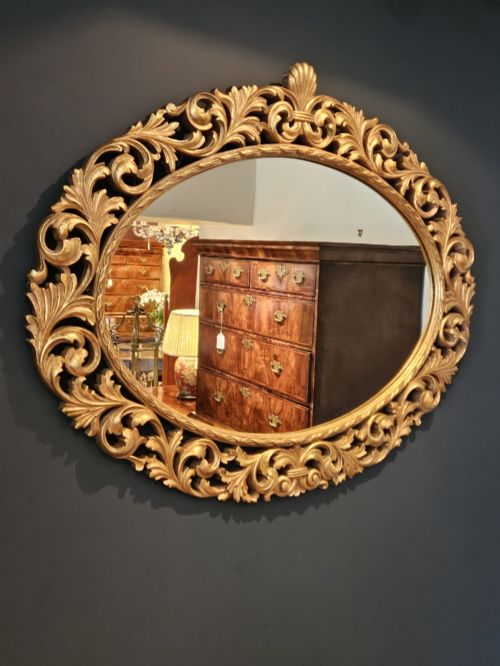
Carpenters utilised solid hardwoods such as oak, mahogany and walnut for structural frames, applying hand-carved ornamentation directly into the timber. Giltwood and gesso found application on more decorative surfaces, particularly within French Revival and Italian pieces.
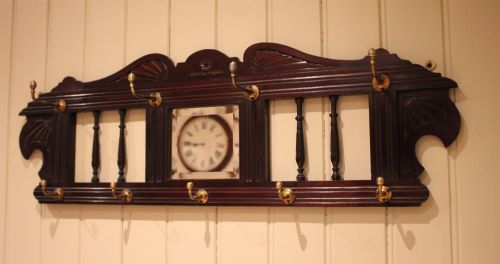
Brass fittings appear frequently as coat hooks, hat pegs and hanging brackets attached securely to wooden backplates. Glass plates sit recessed within the frames, sometimes held by original wooden backing boards.
Listings span periods from the 1880s through the 1920s, dominated by oak and mahogany frames paired with brass hardware.
Evaluating craftsmanship
Depth and precision of the hand-carving separate standard utility items from finer decorative works. Crisp foliage, defined moulding and undercut details indicate skilled workshop production rather than mass output.
Proportion and structural integrity dictate overall worth. Examples that retain original glass, uncompromised joinery and matching brass hardware demonstrate better preservation over time.
The Vintage Carved Hall Mirror Glossary
- Gesso
- Plaster-based material applied to wood substrates and moulded into decorative reliefs before gilding. This mixture provides a smooth base for gold leaf application.
- Fretwork
- Openwork ornamentation carved or pierced from thin boards. This technique creates delicate geometric or scroll patterns on mirror frames.
- Hall stand
- Combined furniture piece incorporating a mirror, coat hooks, glove box and umbrella stands. These items anchored the Victorian and Edwardian hallway.
- Giltwood
- Timber carved and coated in gold leaf or metallic paint. This finish catches hallway light effectively.
- Pediment
- Decorative architectural structure surmounting the top of a mirror frame. It often displays carved shields, ribbons or floral crests.
Vintage Carved Hall Mirror: Frequently Asked Questions
Where should I hang a hall mirror?
Position the piece opposite a light source to maximise brightness in narrow corridors.
Ensure placement allows comfortable viewing height for visitors entering the home.
How do I identify a Victorian hall mirror?
Look for dense hardwoods like mahogany and walnut alongside heavy, deep relief carvings.
Victorian pieces frequently incorporate functional elements such as hat pegs or umbrella trays.
What is an Edwardian hall mirror?
Edwardian examples tend to utilise lighter oak frames with simpler geometric or Arts and Crafts influences.
These designs often include brass coat hooks and small shelving units for keys and letters.
Can these mirrors support heavy coats?
Frames integrated into sturdy hall stands utilise robust timber bracing secured directly to walls for garment storage.
Wall-hanging mirrors featuring brass hooks suit lighter accessories like scarves and hats rather than heavy winter overcoats.