
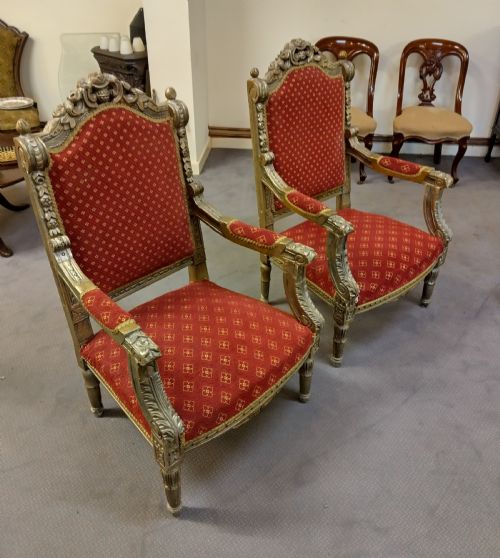
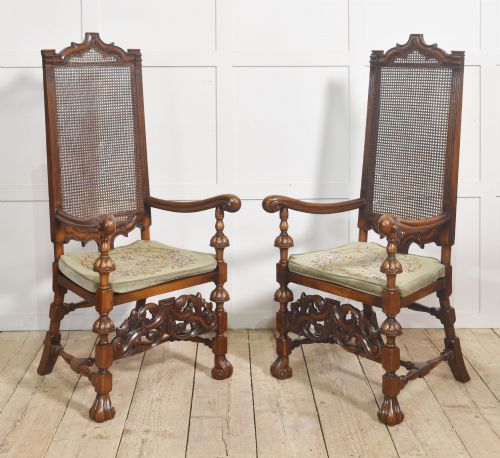


Ornate High Back Armchair
An ornate high back armchair carries heavy historical revival styling and commanding proportions, offering both imposing presence and deep comfort for any grand interior.
Ornate High Back Armchair
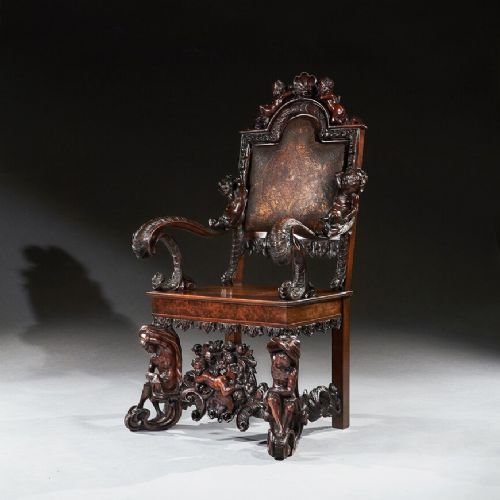
An ornate high back armchair is defined by its commanding stature and elaborate decorative carving, drawing heavily upon historical design vocabulary from past centuries. When searching for this form, collectors encounter diverse revival movements spanning the nineteenth century alongside pieces from around nineteen hundred. These seating choices function as strong focal points within large rooms due to their imposing height and sculptural wooden frames.
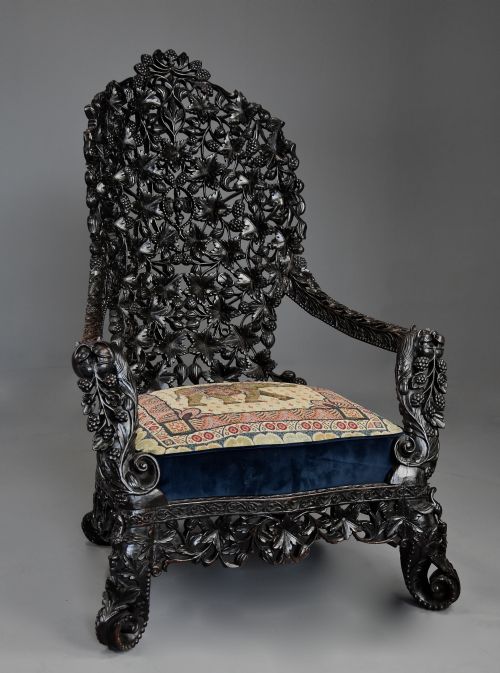
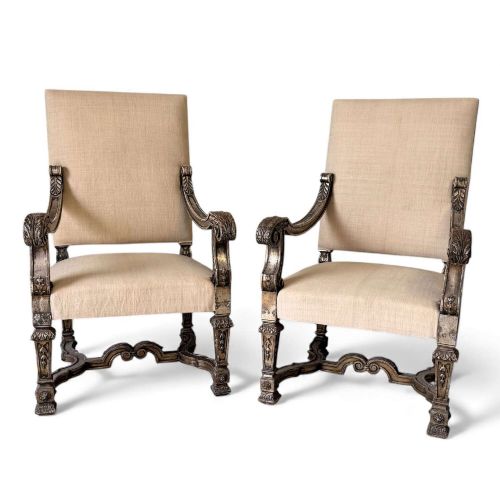
The selections recorded here encompass distinct stylistic revivals including Baroque, Renaissance, Rococo, and Gothic interpretations alongside Anglo-Indian craftsmanship. Walnut, oak, and giltwood form the structural foundation of these tall armchairs, often paired with tactile upholstery such as leather, velvet, tapestry, and silk. Pairs frequently appear alongside singular exhibition-quality showpieces, offering matched seating for formal reception spaces and halls.
How they were made
Makers utilised dense timbers including walnut and oak, carving the substantial frames deeply by hand to achieve high-relief ornamentation such as scrolling foliage and animal figures. Giltwood and gilt finish techniques were applied to timber surfaces to create a metallic sheen, while other pieces showcase bleached oak or dark blackwood finishes. Structural joinery supports the heavy upright proportions required for tall seating designs.
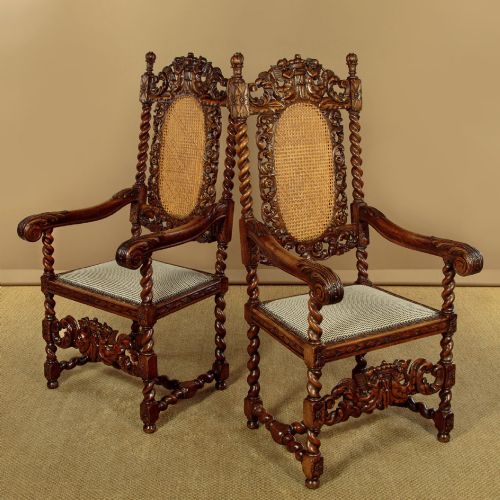
Upholstery methods varied from traditional cane work to sumptuous textiles secured with decorative trims. Silk with parrot designs, patterned tapestry, plush velvet, and textured leather were selected to pad the tall backs and armrests, adding softness against the rigid carved wooden structures.
Listings demonstrate diverse timber selections including walnut, oak, bleached oak, blackwood, and giltwood across nineteenth-century and early twentieth-century periods.
What varies in quality
The depth and crispness of the hand carving dictate the aesthetic tier of an ornate high back armchair. Pieces designated as exhibition quality display intricate, undercut detailing on the wooden frames, whereas standard examples show simpler, shallower surface decoration.
The choice of primary timber and secondary materials also determines distinction within this category. Solid walnut and richly textured giltwood command greater visual weight compared to standard oak frames, while original textiles and intact cane panels elevate the integrity of the seating.
The Ornate High Back Armchair Glossary
- Giltwood
- Timber that has been coated with a thin layer of gold leaf or gilt finish. This decorative treatment provides a bright, reflective surface popular in Baroque revival seating.
- Revival
- A design movement that imitates the aesthetic style of a previous historical era. Common iterations in these tall chairs include Baroque, Renaissance, and Gothic revivals.
- Carolean
- A seventeenth-century English design style characterised by rich walnut framing, scrolling woodwork, and ornate crown motifs. Revival versions of this aesthetic appeared frequently during the Victorian period.
- Throne
- A large, imposing armchair designed with an elevated back and prominent stature to denote authority. These pieces often feature elaborate arm supports and heavy timber construction.
- Cane
- Strips of woven rattan material utilised for seats or back panels. It offers a flexible, breathable surface within rigid wooden chair frames.
Ornate High Back Armchair: Frequently Asked Questions
Where did these tall armchairs originate?
These seating pieces emerge from European and British workshops, alongside Anglo-Indian production centres. Makers drew inspiration from continental design traditions to satisfy nineteenth-century domestic demand for dramatic furniture.
Craftsmen adapted historical Italian, French, and English motifs into substantial wooden frames suited to large Victorian and Edwardian reception rooms.
How do I distinguish between different revival styles?
Revival styles are identified through their specific carved ornamentation and structural silhouettes. Baroque and Rococo pieces display flowing scrolls and gilded finishes, while Gothic examples feature architectural tracery and heraldic motifs.
Examining the depth of the carving and the primary timber assists in separating nineteenth-century interpretations from one another.
What rooms suit an ornate high back armchair?
These large armchairs suit spacious interiors with high ceilings, such as libraries, grand hallways, and formal living rooms. Their commanding height and decorative frames demand sufficient space to prevent them from overwhelming a smaller room.
Pairs function well flanking a fireplace or positioned symmetrically against a panelled wall.
Are these chairs comfortable for daily use?
Comfort levels vary depending on the upholstery and the upright posture dictated by the tall wooden backs. Many examples feature padded velvet, leather, or tapestry inserts designed to offer support during extended seating.
Original historic upholstery may require careful handling or conservation to maintain its integrity during regular use.