
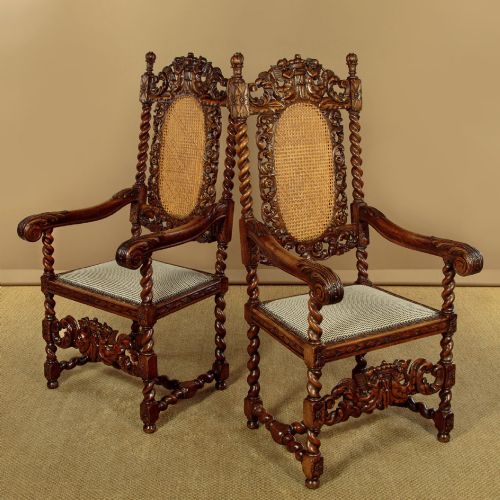
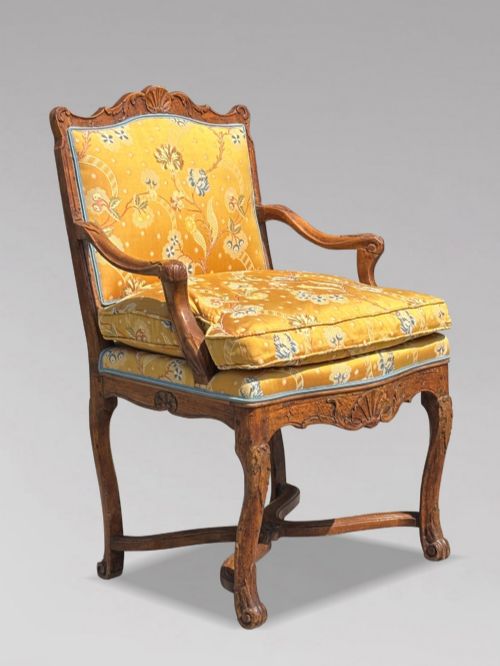
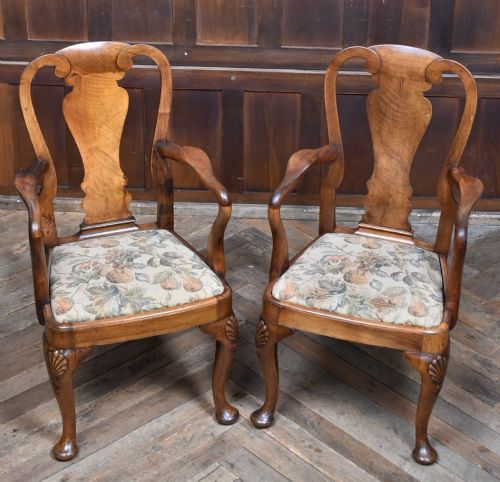
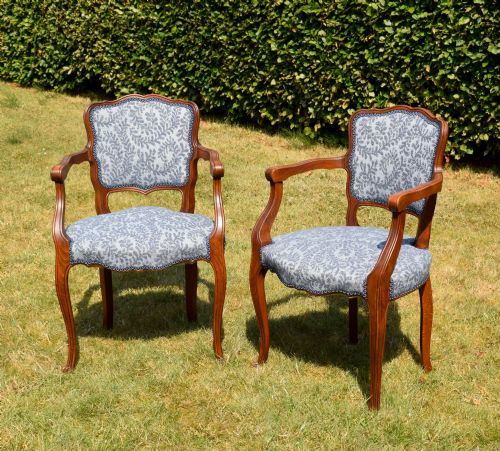
Carved Walnut Open Armchair
When you search for a carved walnut open armchair, you are looking at substantial seating built from dense timber, carrying centuries of ornamental carving.
Carved Walnut Open Armchair
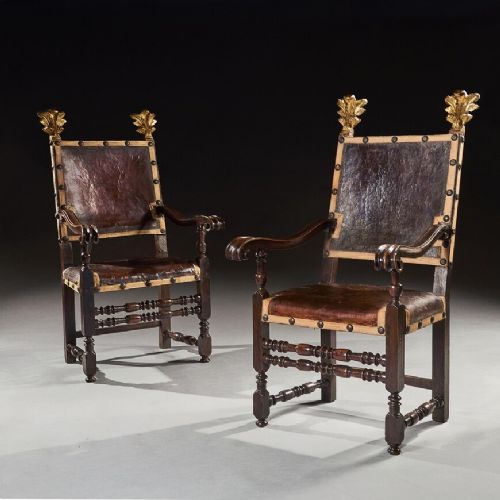
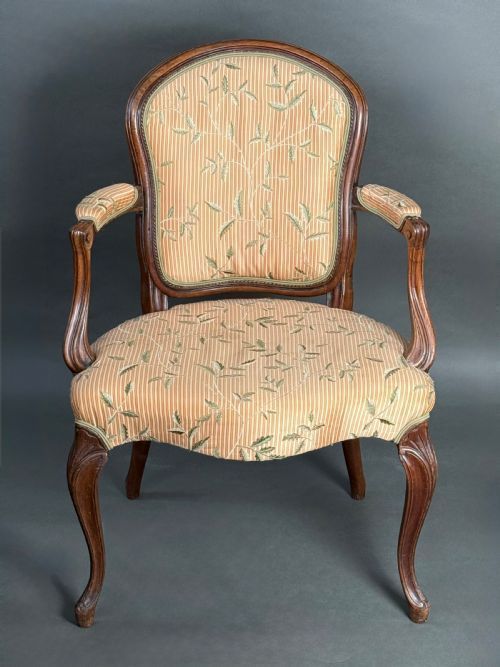
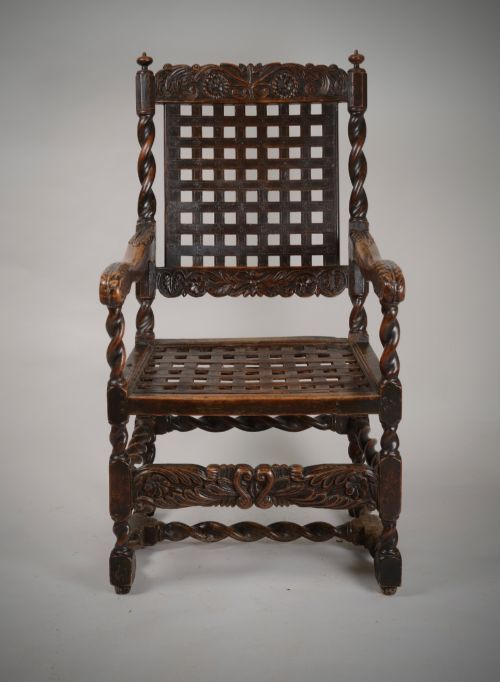
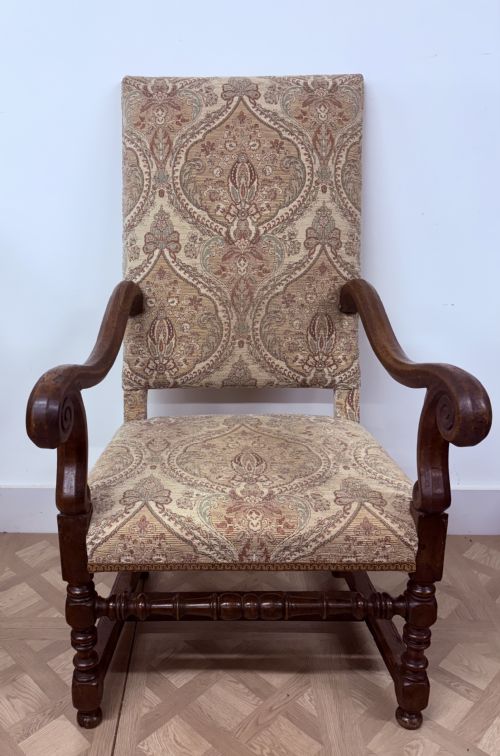
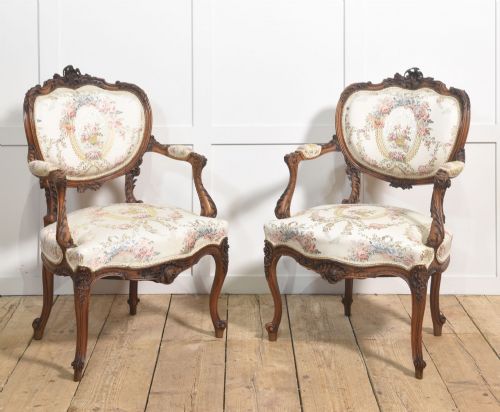
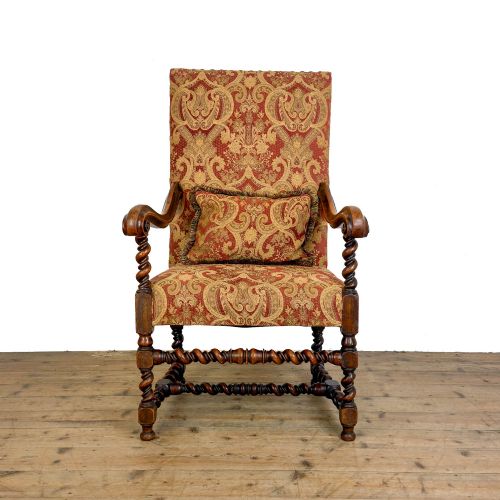
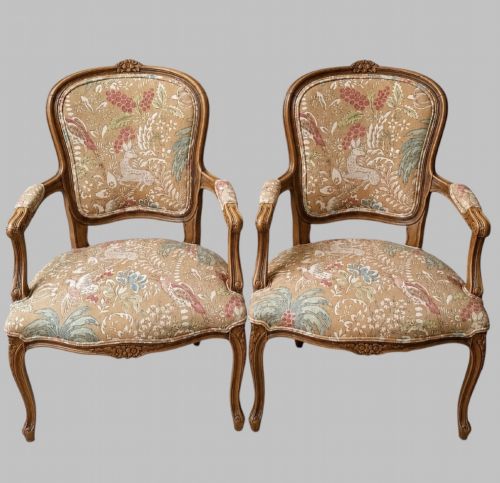
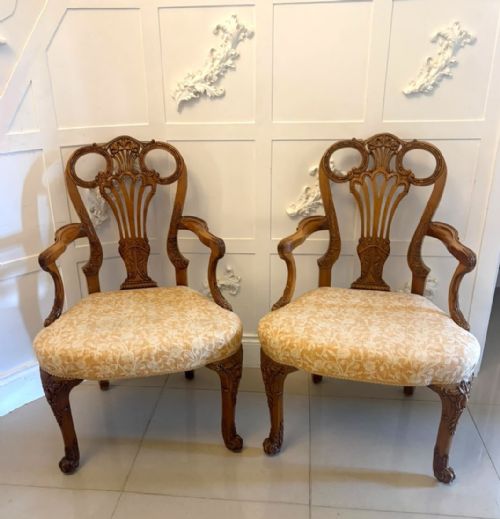
A carved walnut open armchair brings together structural timber frames and open armrests, spanning periods from the seventeenth century through to the twentieth century. These pieces appear in distinct regional styles, ranging from English designs to French Provincial and Italian Baroque iterations.
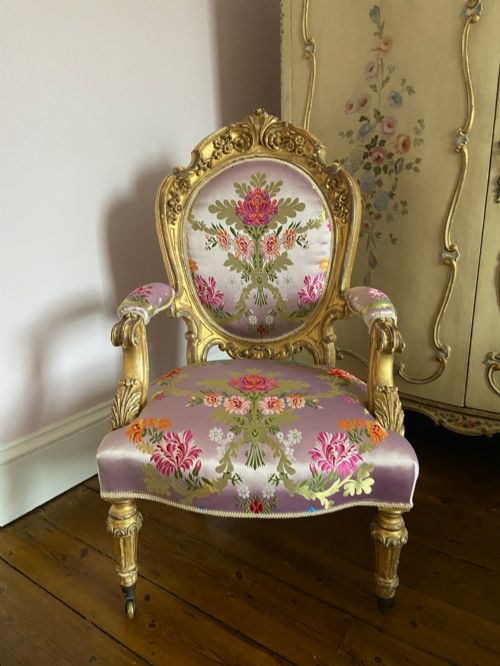
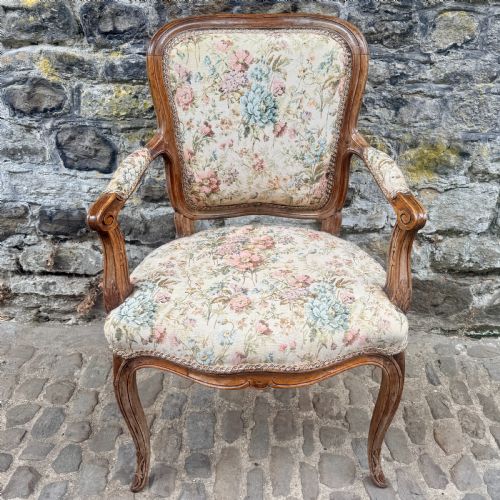
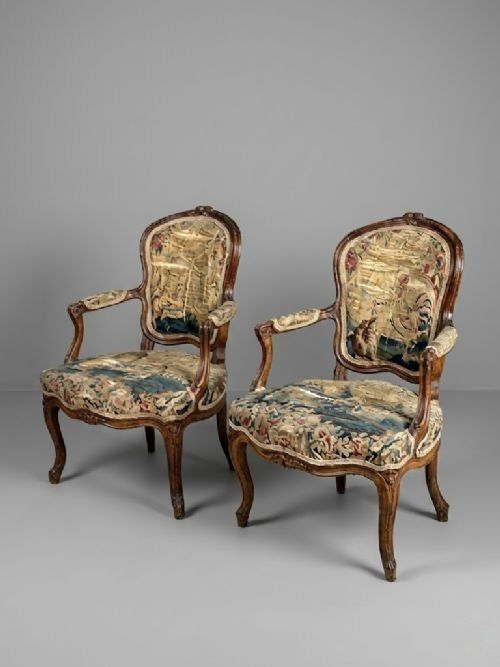
The materials paired with the timber include traditional textiles such as tapestry, needlepoint, silk, and leather upholstery. Many examples survive as pairs, reflecting their original domestic placement in grand salons, libraries, and parlours.
How they were made
The primary material is walnut, selected for its dense grain and capability to hold sharp, deep hand-carving along the frames, arms, and legs. Cabinetmakers utilised mortise and tenon joinery to construct stable wooden skeletons before applying decorative parcel-gilt highlights or polished finishes.
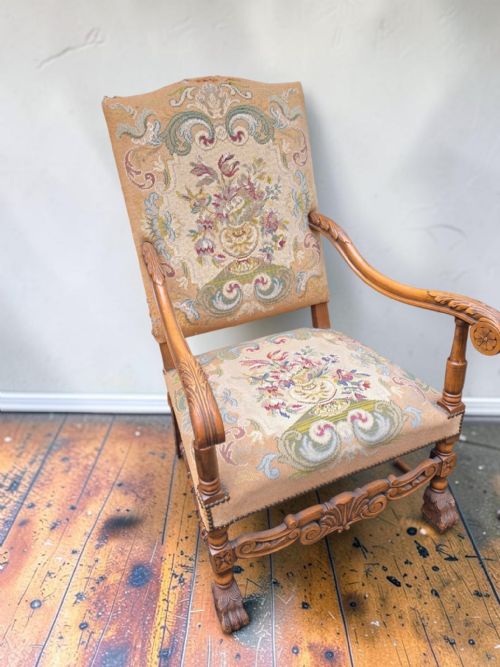
Upholstered elements rely on traditional stuffing techniques secured beneath layers of textile, velvet, or leather, often fastened with brass tacks. Needlepoint and tapestry panels were worked separately by hand before being integrated into the seat backs and pads.
Listings feature walnut armchairs spanning four distinct centuries alongside Victorian and Edwardian revival interpretations.
What varies in quality
The depth and crispness of the carved ornamentation separate standard examples from finer commissions, as skilled carvers achieved greater dimensionality in foliage and scrollwork. The choice of secondary timbers and the integrity of the original frame construction dictate structural longevity.
The grade of the covering material, whether period needlepoint, silk, or patinated leather, influences the overall character and historical completeness of the armchair.
Hindley & Sons·Colefax and Fowler
The Carved Walnut Open Armchair Glossary
- Parcel-gilt
- Partially gilded with gold leaf or powder over portions of the wooden surface. This technique highlights specific carved details against the dark walnut ground.
- Needlepoint
- Embroidery stitched onto a stiff open-weave canvas ground to form pictorial or geometric patterns. It frequently covers the seats and backs of period chairs.
- Baroque
- A theatrical European design style characterised by robust proportions, dynamic curves, and rich ornamentation. It appears across seventeenth and nineteenth-century revivals.
Carved Walnut Open Armchair: Frequently Asked Questions
What is a carved walnut open armchair?
A carved walnut open armchair is a wooden seat featuring exposed structural arms and decorative carved details executed in walnut timber. These pieces range from seventeenth-century English and Italian examples to nineteenth-century revival styles.
They combine functional seating with elaborate craftsmanship, often incorporating upholstered panels in leather or tapestry.
How were these armchairs used originally?
These armchairs served as prominent seating in reception rooms, libraries, and parlours of substantial homes. Their open arms accommodated voluminous historical dress fashions while providing social status within the room.
They were positioned around social groupings or used individually as library and desk chairs.
How do I live with one?
Living with a period armchair involves placing it out of direct sunlight to protect delicate textiles, leather, and walnut surfaces. Regular dusting with a dry cloth helps maintain the polished timber finish.
Positioning the chair away from direct heat sources prevents the wood and historical joinery from drying out.
How do I tell periods apart?
Periods are distinguished through structural silhouettes, carving styles, and joinery methods. Seventeenth-century pieces display rigid frames and heavy bar elements, whereas eighteenth-century versions adopt fluid Rococo curves.
Nineteenth-century revival pieces often synthesise earlier Baroque or Louis formats with heavier machine-assisted construction details.