
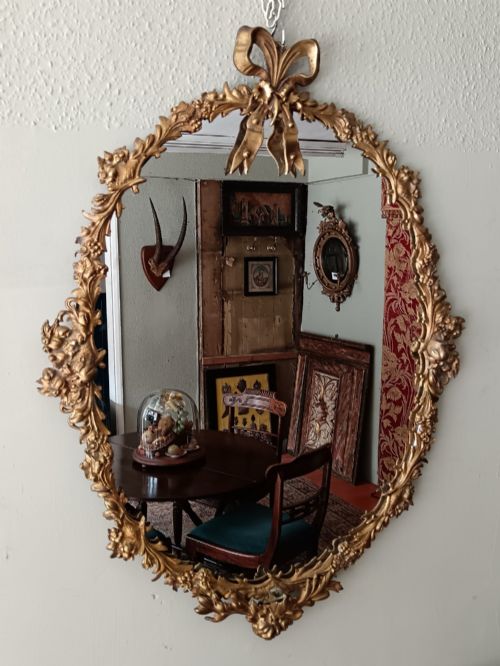


Ornate Gold Hall Mirror
An ornate gold hall mirror brings instant light and presence to an entrance, spanning Victorian, Rococo Revival, and Neoclassical styles.
Ornate Gold Hall Mirror
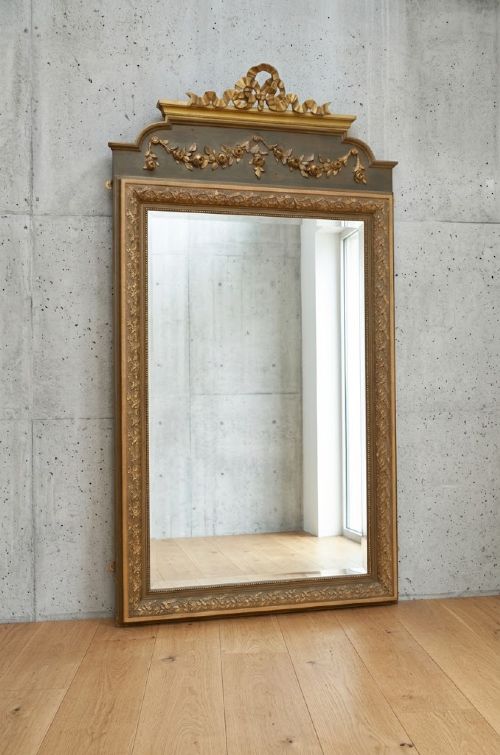
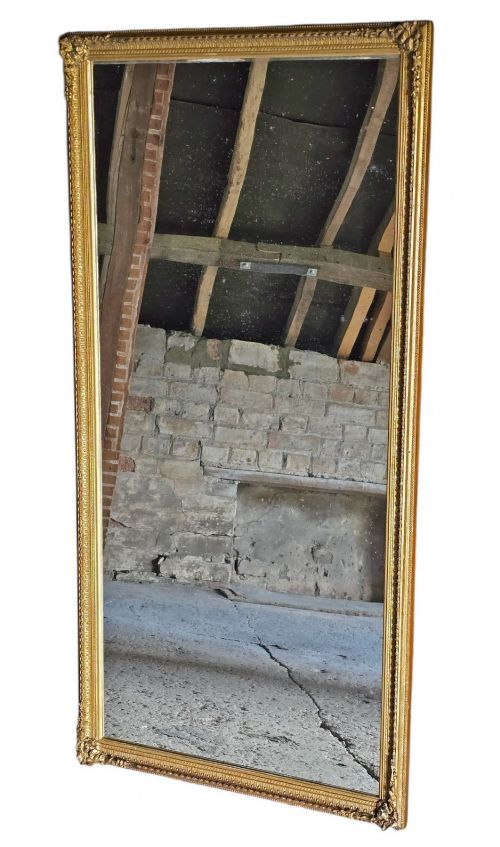
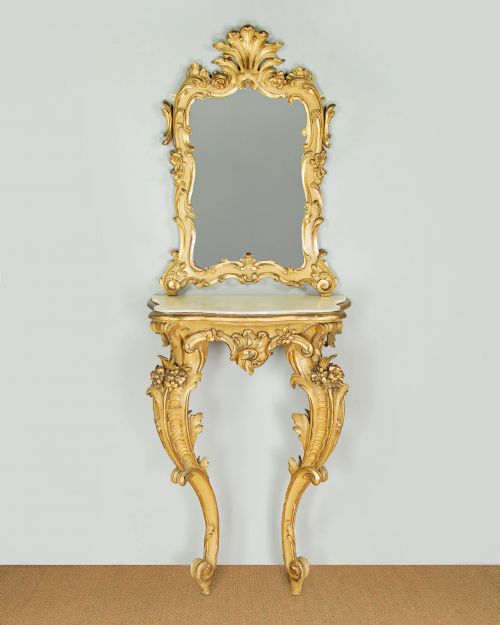
When you search for an ornate gold hall mirror, you encounter pieces designed to anchor an entrance hall, often appearing as tall wall mirrors, pier glasses, or dressing mirrors. Many examples arrive paired with marble-topped console tables, creating a unified ensemble for a hallway.
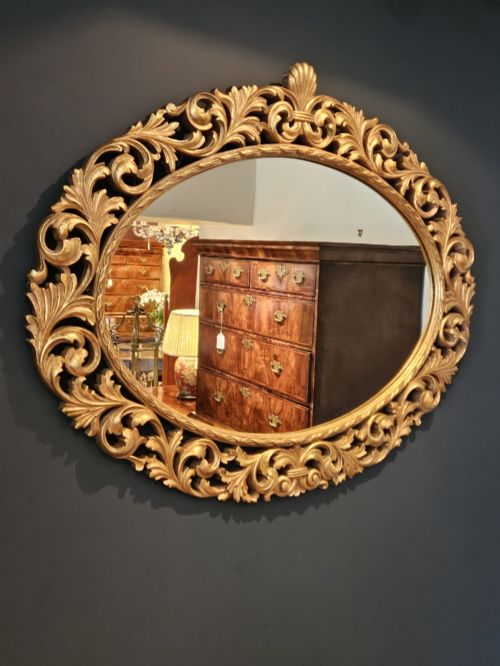
The dominant aesthetic draws heavily from 19th-century French and Victorian tastes, including Rococo Revival, Baroque Revival, and Neoclassical styles. These objects utilise elaborate crests, ribbon motifs, and deep moulding to catch the eye immediately upon entering a room.
The selections span from the mid-nineteenth century through to the early twentieth century, encompassing both substantial overmantel formats and slender vertical designs suited for narrow spaces.
Materials and Construction
The construction relies heavily on carved timber, wood, and gesso frameworks that support intricate surface ornamentation. Artisans applied gold leaf or gilt finishes over these prepared wooden bases to achieve a brilliant metallic sheen.
Mirrors incorporate heavy glass plates, frequently paired with white or veined marble tops on accompanying console tables. Parcel gilt techniques combine exposed wood tones with highlighted gold sections to accentuate carved depth.
Listings feature periods spanning from the mid-nineteenth century through the early twentieth century, predominantly showcasing Victorian, Rococo Revival, and Neoclassical aesthetics.
Judging Quality and Craftsmanship
The distinction between tiers of quality rests on the depth and crispness of the carving. Hand-carved timber and refined gesso work display sharp relief and fluid curves, whereas lesser examples rely entirely on heavy, uniform composition pressings that lack fine definition.
The handling of the gilding further separates standard items from exceptional ones. Application of genuine gold leaf yields a warm, enduring lustre, while simpler metallic paints or later touch-ups tend to flatten the visual texture of the ornament.
Integration between the mirror frame and auxiliary pieces, such as matched console tables, demonstrates superior workshop design. Unified proportions and consistent patination across both table and glass frame indicate a high-grade commission.
The Ornate Gold Hall Mirror Glossary
- Giltwood
- Timber that has been coated with gold leaf or a gold-coloured substance. This finish provides the bright reflective exterior seen on period frames.
- Gesso
- A plaster-like mixture applied to wood surfaces and carved before gilding. It allows for the creation of intricate three-dimensional decorative relief.
- Pier glass
- A tall, narrow mirror designed to hang on the wall space between windows or in a hallway. These pieces maximise ambient light in narrow architectural zones.
- Repoussé
- A metalworking technique where the metal is hammered into relief from the reverse side. This method creates textured ornamentation on brass mirror frames.
- Overmantel mirror
- A large mirror originally built to hang above a fireplace mantel. Many examples translate effectively into grand entrance hall settings.
- Parcel gilt
- A decorative treatment where only specific parts of an object are gilded. This technique highlights particular carved details against a contrasting wood base.
Ornate Gold Hall Mirror: Frequently Asked Questions
How do I style an ornate gold hall mirror?
Position the mirror centrally on a main wall in your entrance hall to bounce light through the doorway. Pairing it with a slim console table underneath creates a balanced and functional focal point.
Allow the gilded frame to contrast against neutral or deeply coloured walls to emphasise the carved details. Keep surrounding decor minimal so the piece remains the primary visual anchor.
Were these mirrors made for hallways?
Period makers designed these large mirrors for various formal interior spaces, including reception rooms, parlours, and overmantels, alongside narrow pier spaces. Their tall proportions and reflective qualities naturally suited entrance areas where guests were first received.
Over time, many of these grand wall mirrors and console combinations found permanent homes in hallways due to their narrow depth and dramatic impact.
What is the difference between gesso and carved wood?
Carved wood involves shaping the actual timber frame by hand with chisels and gouges. This method produces crisp, individual details inherent to the natural grain.
Gesso acts as a smooth surface layer applied over the wood to hold intricate moulded ornaments made from composition material. Many 19th-century frames combine a solid wooden core with applied gesso decoration.
How do I identify a 19th-century gilt mirror?
Examine the construction of the wooden backboards, the type of joinery used, and the composition of the glass plate. Nineteenth-century frames often exhibit hand-beveled glass, oxidised backing pins, and traditional gesso cracking patterns.
Stylistic markers such as Rococo Revival curves or Neoclassical symmetry point directly to Victorian and Belle Époque manufacturing periods.