
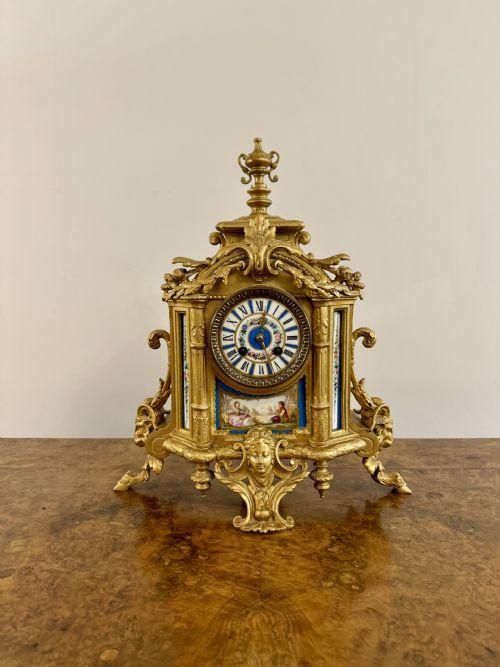


Ornate Gilt Shelf Clock
An ornate gilt shelf clock brings nineteenth-century French and Victorian grandeur into a room, combining heavy metalwork with striking movements.
Ornate Gilt Shelf Clock
An ornate gilt shelf clock is typically a mantel or bracket timepiece produced during the nineteenth century, spanning Victorian and revival periods. These decorative pieces sit on domestic surfaces, measuring time while serving as prominent decorative objects in a room.
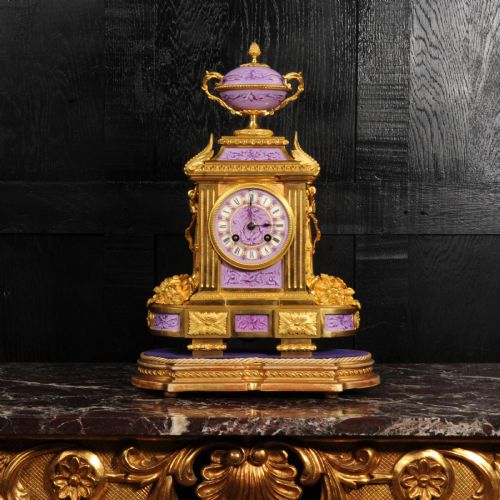
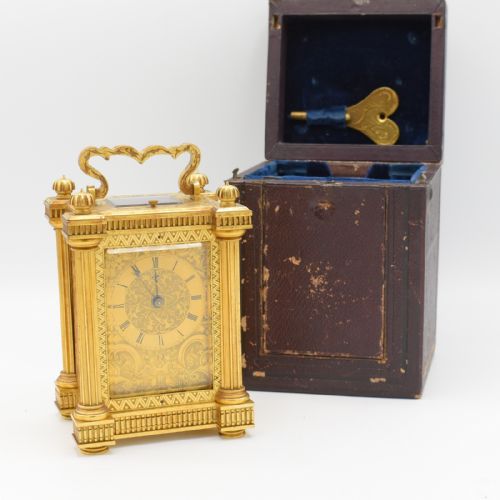
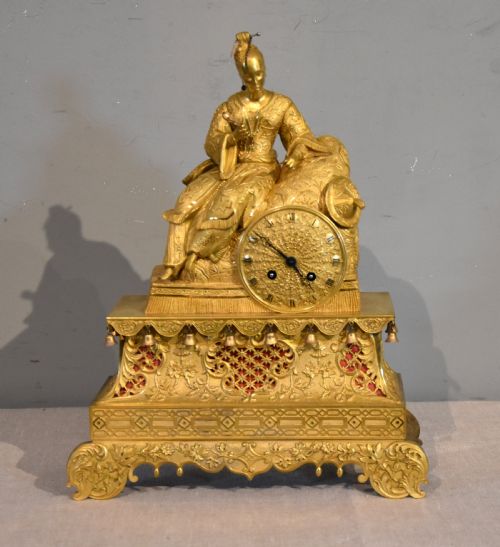
Most examples found here originate from French workshops or English makers, often displaying elaborate architectural or figural designs. The selection leans heavily toward mantel clocks housed in brass, ormolu, or gilt metal.
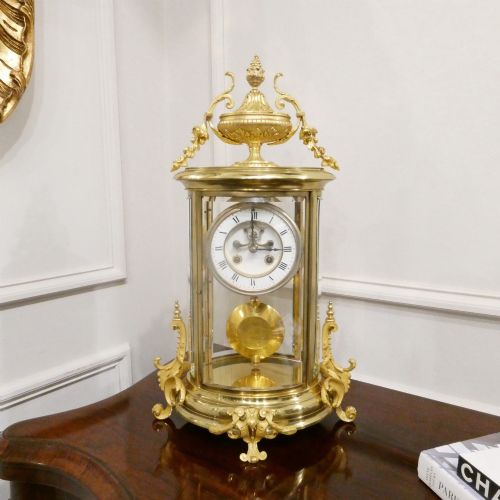
Forms range from glass-sided crystal regulators to architectural marble cases and sculptural pieces featuring cherubs or classical figures. The overarching aesthetic draws from French Rococo, Louis XVI, and Victorian classical revival styles.
Distinctions in quality and finish
The standard of a clock rests on the crispness of the bronze or brass casting and the depth of the gilding. Finer pieces exhibit hand-chased surface details rather than smooth, machine-moulded finishes.
The integration of materials dictates distinction, particularly where hand-painted porcelain panels or champlevé enamel work align precisely with the metal mountings. The reputation of the maker, such as recorded French horologists, further elevates the stature of the piece.
Achille Brocot·Samuel Marti·Howell & James London
The Ornate Gilt Shelf Clock Glossary
- Ormolu
- Finely ground high-carat gold applied to a bronze base using a mercury amalgamation technique. This historic method creates a durable, warm metallic finish common on French revival pieces.
- Champlevé
- An enamelling technique where troughs are dug into a metal surface and filled with vitreous paste before firing. The resulting coloured glass designs sit flush with the surrounding brass.
- Crystal regulator
- A mantel clock featuring glass panels on all four sides to expose the mechanical movement within. These brass-framed cases often incorporate mercury pendulums.
- Repeater
- A clock mechanism that chimes the hours and quarters upon the pull of a cord or push of a button. This complex addition allowed owners to check the time in darkness.
Ornate Gilt Shelf Clock: Frequently Asked Questions
How do I wind an antique mantel clock?
Use the appropriate key on the winding arbors found on the enamel dial face, turning gently until resistance is felt.
Avoid over-winding the mainspring to prevent damage to the internal mechanical movement.
Where should I place a heavy gilt clock?
Position the piece on a stable, level surface such as a mantelpiece, sideboard, or sturdy bracket shelf. A secure foundation ensures the pendulum swings evenly and keeps accurate time.
Keep the clock away from direct sunlight and damp environments to protect the gilt finish and enamel dial.
What is an eight day striking movement?
An eight day movement requires winding approximately once a week to maintain continuous operation. The striking function sounds the hours and half-hours on a bell or gong.
These mechanical systems rely on coiled mainsprings rather than hanging weights.
How do I distinguish French and English clocks?
French pieces of this era frequently utilise ormolu, champlevé enamel, and elaborate Rococo or Louis XVI revival styling. Makers often stamped their mechanical backplates with identifying medallions.
English examples lean toward classical proportions, sometimes incorporating signed dials and London workshop signatures.