




Ornate Gilt Mantel Clock
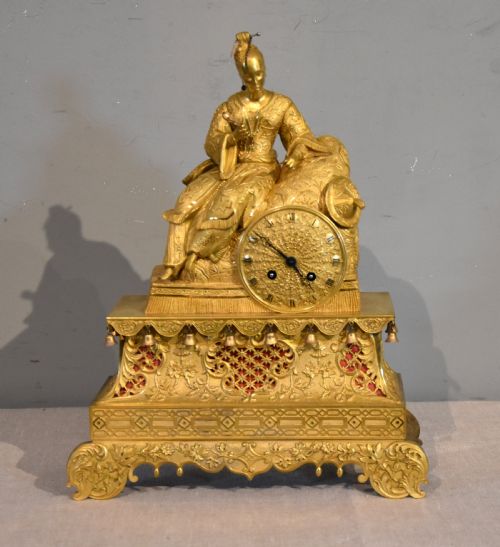
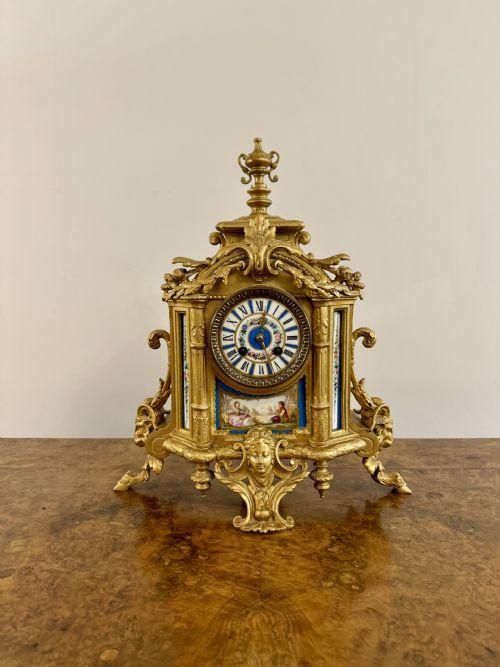
An ornate gilt mantel clock brings nineteenth-century French and English presence to a room, combining heavy metal cases with visible mechanical movement.
Ornate Gilt Mantel Clock
An ornate gilt mantel clock typically takes the form of a heavily decorated timekeeper designed to sit on a fireplace ledge or shelf. When searching this phrase, buyers encounter nineteenth-century objects originating chiefly from French workshops and English makers.
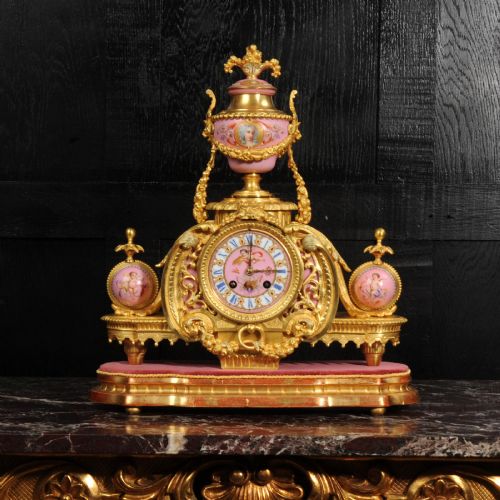
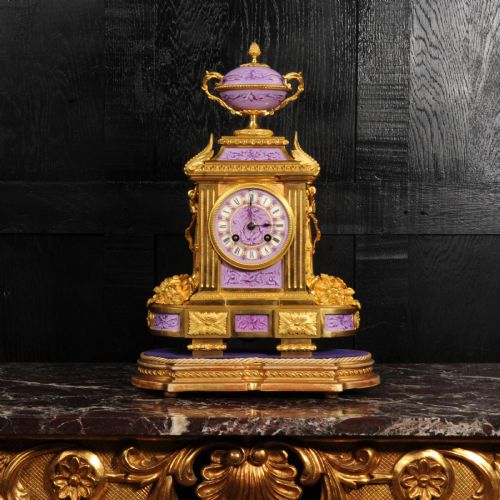
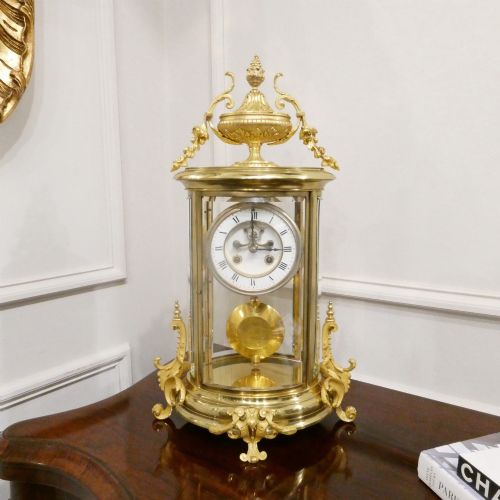
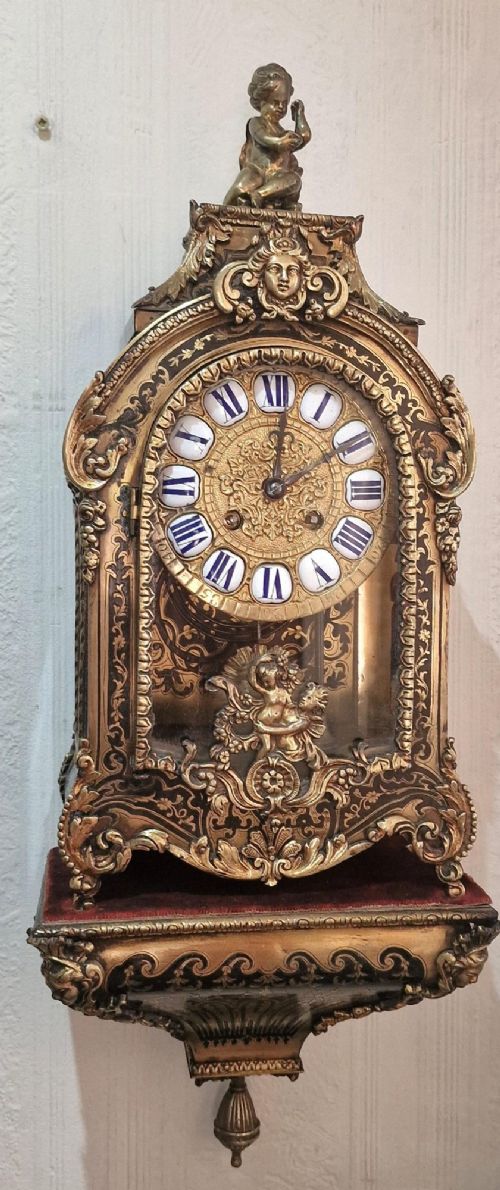
The most common versions on this page are French examples executed in the Rococo Revival or Louis styles, often incorporating porcelain panels or glass sides. These pieces range from substantial portico and bracket clocks down to smaller carriage and desk timepieces.
How they were made
Makers constructed the structural cases using cast brass, bronze, and ormolu, applying fire-gilding or electroplating to achieve the characteristic metallic sheen. Heavier architectural examples integrate slabs of red or dark marble alongside glass panels that expose the internal gears.
Many dials combine painted enamel numerals with intricately pierced metal hands, whilst porcelain dial surrounds and figural mounts add decorative complexity. Clockmakers housed eight-day striking mechanisms and fusee movements inside these housings, occasionally incorporating grand sonnerie complications.
Several pieces conceal intricate striking mechanisms behind heavy gilt bronze cherubs and tortoiseshell panels.
What varies in quality
The standard of an ornate gilt mantel clock depends heavily on the crispness of the bronze or brass casting and the depth of the gilding. Finer pieces display sharply chiselled foliage, well-defined figures, and heavy metal gauges rather than thin pressed sheet.
Movement quality separates workshop standards, with signed mechanical assemblies by recognised makers holding greater merit than unmarked variants. The integration of hand-painted Sèvres porcelain or champlevé enamel panels further distinguishes superior examples.
Achille Brocot·Samuel Marti·Japy Freres·William Payne·John Barwise
The Ornate Gilt Mantel Clock Glossary
- Ormolu
- Gilded bronze produced by applying a mercury and gold amalgam to a bronze base and heating it. This technique creates a durable, warm metallic finish seen on nineteenth-century French cases.
- Fusee
- A conical pulley connected to the mainspring by a chain or cord that equalises the driving force as the spring unwinds. This mechanism improves timekeeping accuracy over the duration of the wind.
- Champlevé
- An enamelling technique where troughs are dug into a metal surface and filled with vitreous enamel powder before firing. The resulting coloured patterns decorate many late-nineteenth-century clock cases.
- Grand Sonnerie
- A striking train complication that chimes the hours and quarters automatically on bells or gongs. It represents a higher tier of horological complexity in carriage and mantel clocks.
- Portico timepiece
- A clock case styled after classical architecture with supporting pillars framing the central dial. These architectural forms appeared frequently during the Victorian period.
Ornate Gilt Mantel Clock: Frequently Asked Questions
How do I wind an antique mantel clock?
Most mechanical clocks use a key inserted into holes on the dial to tension the springs inside the movement.
Carefully turn the key until you feel resistance, avoiding overwinding to protect the internal components.
Why does my clock run fast or slow?
The pendulum length controls the speed of the movement and requires minor adjustments via the regulation nut.
Altering the position of the bob up or down lengthens or shortens the swing to correct the timekeeping.
How do I identify the maker?
Makers typically stamped their names or trademarks onto the brass backplate of the internal movement rather than the dial.
Removing the rear access door reveals these workshop stamps alongside serial numbers that help date the piece.
Where should I place my clock?
Select a stable, level surface away from direct sunlight, draughts, and dampness to protect the delicate gilding and wood.
Mantelpieces provide a traditional setting provided the shelf does not suffer from excessive vibrations.