




Ornate Gilt Clock
An ornate gilt clock brings nineteenth-century French and Victorian weight and metalwork to a mantelpiece.
Ornate Gilt Clock
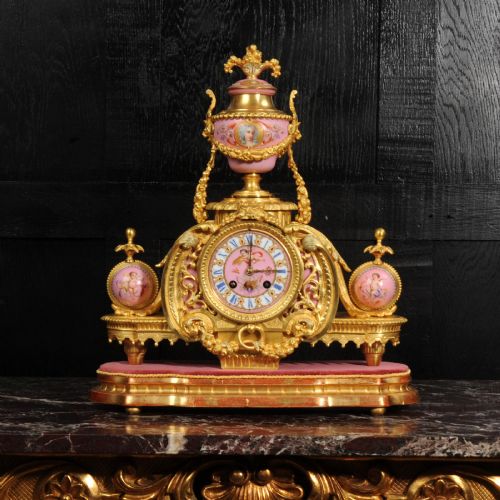
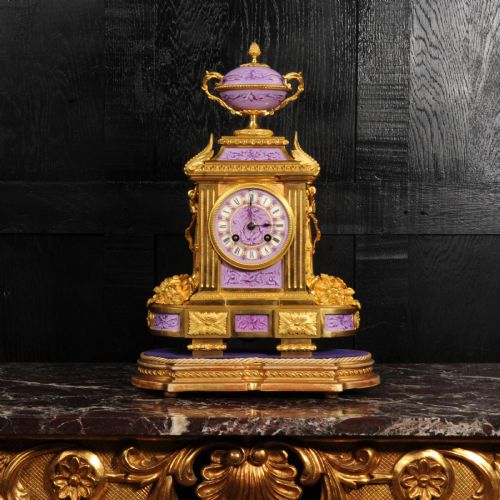
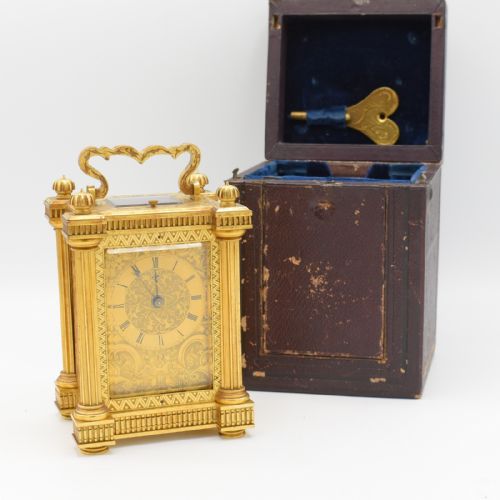
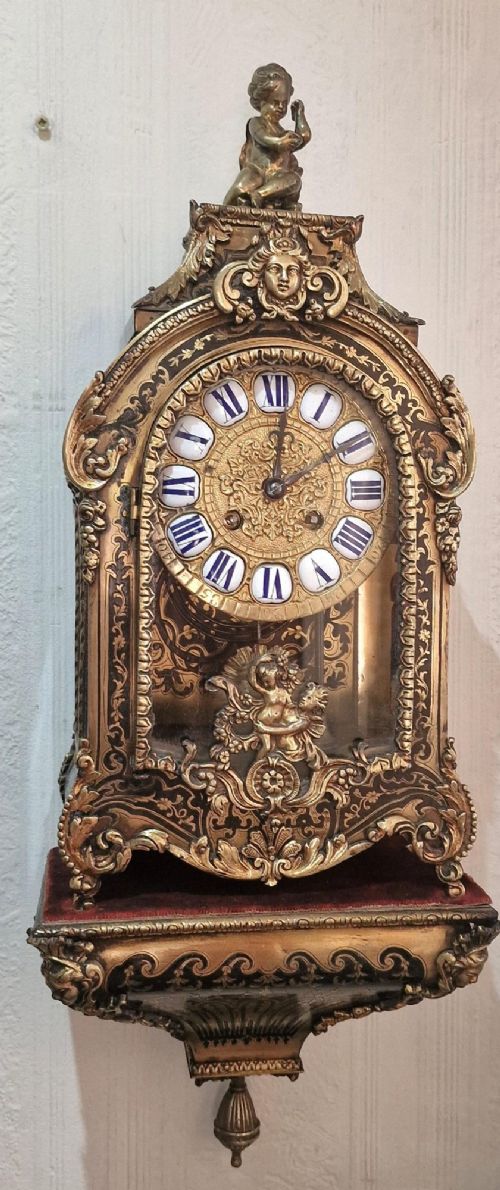
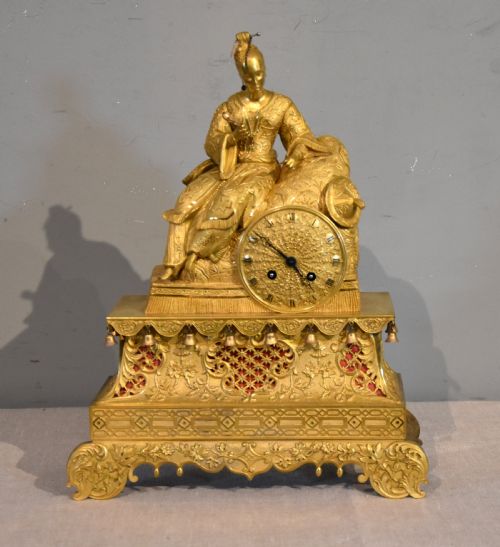
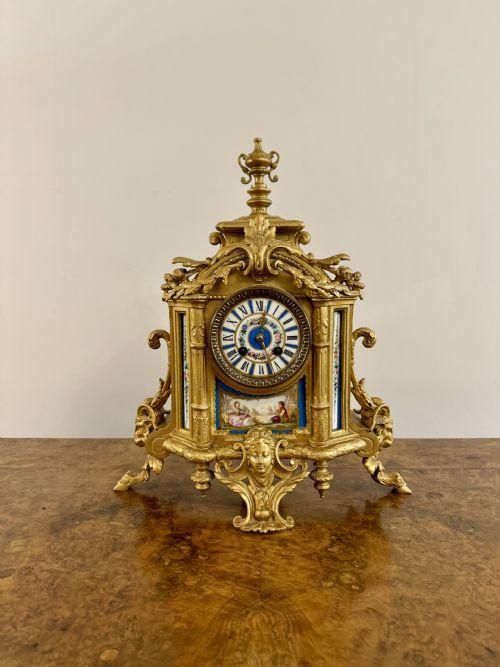
An ornate gilt clock draws the eye through gilded surfaces and heavy metal frames, often taking the form of mantel clocks, carriage clocks, or clock garnitures. These timepieces stem predominantly from the nineteenth century, ranging from the 1850s through to 1900, with French Rococo Revival and Victorian styles dominating the selection.
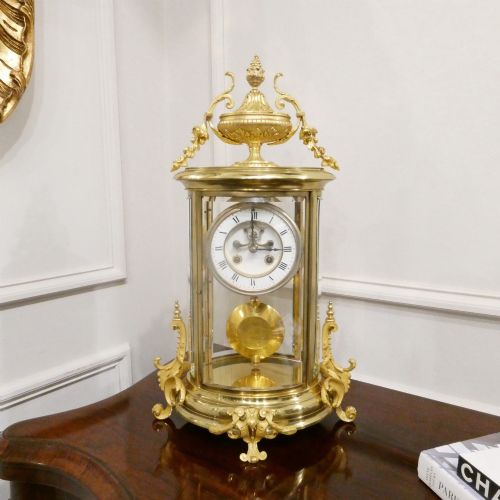
Buyers will most frequently meet mantel clocks and carriage clocks finished in ormolu, gilt bronze, or gilt brass. Many incorporate decorative elements such as Sèvres porcelain panels, champlevé enamel, and marble plinths, while others utilise four glass sides to reveal the inner mechanics.
Materials and construction
The construction relies heavily on brass, bronze, and copper cast into elaborate rococo or architectural shapes, then treated with mercury gilding or modern electrogilding to achieve a rich ormolu finish. Clockmakers paired these metal casings with porcelain dials, hand-painted enamel chapter rings, and bevelled glass panels.
Movement assembly was often entrusted to notable Parisian workshops and independent London watchmakers who produced robust mechanical foundations, including platform escapements and repeater mechanisms housed within solid brass or gilt bronze frames.
Listings feature carriage clocks, mantel clocks, and wall clocks spanning the Victorian era, the nineteenth century, and the early twentieth century.
Assessing quality in gilt timepieces
Quality rests in the crispness of the cast metal ornamentation and the depth of the gilding rather than simple surface shine. Superior examples display sharply chased acanthus leaves, scrollwork, and figural details that have not been softened by over-cleaning or abrasive polishing over the decades.
The sophistication of the internal movement and the integration of secondary materials like hand-painted porcelain or champlevé enamel separate standard production pieces from exceptional horological works. Signed movements by established makers further elevate the standing of an individual clock.
Achille Brocot·Samuel Marti·Howell And James·Japy Freres·William Payne
The Ornate Gilt Clock Glossary
- Ormolu
- A golden-coloured brass alloy used to simulate cast gold, applied to bronze or brass mounts through mercury gilding or electroplating.
- Carriage clock
- A small, portable spring-driven timepiece designed for travel, typically fitted with a carrying handle and a glass-panelled brass case.
- Garniture
- A set consisting of a central clock flanked by matching decorative ornaments such as vases or candelabra.
- Escapement
- The mechanical linkage that regulates the speed of the clock by controlling the release of power from the gear train.
Ornate Gilt Clock: Frequently Asked Questions
How do I wind a mechanical carriage clock?
Most carriage clocks require a key inserted into the winding arbors located on the underside or the backplate of the movement. Turn the key gently until resistance signals that the mainspring is fully wound.
Take care not to overwind the mechanism, as this can strain the mainspring. Ensure the clock rests on a level surface to keep the balance wheel beating evenly.
What is a clock garniture set?
A clock garniture set is a decorative grouping composed of a central mantel clock accompanied by two matching side pieces, such as urns or candelabra. These matched items were designed to sit harmoniously across a mantelpiece or sideboard.
The matching side pieces share the same materials, such as marble, gilt bronze, or porcelain, echoing the decorative motifs of the main timepiece.
How do I care for gilt bronze?
Gilt bronze and ormolu surfaces require only gentle dusting with a soft, dry microfibre cloth to remove accumulated particles. Avoid using metal cleaners, water, or abrasive solutions, which can strip away the delicate gold layer.
Keep the clock away from direct sunlight and damp environments to protect both the exterior gilding and the delicate interior metalwork.