



Ornate Gilded Pier Table
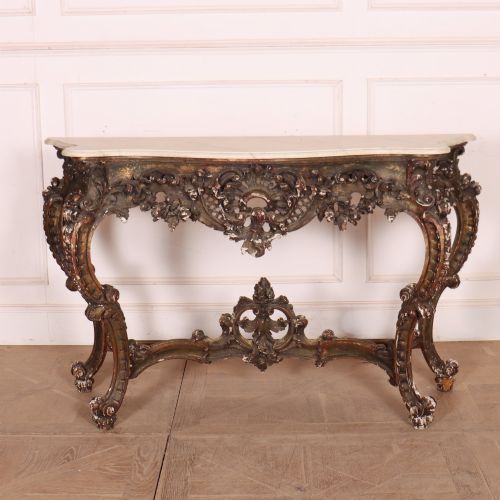
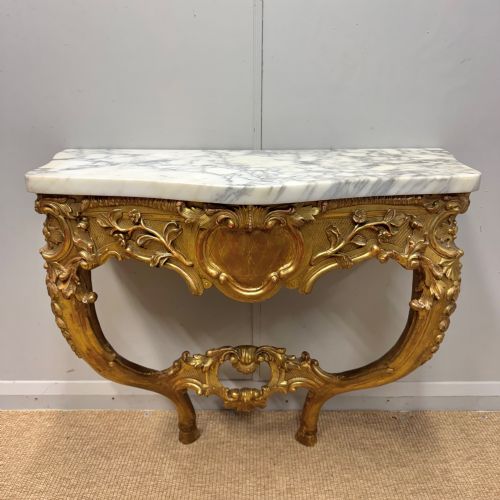
An ornate gilded pier table brings brilliant French and Italian influence into a room through heavy carving, marble tops and bright leaf finishes.
Ornate Gilded Pier Table
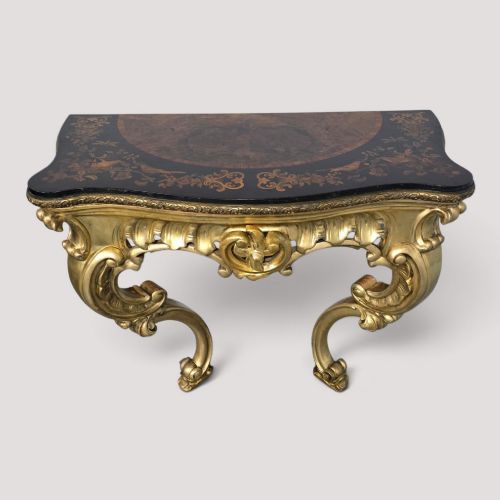
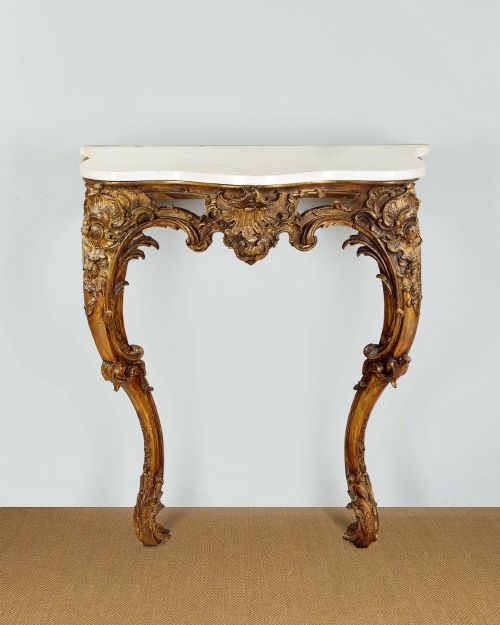
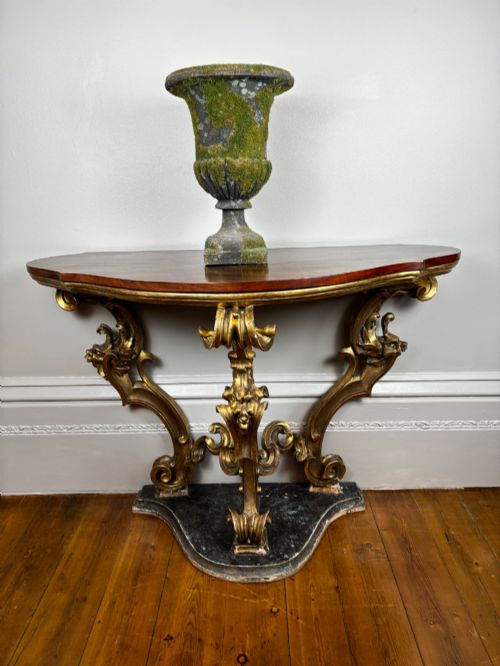
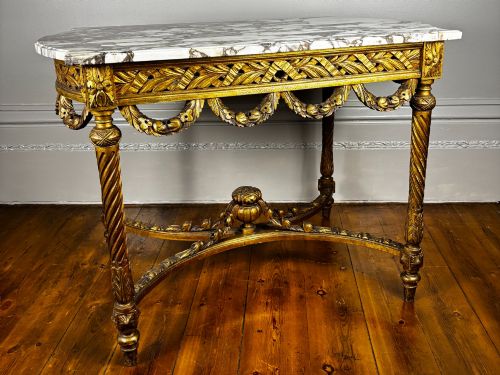
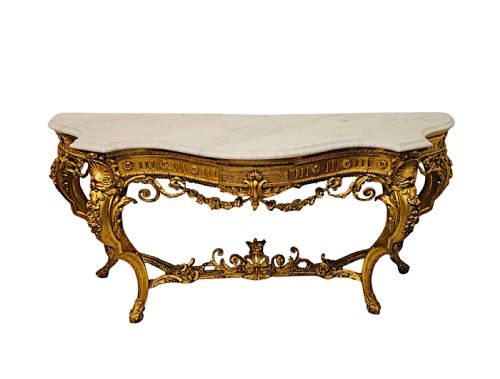
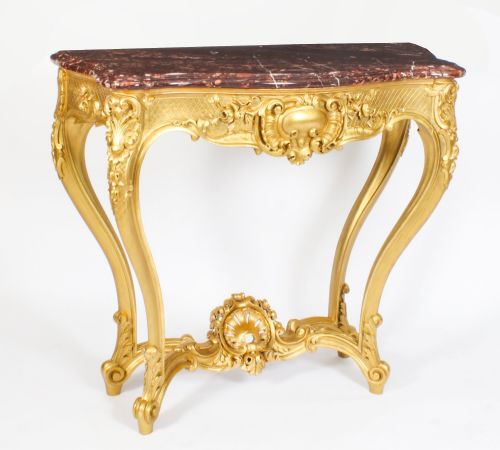
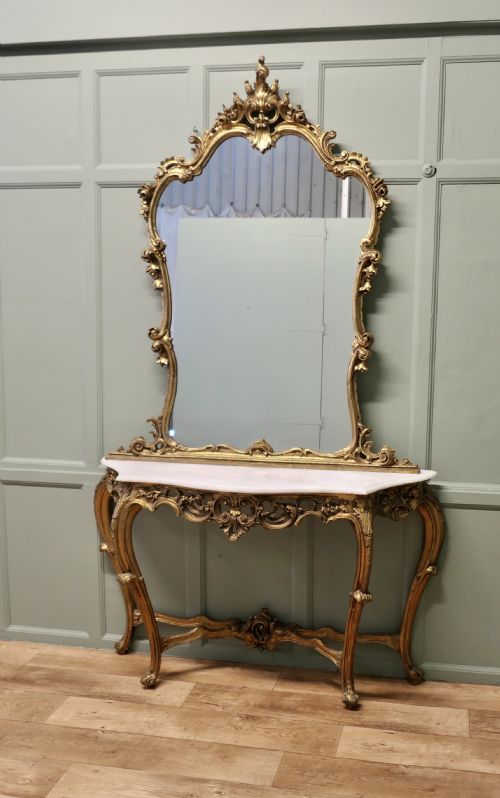
An ornate gilded pier table occupies the narrow wall space between windows, often paired with a matching wall mirror to bounce light across a formal interior. These pieces emerge chiefly in 18th century and 19th century workshops, drawing heavily on French Rococo, Louis XV and Venetian design vocabularies.
Console tables and side tables dominate the selections here, frequently featuring serpentine fronts and substantial carved wooden frames beneath heavy stone slabs. The nineteenth-century revival pieces lean into exuberant ornamentation like putto figures, rams and maiden heads.
Italian and French origins predominate among these survivals, showing regional preferences for lavish surface decoration and sculptural bases. Buyers encounter everything from compact small console tables to large pairs built for grand reception rooms.
Materials and Construction Methods
Carpenters carved structural frames from softwoods and hardwoods before applying layers of gesso to smooth the surface for gilding. Artisans then laid gold leaf or metallic paint over the prepared wood to achieve a brilliant reflective sheen.
Heavy marble tops, cut to fit the serpentine or straight contours of the frame, rest directly on the wooden structures. Glazed surfaces and wall mirrors complete the compositions, utilising glass plates set within matching carved gilt frames.
Ornate Gilded Pier Table Retail Price Guide 2026
Typical asking prices for ornate gilded pier table among the pieces listed under this phrase on Sellingantiques today, from the lower quarter to the upper quarter. They describe what is for sale here now, not the wider market.
Listings feature items from the 18th century through the 1920s, dominated by giltwood, marble and carved wood construction.
Distinguishing Quality Across Examples
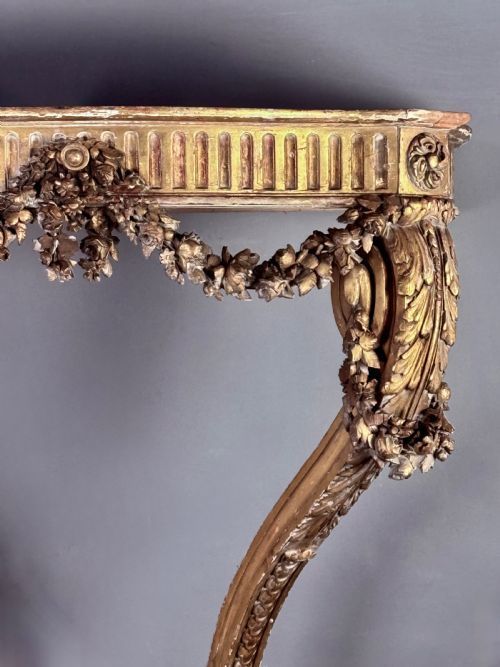
The crispness of the wood carving dictates much of the visual success, separating fluid, deeply undercut foliage from softer, more generalized moulding. Master carvers achieved remarkable depth in scrollwork and figural elements like putto motifs and maiden heads.
The application and preservation of the gold leaf or paint layer heavily influence the character of the piece. Intricate preparation with gesso underneath allows the metallic finish to catch the light evenly across complex surfaces.
Felix-Alfred Ternisien
The Ornate Gilded Pier Table Glossary
- Giltwood
- Wood that has been coated with gold leaf or gold dust. This finish creates a bright, reflective surface characteristic of formal antique furniture.
- Gesso
- A plaster mixture applied to carved wood to provide a smooth base for gilding. It allows artisans to shape sharp details before applying metal leaf.
- Pier Table
- A table designed to stand against the wall between two windows, typically positioned beneath a tall mirror. They frequently feature flat backs and elaborate front legs.
- Serpentine Front
- A piece of furniture front featuring a concave centre flanked by convex curves, or the reverse. This undulating shape adds dynamic movement to console tables.
Ornate Gilded Pier Table: Frequently Asked Questions
Where should an ornate gilded pier table go?
These tables find their traditional home against the wall space between two windows, often anchored beneath a matching mirror.
Because of their shallow depth, they also suit narrow hallways and reception rooms where floor space is at a premium.
How do I care for a marble top?
Marble surfaces require gentle cleaning with a damp cloth and mild soap to protect the stone from staining and etching.
Avoiding acidic liquids and harsh chemicals preserves the polished finish of the antique top over years of use.
What defines the Rococo style?
Rococo design relies on asymmetrical scrollwork, natural shell motifs and flowing organic lines that avoid rigid symmetry.
This aesthetic flourished in 18th-century France and inspired numerous revivals during the 19th century.
Are mirrors always included?
While many period pier tables were designed to coordinate with a matching wall mirror, tables and mirrors also appear as standalone items.
Sets combining both pieces reflect the original decorative intent of grand 19th-century interiors.