





Rococo Revival Wall Table
These rococo revival wall table pieces bring dramatic nineteenth-century curves, carved giltwood and marble tops into modern interiors.
Rococo Revival Wall Table
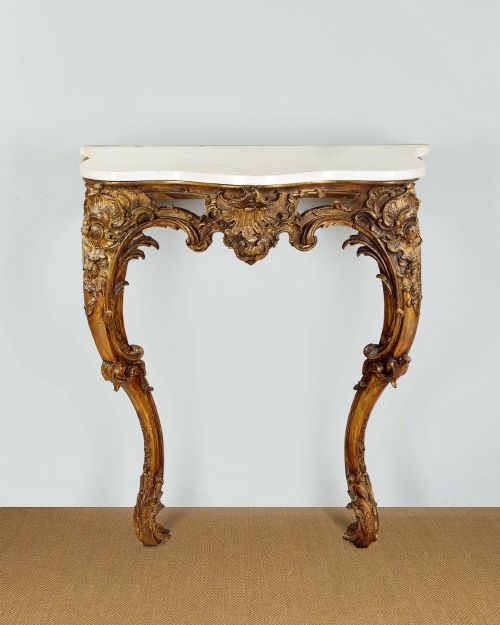
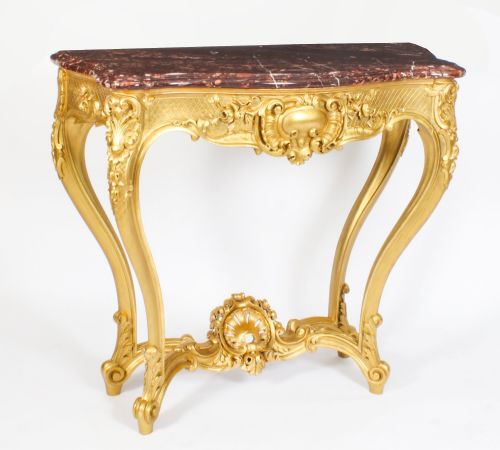
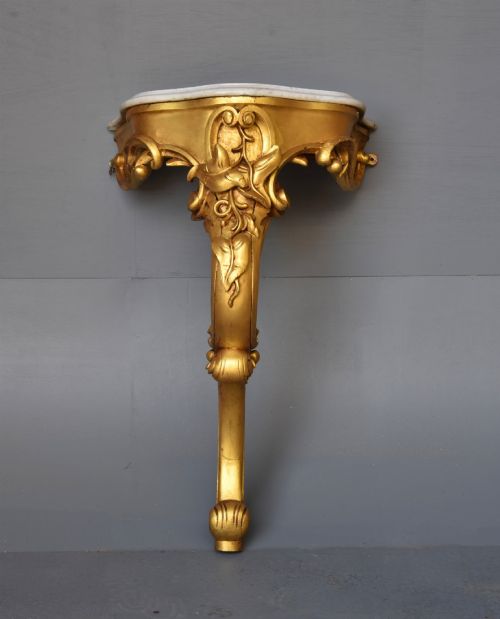
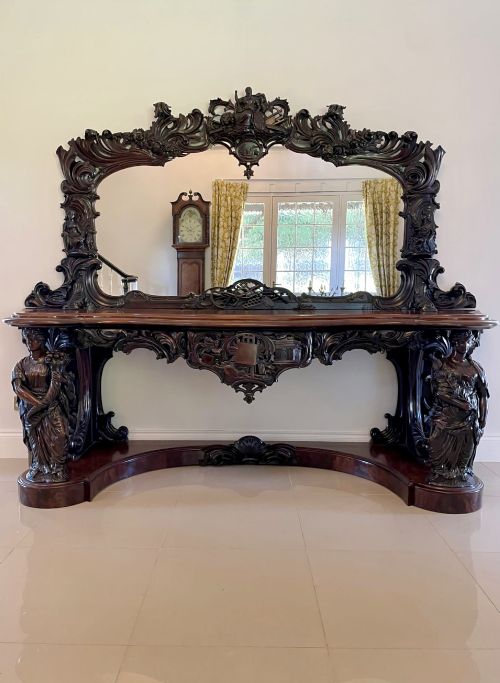
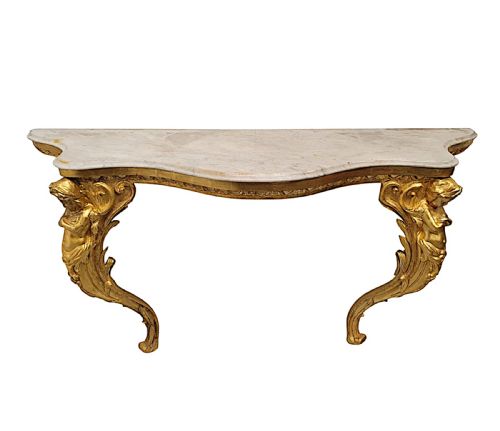
A rococo revival wall table sits flush against a surface, taking the form of console tables, pier tables and matching mirror sets from the nineteenth century. These items draw on eighteenth-century French precedents, translated through Victorian and Continental workshops into substantial decorative furniture.
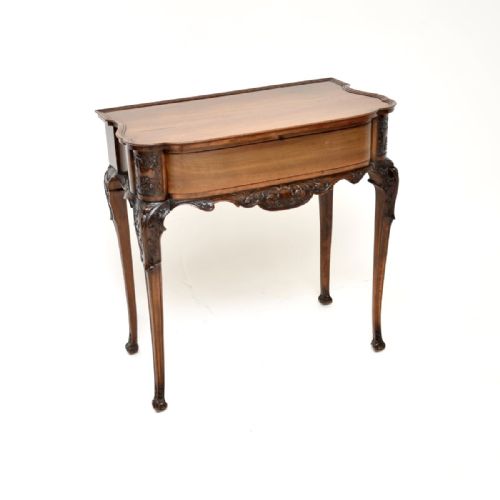
The version most commonly encountered on this page is a nineteenth-century console table featuring a carved wooden frame and a fitted marble top. Walnut, mahogany and painted wood appear alongside gilded surfaces, reflecting the varied tastes of the period.
Many examples arrive paired with large wall mirrors or hail from specific regional traditions including French, Italian and German makers. The form serves primarily as a decorative focal point in a hallway or drawing room rather than a surface for heavy daily use.
Materials and construction methods
Makers utilised timber frames of walnut, mahogany or softer woods prepared for gilding with layers of gesso. Skilled carvers then shaped the flowing asymmetrical scrolls, foliage and shells characteristic of the style directly into the wood or gesso ground.
Heavy marble tops, cut to follow the serpentine or breakfront contours of the frame, provide the characteristic stone surface. Giltwood examples employ gold leaf applied over bole, whilst painted and polished timber variations display the natural grain of burr walnut or mahogany.
Rococo Revival Wall Table Retail Price Guide 2026
Typical asking prices for rococo revival wall table among the pieces listed under this phrase on Sellingantiques today, from the lower quarter to the upper quarter. They describe what is for sale here now, not the wider market.
Continental workshops from Italy and Germany are represented alongside British Victorian interpretations of French eighteenth-century design.
Distinguishing quality in the range
The depth and crispness of the wood carving dictate the visual impact of the piece, separating standard production from exhibition-grade work. Sharp undercut foliage and confident asymmetry demonstrate superior hand skills from the workshop.
The choice and thickness of the marble top, along with the quality of the original gilding or timber finishing, mark the upper tiers of the selection. Associated makers like Maple and Co also introduce documented provenance that influences the standing of individual tables.
Maple and Co
The Rococo Revival Wall Table Glossary
- Console table
- A table supported by brackets or legs attached to a wall, designed to stand against a vertical surface. They often feature shaped marble tops and elaborate underframes.
- Giltwood
- Timber that has been coated with gold leaf or powder. This finish appears frequently on nineteenth-century revival furniture to catch the light in formal rooms.
- Gesso
- A plaster-like mixture applied to wood surfaces to provide a smooth base for carving or gilding. It allows for intricate relief work that holds fine detail.
- Burr walnut
- Timber taken from the warted growths of walnut trees, yielding complex swirling grain patterns. It was favoured for high-status veneered furniture.
- Pier table
- A table designed to fit against the wall space between two windows, frequently placed beneath a matching pier glass mirror.
Rococo Revival Wall Table: Frequently Asked Questions
How were these tables used historically?
Historically, these tables functioned as decorative fixtures in grand reception rooms and hallways, often paired with matching wall mirrors to reflect light.
They displayed ornamental objects, clocks or candelabras rather than serving utilitarian purposes in domestic routines.
Are the marble tops original?
Many tables retain their heavy fitted marble slabs, shaped precisely to follow the serpentine or breakfront contours of the wooden frame underneath.
Replacement marble tops do occur due to the fragility of stone over long periods of domestic use.
How do I secure a wall table safely?
Because these tables often rely on wall support or narrow legs for balance, proper anchoring to the wall structure is essential for stability.
Consulting a professional installer ensures the weight of the heavy marble top rests securely without placing undue strain on historical joints.
What defines the revival style?
The revival style reinterprets the extravagant curves, natural motifs and asymmetrical designs of the original eighteenth-century French movement through nineteenth-century manufacturing techniques.
Craftsmen adapted these flamboyant decorative elements to suit Victorian and Continental drawing rooms.