
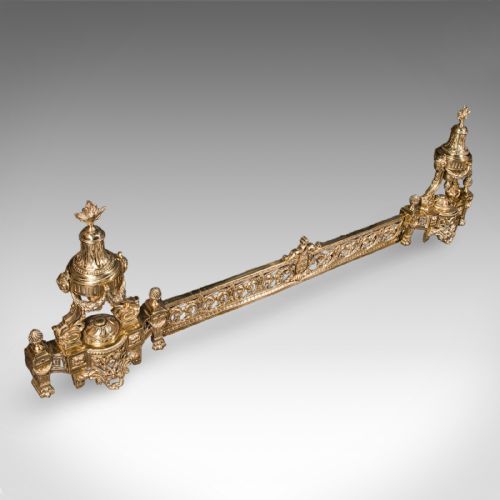

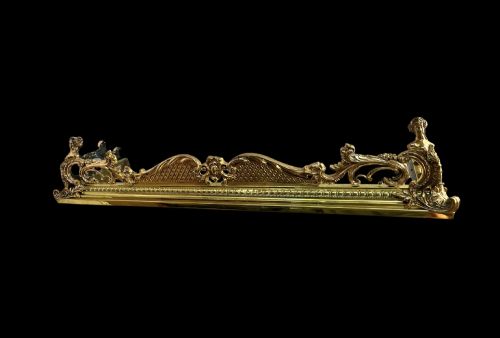
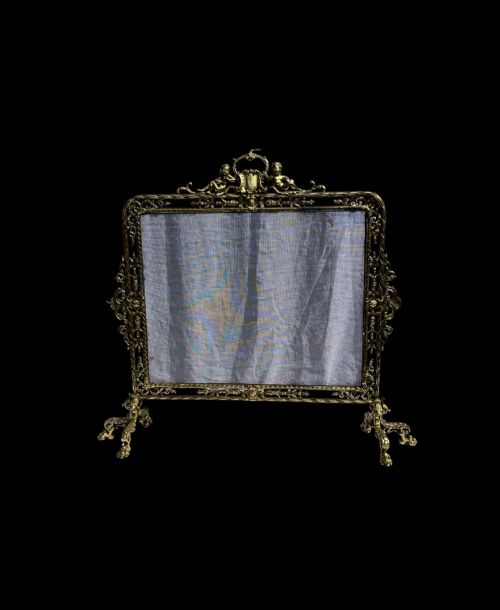
Ornate Fire Guard
An ornate fire guard brings decorative metalwork and heavy casting to the hearth, offering protection while framing the fire.
Ornate Fire Guard
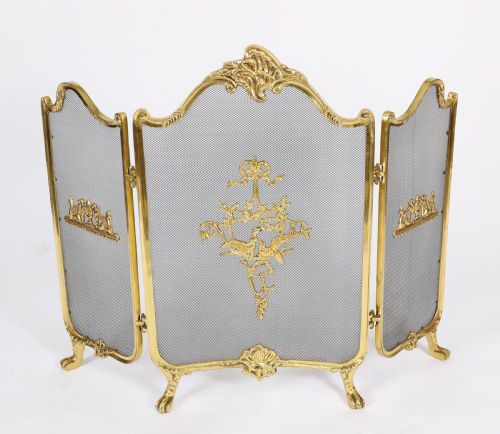
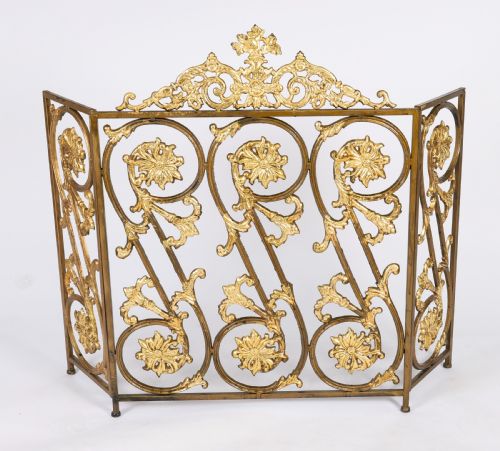
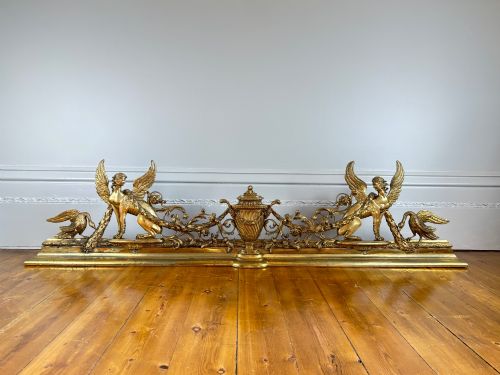
When you search for an ornate fire guard, you encounter screens and fenders dating across the nineteenth century into the early twentieth, with many pieces originating from French workshops.
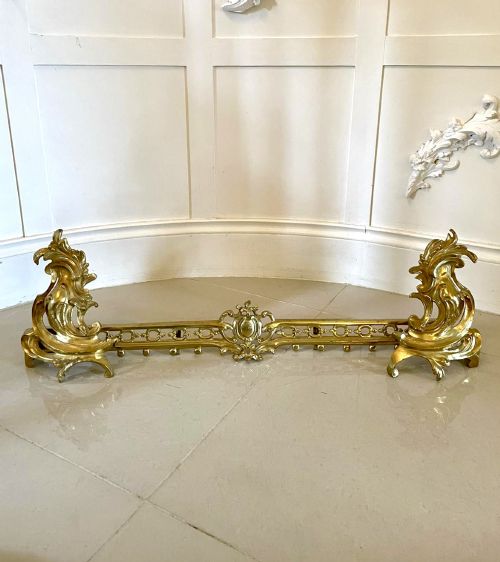
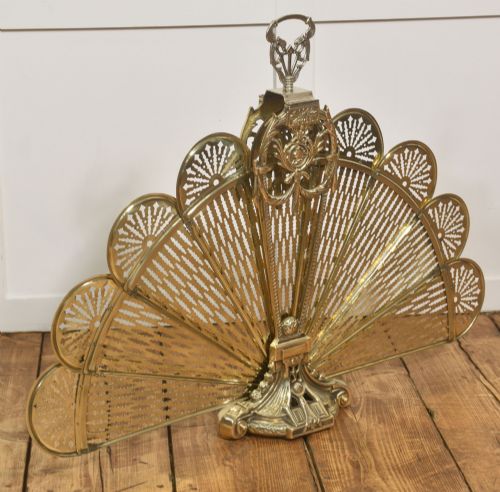
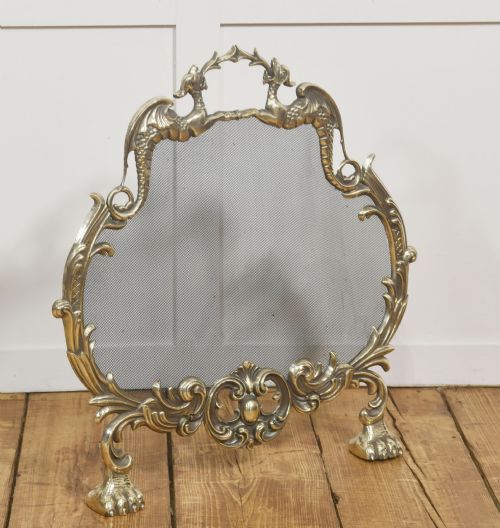
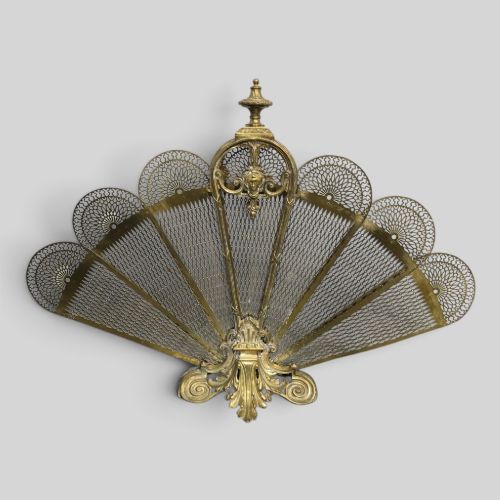
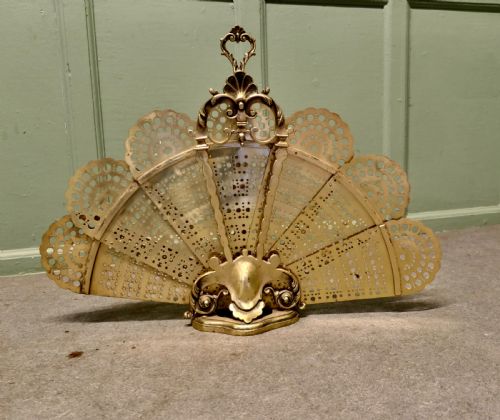
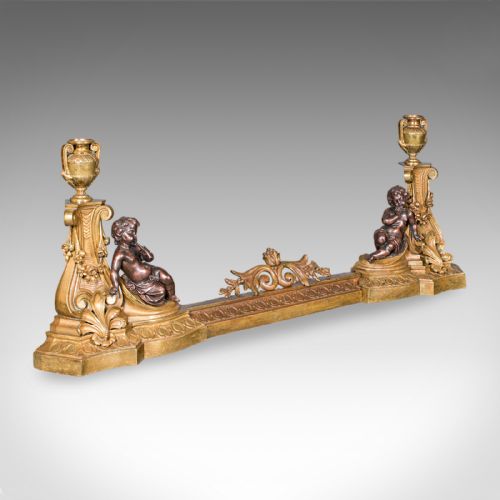
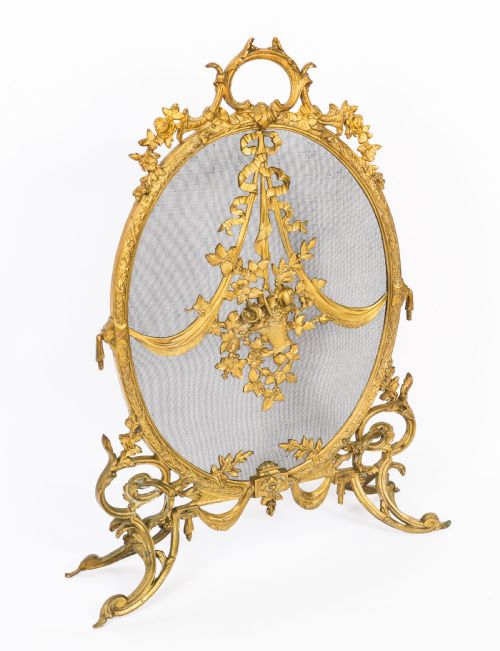
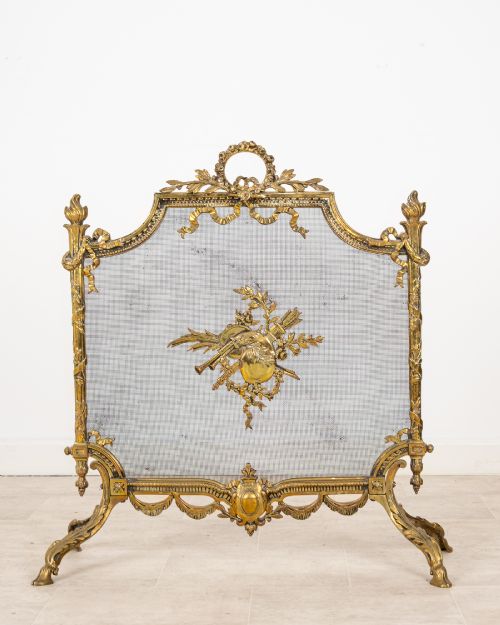
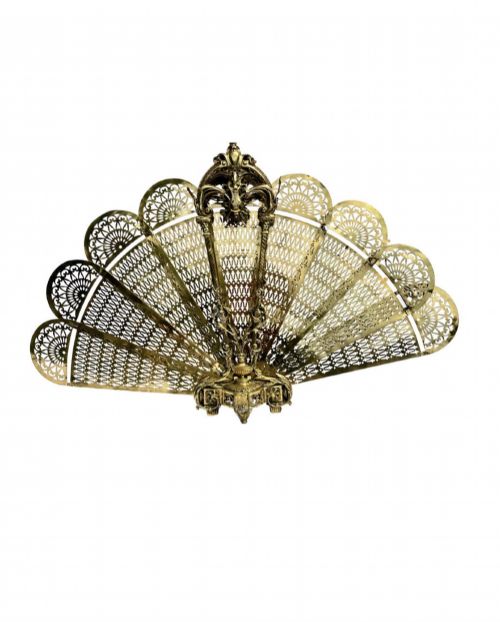
The selection centres on folding peacock fans, solid mesh panels, and extending hearth fenders in brass, bronze, and cast iron.
Victorian English designs and French Rococo or Louis styles dominate the selection, providing protective barriers that double as decorative centrepieces.
Materials and Technique
Craftsmen utilised cast brass, gilt bronze, and wrought iron, employing piercing and chasing techniques to create intricate surface relief.
Wire mesh forms the protective body of many screens, held within rigid metal frames that sometimes incorporate folding mechanisms or adjustable bars.
Dolphins feature in the brass mesh on some French screens, swimming across the hearth.
Distinctions in Manufacture
The standard of a piece rests upon the weight of the metal and the crispness of the cast ornamentation, distinguishing heavy gilt bronze from lighter stamped brass.
Fine examples display hand-finished detailing on garlands, scrollwork, and mounts, whereas simpler items rely on plain cast components without further chasing.
E F Caldwell New York
The Ornate Fire Guard Glossary
- Fender
- A low metal guard placed on the hearth around the front of a fireplace to contain sparks and rolling embers. These often adjust in length to fit various hearth sizes.
- Ormolu
- Gilt bronze, where finely ground gold is applied to a bronze base using a mercury amalgam. This technique creates a rich, lasting surface lustre.
- Spark Screen
- A fine wire mesh barrier designed to catch flying embers while maintaining visibility of the fire. They appear as folding panels or static guards.
- Repoussé
- A metalworking technique where the metal is hammered from the reverse side to form a raised design in relief. It frequently appears on decorative hearth accessories.
Ornate Fire Guard: Frequently Asked Questions
What is the difference between a fire screen and a fender?
A fire screen stands upright to block radiant heat and protect the room from stray sparks. It usually sits a short distance from the fire opening.
A fender sits directly on the hearth floor around the base of the grate. Its primary role is containing rolling coals and debris rather than blocking heat.
How do I measure for an extending fender?
Measure the width of your hearth stone from edge to edge where the fender will rest. Extending fenders offer flexibility, allowing you to slide the sections to match the exact opening.
Ensure you check both the minimum and maximum lengths given in the listing to confirm the metalwork spans your fireplace correctly.
Are peacock fan screens fragile?
Peacock fan screens contain multiple folding brass blades that fan out to form a semi-circular guard. While sturdy when fully extended, the individual vanes require gentle handling during opening and closing.
Folding them carefully prevents bending the thin metal segments and ensures the mechanism operates smoothly.
How should I clean antique brass and bronze?
Dust the metal regularly with a soft, dry cloth to prevent grime accumulation. Avoid harsh chemical polishes that strip away the aged patina and any original gilding.
If cleaning is necessary, use warm soapy water on a damp cloth, drying the metal thoroughly afterwards to prevent water spots.