
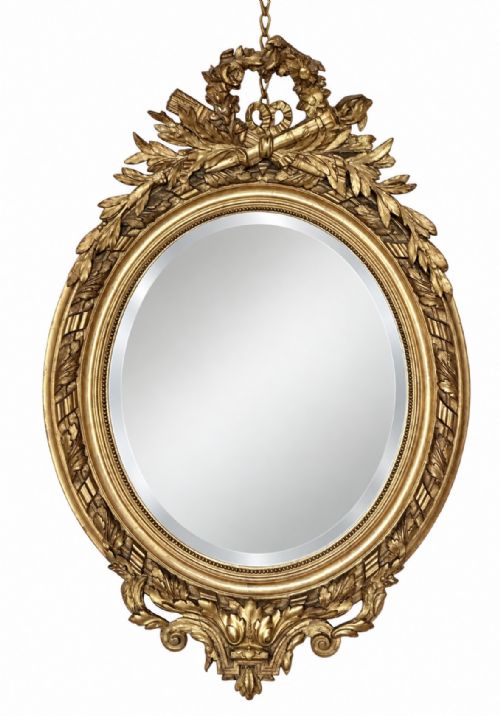
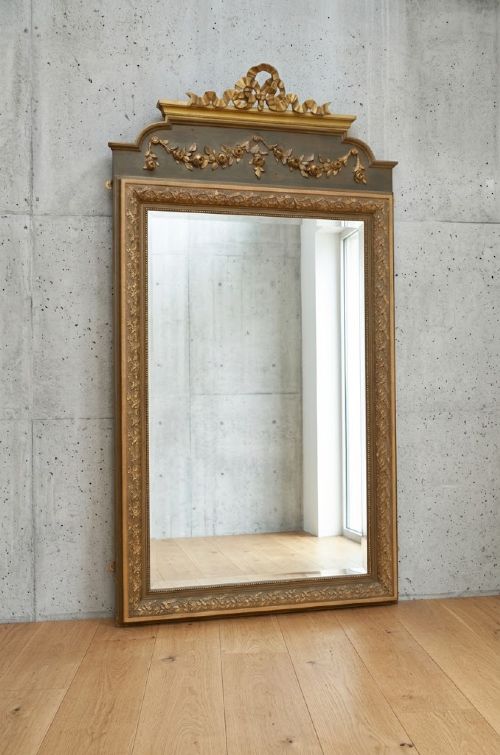
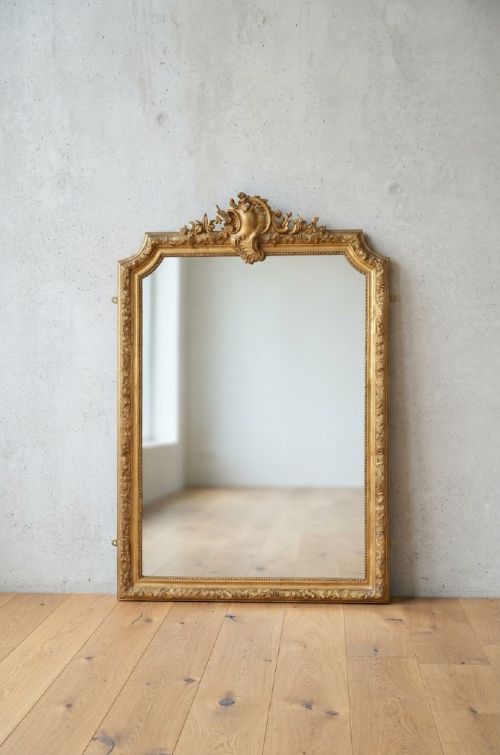
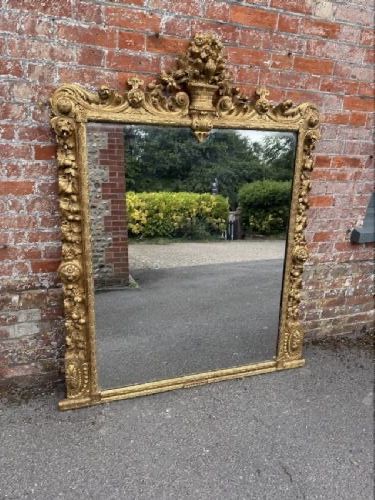
Ornate Crested Wall Mirror
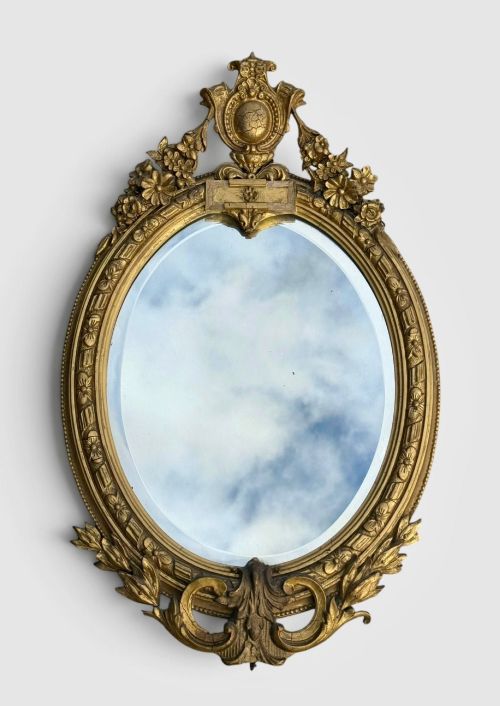
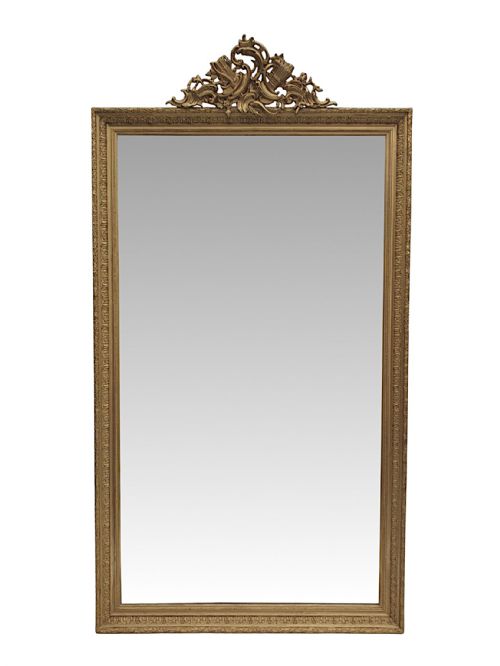
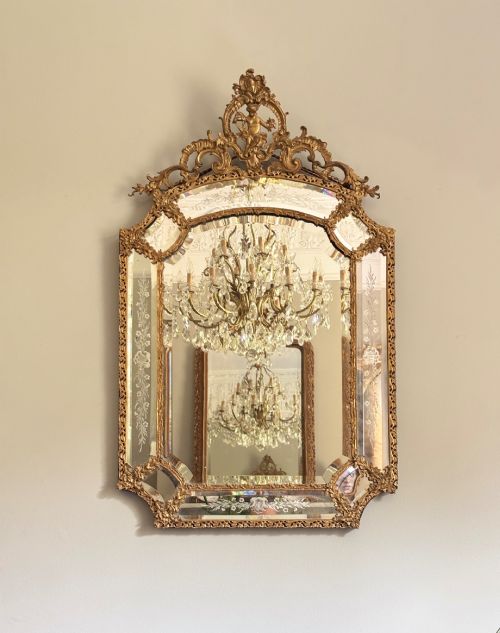
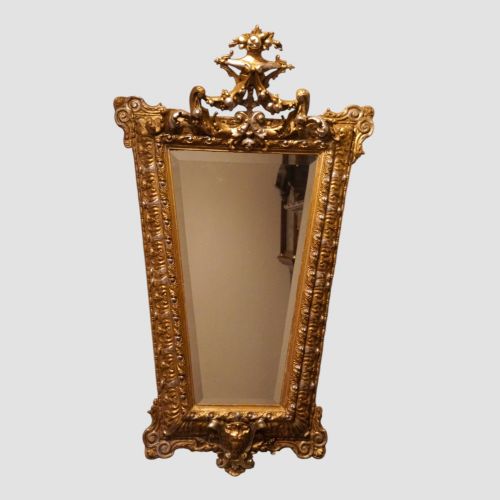
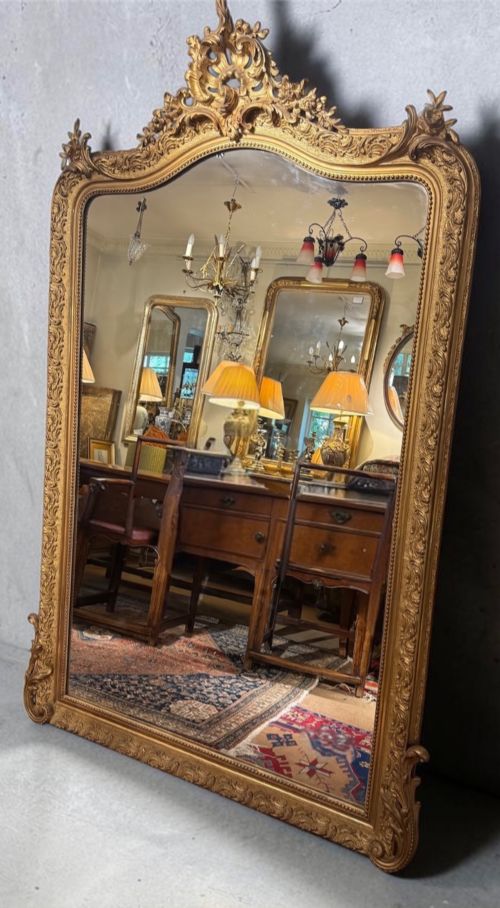
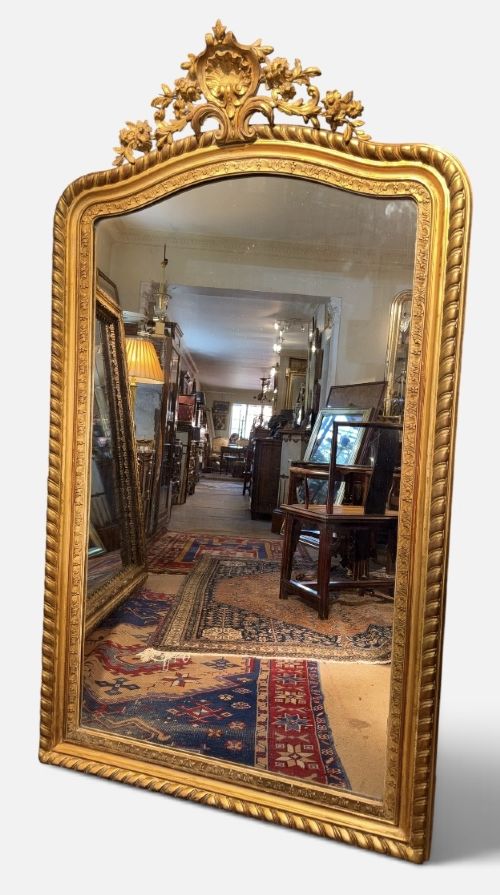
An ornate crested wall mirror brings dramatic scale and reflective light to an interior, drawing the eye with elaborate crestings and carved frames.
Ornate Crested Wall Mirror
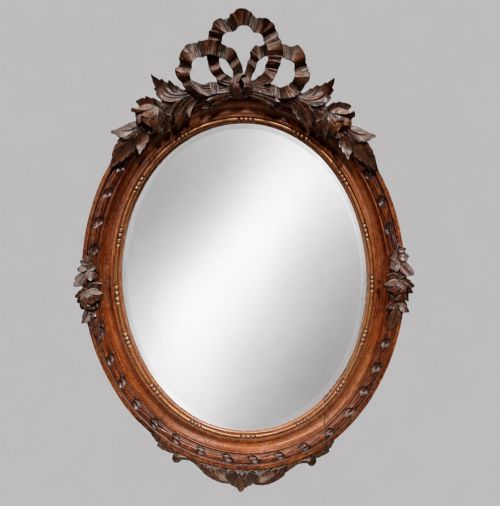
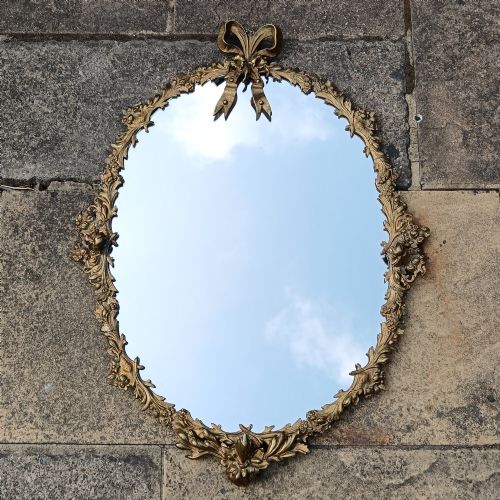
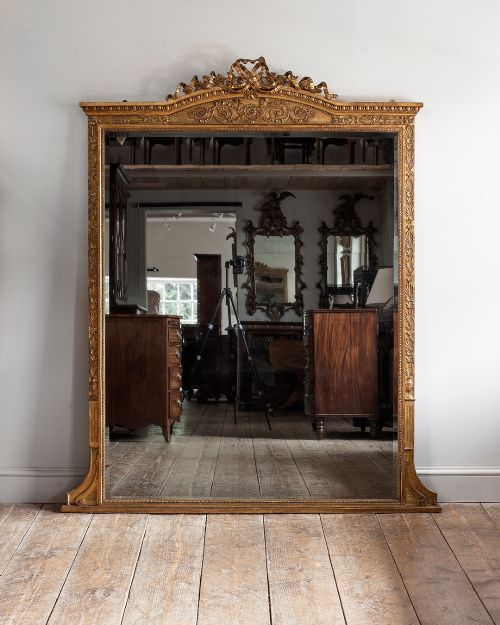
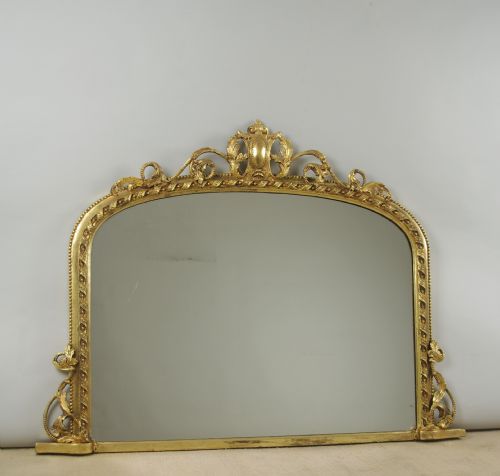
An ornate crested wall mirror centres on decorative crestings, cartouches, or ribbon motifs surmounting the glass plate. These pieces predominantly date from the nineteenth century, including Victorian and French periods.
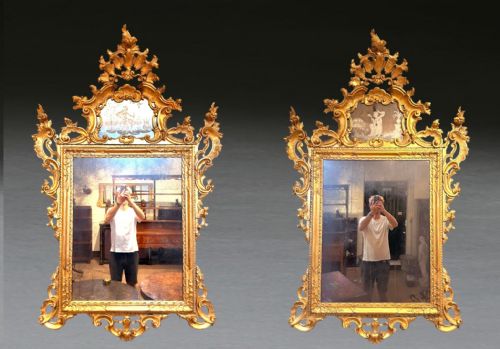
Forms range from large overmantel mirrors designed for mantelshelves to oval wall mirrors and grand architectural pier mirrors. French Rococo and Louis XVI styles frequently define the aesthetic vocabulary of these decorative objects.
Materials and construction methods
Carved wood and moulded gesso provide the structural relief for giltwood and silver-gilt frames. Guilders applied gold leaf or composition over these surfaces to achieve a luminous finish.
Listings feature eighteenth-century to twentieth-century examples, spanning Victorian, Georgian, Regency, and Belle Époque periods in French, Italian, and English origins.
Evaluating craftsmanship and detail
Depth and crispness of the carving distinguish finer examples, particularly where floral swags, scrolls, or crested masks display confident handling by the maker. Hand-carved wooden frames demonstrate superior execution compared to heavily moulded composition alternatives.
The integration of the cresting with the main frame reveals the builder's intent, as does the retention of the original gilding and historic mirror plates.
The Ornate Crested Wall Mirror Glossary
- Overmantel mirror
- A large mirror specifically proportioned to hang above a fireplace mantelpiece. These pieces often incorporate arched tops to fit architectural spaces.
- Gesso
- A plaster-like mixture applied to wood frames and carved or moulded before gilding. It provides a smooth ground for gold leaf.
- Giltwood
- Timber that has been coated with gold leaf. This technique creates a rich, reflective metallic surface popular in formal interiors.
- Mercury plate
- An older mirror glass manufacturing method utilising a tin and mercury amalgam. It produces a characteristic mottled, deep reflection.
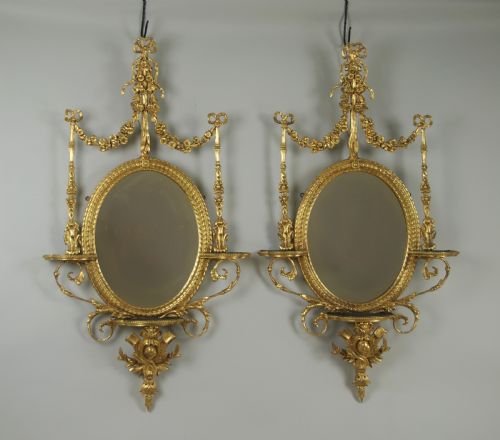
- Girandole
- A wall mirror featuring attached candle sconces or arms. The glass reflects the candlelight to brighten the room.
Ornate Crested Wall Mirror: Frequently Asked Questions
Where should I hang an overmantel mirror?
These large mirrors sit naturally above a fireplace mantelpiece, where their scale anchors the room and reflects surrounding light.
Ensure the wall construction supports the substantial weight typical of nineteenth-century frames.
How do I identify a French Rococo mirror?
Look for asymmetrical scrolls, C-scrolls, and naturalistic leaf motifs that characterise the Rococo style. French examples often incorporate elaborate crestings and giltwood construction.
Makers frequently drew inspiration from Louis XV and Louis XVI designs during the nineteenth century.
What is mercury glass?
Mercury glass refers to historic mirror plates created using a tin and mercury backing technique before modern silvering processes took over.
This historic glass produces a soft, uneven reflection with characteristic dark spots and age foxing.
How do I care for giltwood frames?
Dust giltwood surfaces gently with a soft, dry brush to protect the delicate gold leaf application. Avoid liquid cleaners and moisture, which can damage the underlying gesso and wood.