




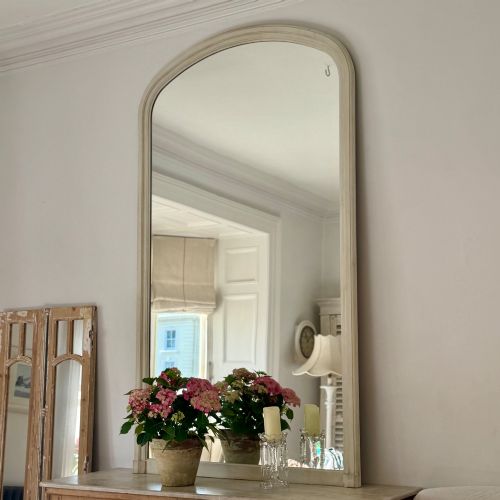
Cream Painted Overmantel Mirror
A cream painted overmantel mirror brings proportion and reflected light to a high fireplace, spanning eighteenth-century pine to nineteenth-century revival styles.
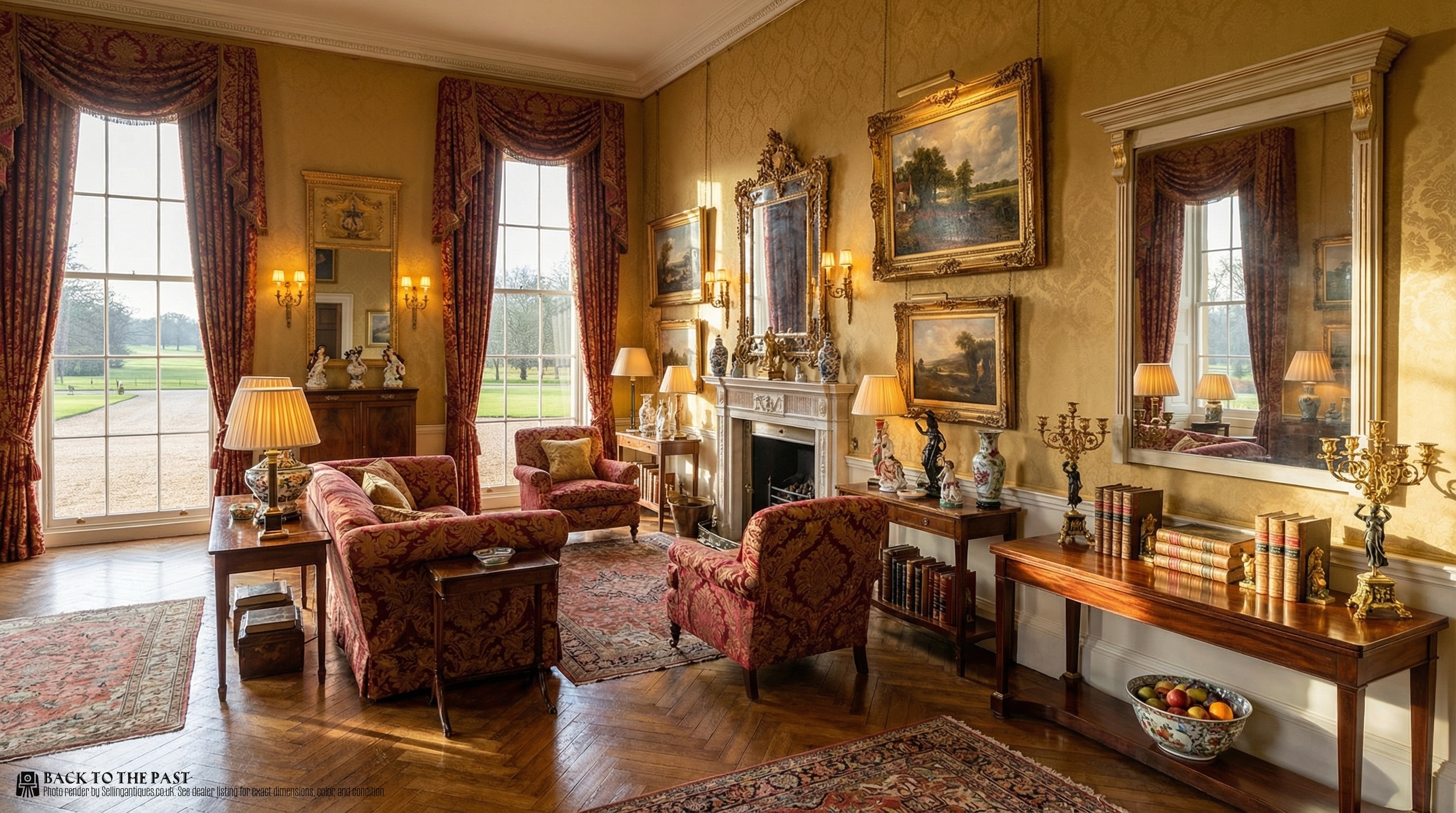
Cream Painted Overmantel Mirror
A cream painted overmantel mirror sits directly above a fireplace, designed to occupy the wide wall space beneath the mantelpiece. The pieces gathered under the cream painted overmantel mirror search span the eighteenth, nineteenth, and early twentieth centuries, encompassing English and French origins.
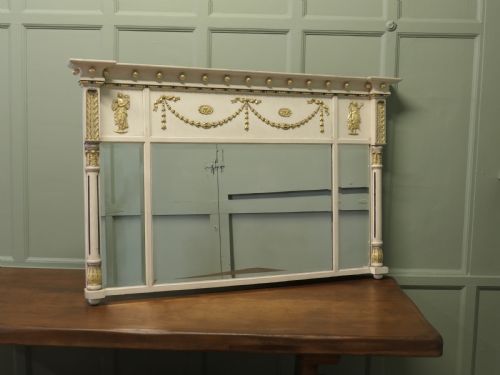
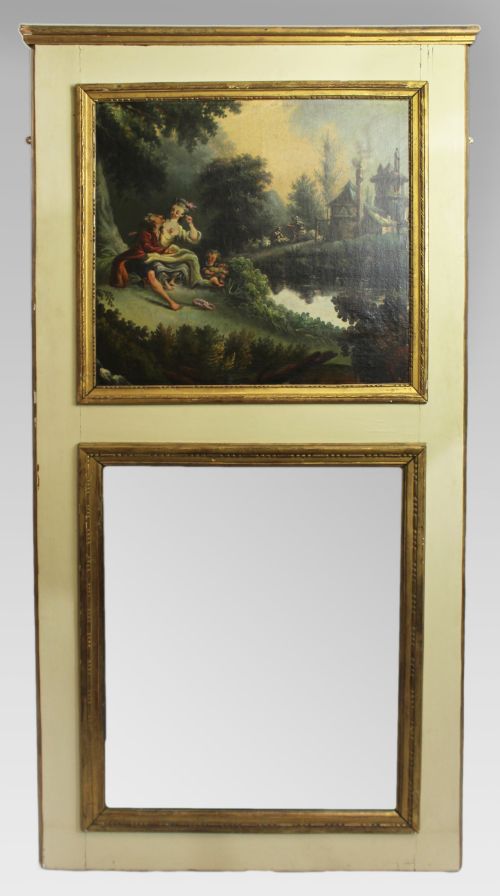
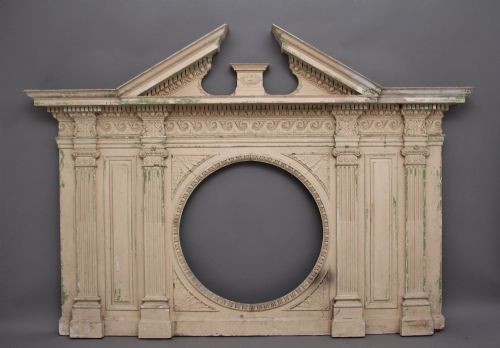
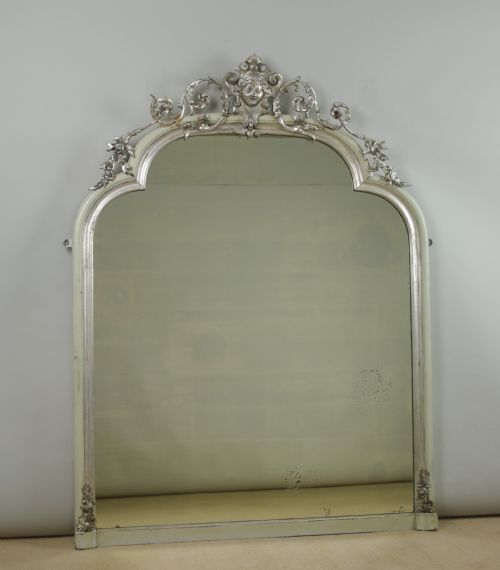
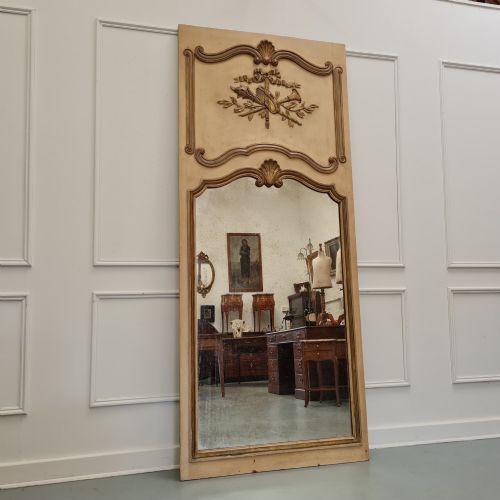
The dominant forms include arched, rectangular, and shaped tops, often framed by carved wood and gesso ornamentation. Many examples integrate classical motifs such as lion masks, columns, and scrolls, while French trumeau variants occasionally incorporate oil paintings or panels within the frame.
Makers and workshops from the Victorian, Regency, and Georgian eras produced these mirrors in various dimensions, from modest parlour pieces to very large statement formats. Regional English and French traditions inform the proportion, moulding profiles, and decorative vocabulary seen across the inventory.
Materials and construction
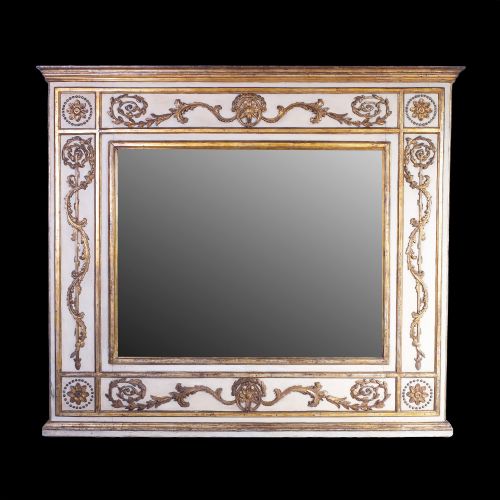
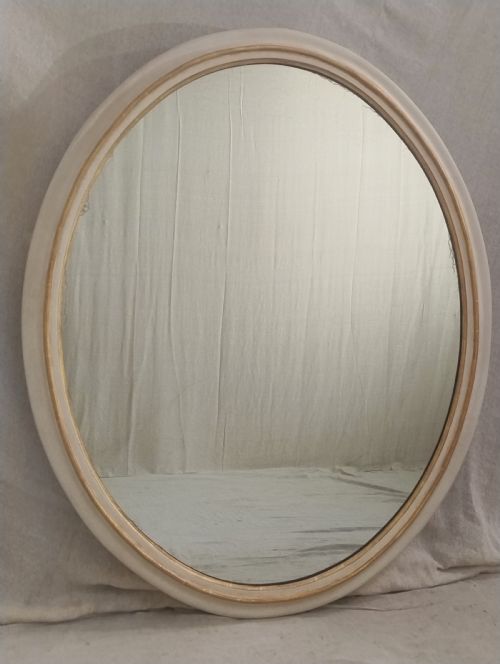
Carved wood provides the structural core for the heavy frames, frequently supplemented with applied gesso to build up intricate relief details like scrolls and egg-and-dart moulding. Artisans then applied paint finishes over the timber and gesso, sometimes combining cream paint with parcel gilt highlights or gold leaf accents.
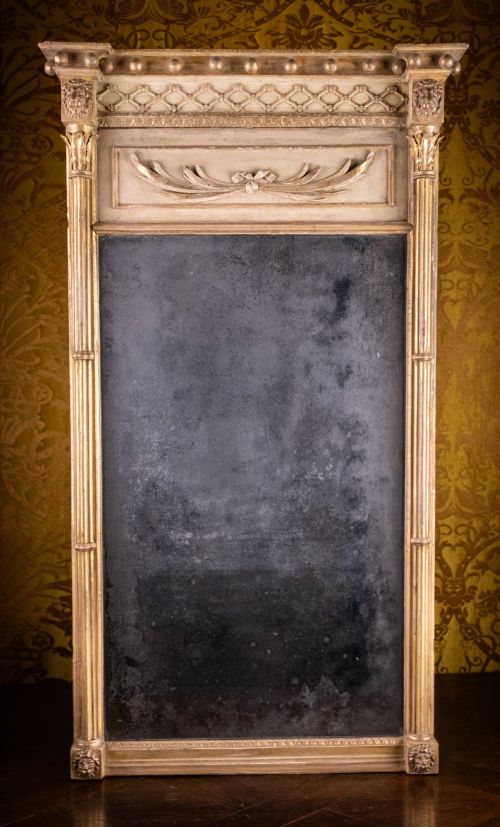
The mirror glass itself is held within heavy rebates, often comprising original silvered plates that exhibit the subtle foxing, distortion, or minor pitting characteristic of age. Frames range from solid pine in eighteenth-century pieces to built-up wooden constructions reinforced at the corners to support substantial glass weight.
The inventory records spanning the eighteenth to the early twentieth century show forms ranging from plain rectangular formats to arched top designs.
Judging execution and finish
Quality rests upon the crispness of the carved wood and gesso ornament beneath the paint layers, where hand-modelled relief surpasses mass-produced composition ornament. The depth of the moulding and the integration of architectural details like columns or lion masks indicate the ambition of the original maker.
The handling of the cream paint and parcel gilding determines the visual success of the surface, with layered, distressed, or over-painted finishes interacting differently with the underlying gilt. Original mirror plates with deep bevelling and heavy silvering hold higher regard than later replacements.
The Cream Painted Overmantel Mirror Glossary
- Overmantel mirror
- A large mirror specifically proportioned to hang on the wall directly above a fireplace mantelpiece. They often feature elongated horizontal formats or grand vertical arches.
- Trumeau mirror
- A decorative wall or pier mirror incorporating a painted panel or oil painting above the glass plate, originating primarily in French interior design. These pieces often display pastoral scenes or classical motifs.
- Gesso
- A plaster-like mixture applied to wood frames and carved or moulded into relief decoration before painting and gilding. Its crispness defines the decorative quality of nineteenth-century frames.
- Parcel gilt
- A finishing technique where specific decorative elements of a frame are selectively highlighted with gold leaf while the remainder is painted cream or another colour.
- Pier mirror
- A tall mirror designed to hang on the narrow wall space between two windows, though the term often overlaps with large overmantels in nineteenth-century listings.
- Crackle finish
- A patterned network of fine cracks across the painted surface, occurring naturally through age or intentionally applied during decoration to simulate antiquity.
Cream Painted Overmantel Mirror: Frequently Asked Questions
How do I hang a heavy overmantel mirror safely?
These large frames require secure fixing directly into structural wall studs or masonry using heavy-duty brackets suited to the substantial combined weight of wood, gesso, and glass. Professional installation ensures the mirror rests stably above the fireplace without placing undue strain on the upper frame.
Positioning the base so it sits slightly above or directly level with the mantelpiece creates the correct visual anchor for the room's proportions.
Are the mirror plates original to the frames?
Many nineteenth-century examples retain their original silvered glass, which frequently displays characteristic foxing, minor speckling, and gentle distortions reflecting its age. Some pieces have received replacement glass during their history to provide a clearer reflection.
Examining the silver backing and the way the glass sits within the rabbet helps distinguish original plates from later insertions.
How do I clean a painted and gilded antique mirror frame?
Dust the carved gesso and painted surfaces gently using a soft, dry brush to avoid catching delicate or flaking relief details. Moisture and modern chemical cleaners should be kept away from both the painted cream finish and any exposed parcel gilt.
Glass can be wiped sparingly with a damp cloth, taking care not to let liquid seep behind the frame edges where it might damage the original backing.
What is the difference between an English and a French overmantel?
English overmantels from the nineteenth century tend to emphasise architectural strength through heavy moulded cornices, column details, and restrained parcel gilding. French variants, including trumeau and chateau styles, frequently incorporate softer curves, ornate crests, and integrated painted panels above the glass.
Both traditions utilise carved wood and gesso under cream paint, but the silhouette and decorative motifs reflect distinct regional design vernaculars.