

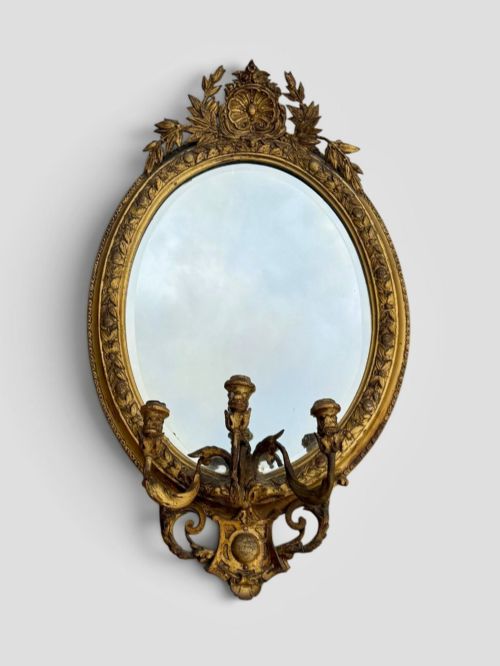
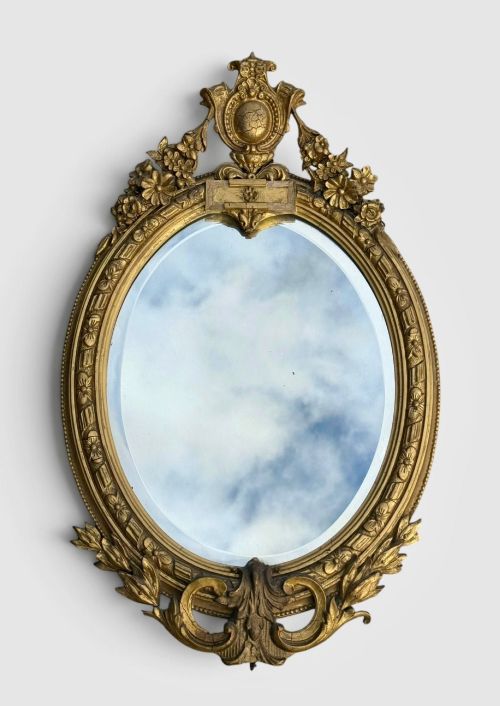
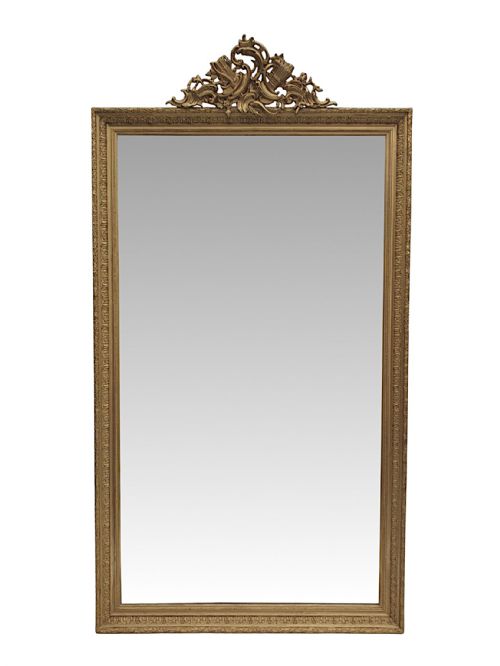
Ornate Carved Framed Mirror
When you search for an ornate carved framed mirror, you enter a world of heavy giltwood, scrolling foliage, and nineteenth-century domestic grandeur.
Ornate Carved Framed Mirror
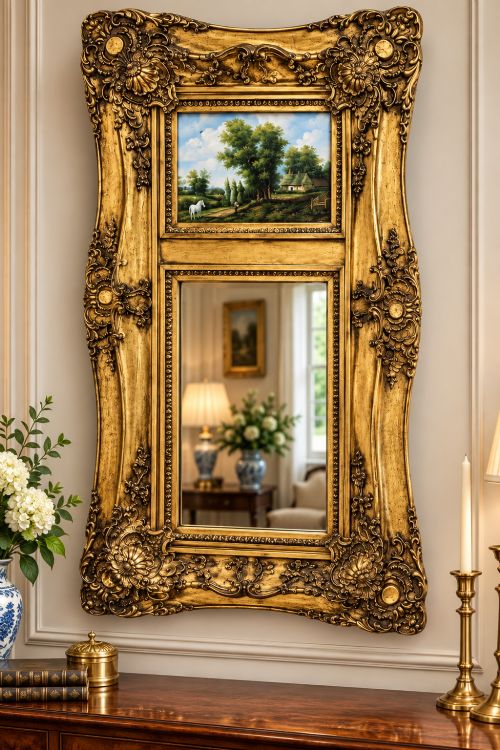
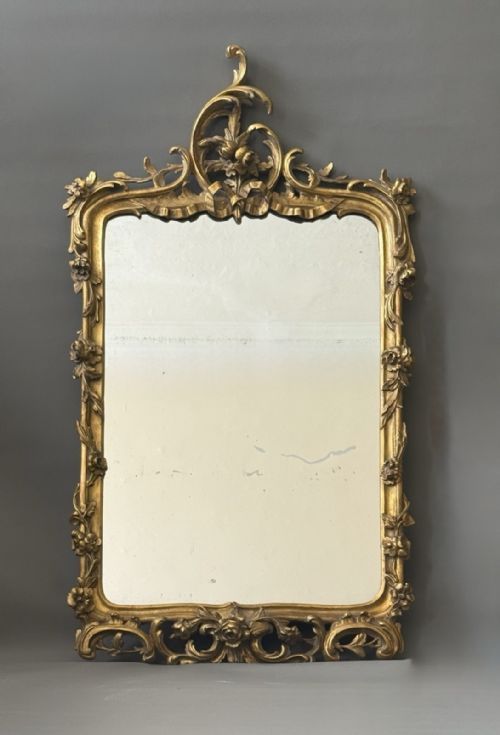
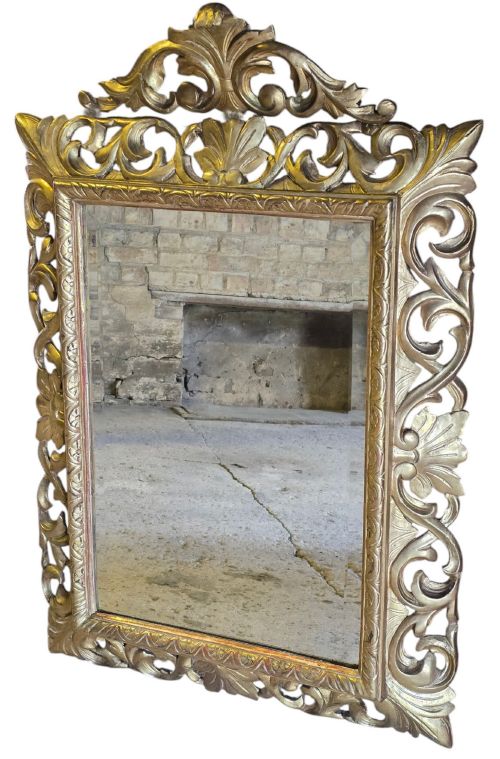
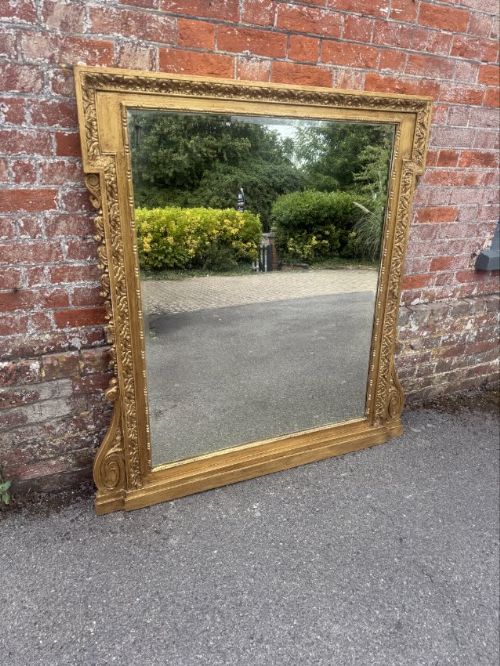
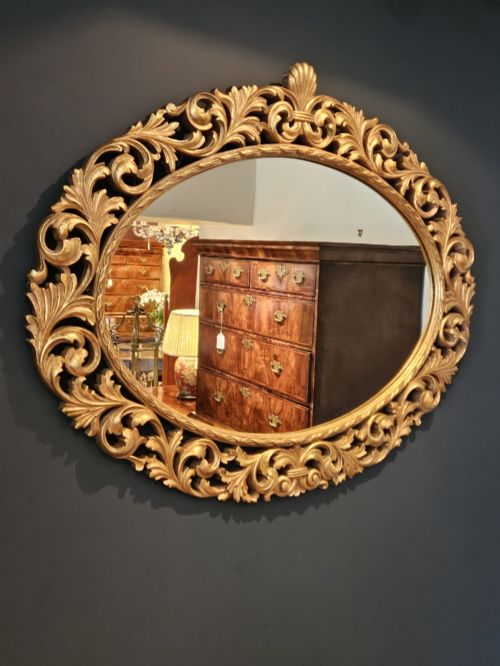
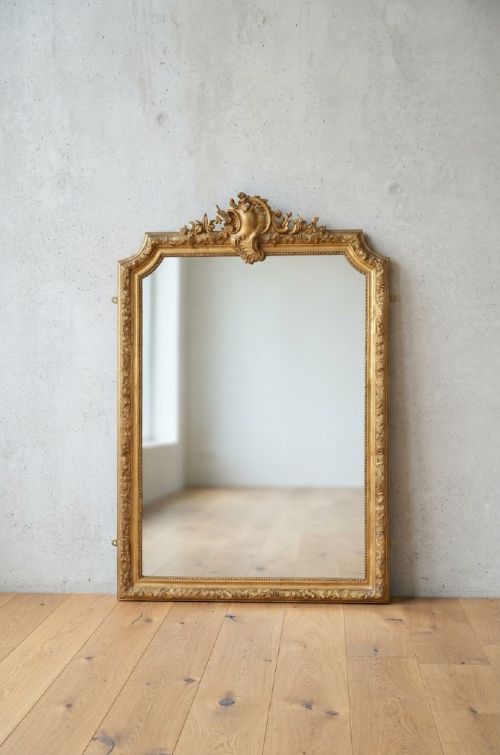
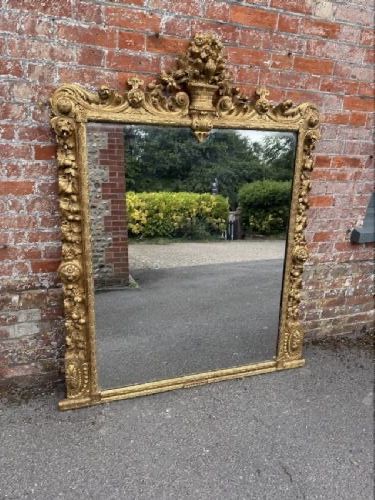
An ornate carved framed mirror brings decorative presence to a room through deep wooden mouldings, moulded gesso, and expansive glass plates designed for nineteenth-century interiors. These pieces range from substantial English overmantels intended for chimney breasts to smaller French wall hangings and Italian Florentine carvings.
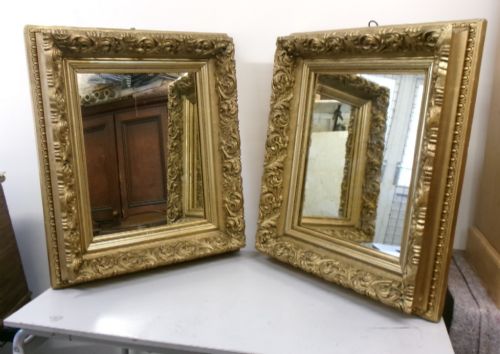
The inventory on this page spans the eighteenth to the early twentieth centuries, with a strong concentration of Victorian and French provincial examples. Buyers frequently encounter large landscape formats, oval frames, and tall pier glasses designed to reflect light between windows.
How They Were Made
Framemakers built the structural foundations from carved timber such as oak or softwoods, applying layers of gesso to build up high-relief scrolls, floral swags, and architectural crests. This plaster-like compound allowed artisans to achieve crisp undercut detail before smoothing the surface for gilding.
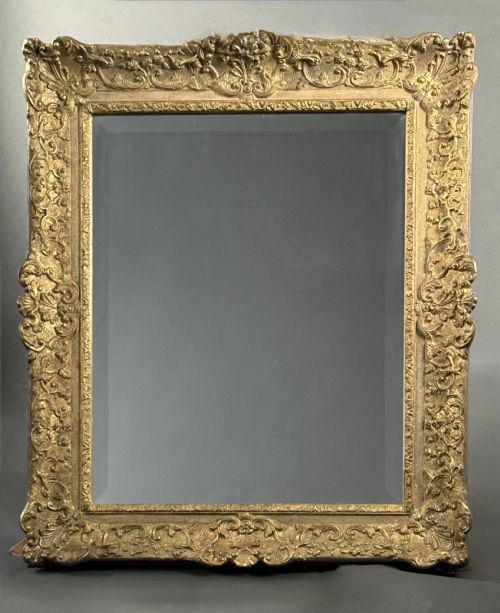
Gilt finishes relied on gold leaf or metal leaf applied over bole, sometimes combined with oil gilding or painted surfaces. Glaziers supplied silvered glass plates, occasionally featuring bevelled edges, mercury backing, or the characteristic foxed spotting of age.
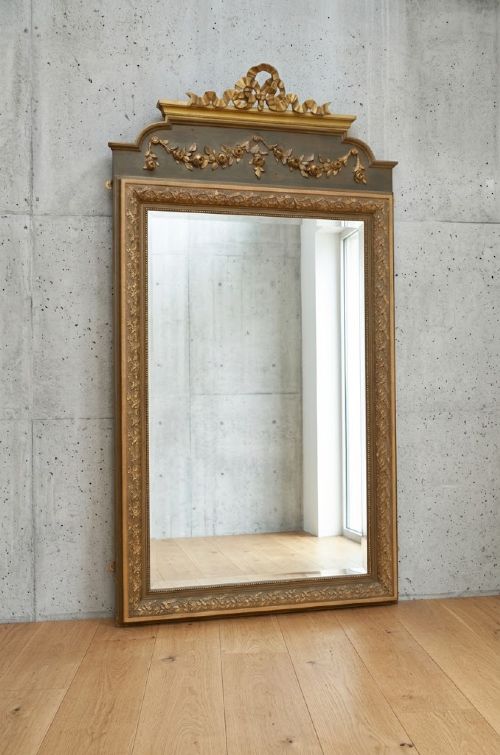
A ribbon crest hangs quietly at the top of one Edwardian wall mirror, holding up heavy timber with sculpted linen sweetness.
What Varies in Quality
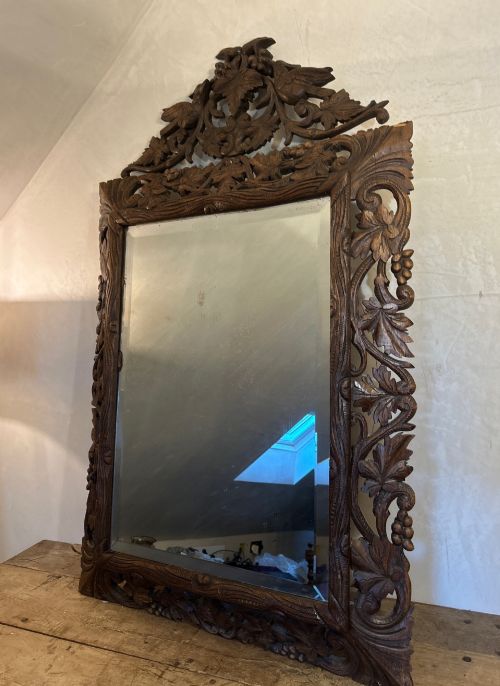
The depth and clarity of the wood carving separate masterwork frames from simpler commercial output, with superior examples showing hand-tooled undercut foliage rather than cast composition mouldings. Original gilding retaining its subtle tonal variations holds greater integrity than later overpainting or re-gilding.
The condition and authenticity of the mirror plate dictate desirability, as original mercury or early silvered glass with natural foxing provides historic depth. Frames that retain their original backboards, structural pins, and uncompromised gesso crests represent the highest standard of survival.
The Ornate Carved Framed Mirror Glossary
- Gesso
- A prepared mixture of chalk, gypsum, and binder applied to wooden frames to provide a smooth base for carving or gilding. Artisans incised and modelled this surface to create sharp decorative relief.
- Overmantel Mirror
- A large horizontal mirror specifically scaled to hang above a fireplace mantelpiece. These pieces often incorporate architectural proportions to anchor the room's primary hearth.
- Pier Glass
- A tall, narrow mirror designed to hang on the wall space between two windows. They maximised interior daylight during periods before widespread artificial lighting.
- Foxing
- The speckled brown or grey oxidation spots that develop on antique mirror plates over decades. This natural chemical breakdown of the silver backing creates a distinctive mottled reflection.
- Giltwood
- Timber that has been coated with thin leaves of gold or metal alloy. It reflects candlelight and daylight with a warm, diffuse glow.
Ornate Carved Framed Mirror: Frequently Asked Questions
How do I hang a heavy overmantel mirror?
These massive timber and gesso frames require professional wall anchoring directly into masonry or heavy studwork using substantial load-bearing brackets.
Due to the considerable weight of nineteenth-century glass and wooden structures, relying on standard picture wire or single wall hooks is unsafe.
What is an antique mirror plate?
An antique mirror plate refers to the original glass installed during the period of manufacture, often identifiable by slight distortions, hand-bevelling, or silver degradation.
Original plates contribute significantly to the authenticity and character of the frame.
How do I clean antique gilt frames?
Dust giltwood surfaces gently with a very soft, dry brush to prevent dislodging delicate gesso details or wearing thin gold leaf.
Avoid all liquid cleaners, moisture, and chemical solvents, which can permanently dissolve historical water-gilt finishes.
What distinguishes Rococo Revival style?
Rococo Revival pieces feature asymmetrical scrolls, shell motifs, C-scrolls, and naturalistic floral arrangements inspired by eighteenth-century French design.
Victorian makers reinterpreted these exuberant organic forms with deep relief carving and lavish gilding.