


Ornate Carved Armchair
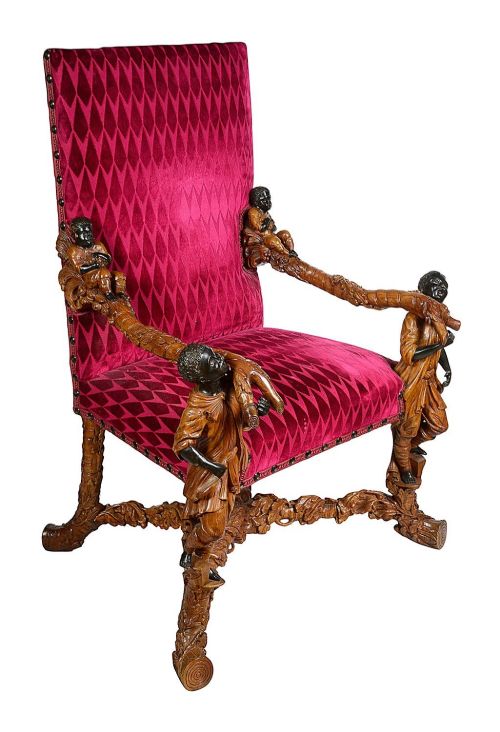
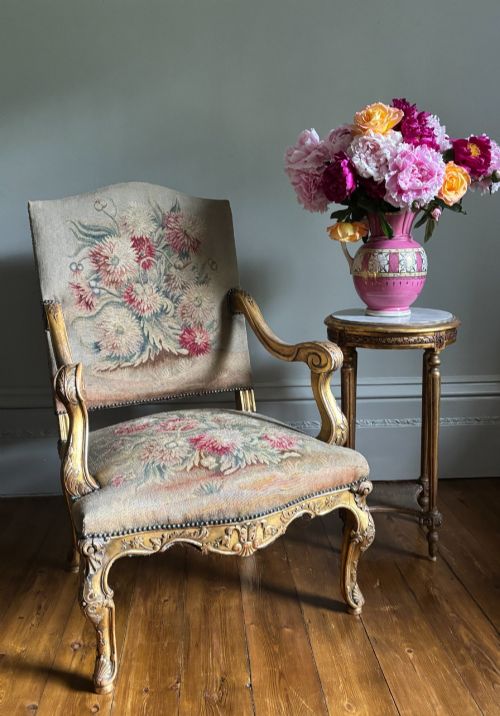
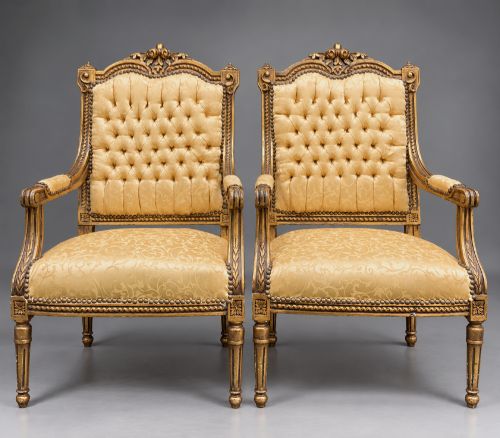
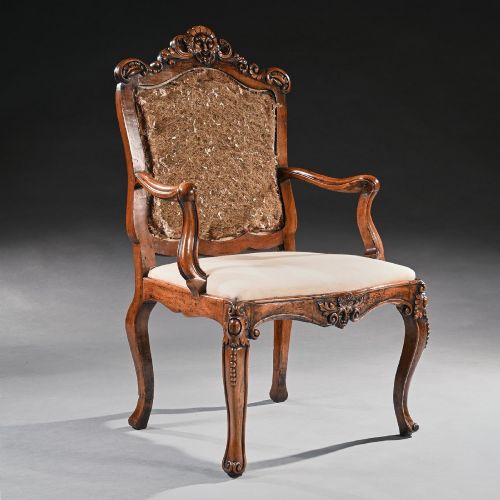
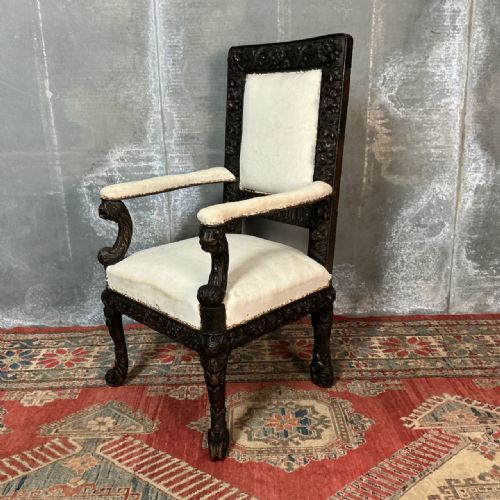
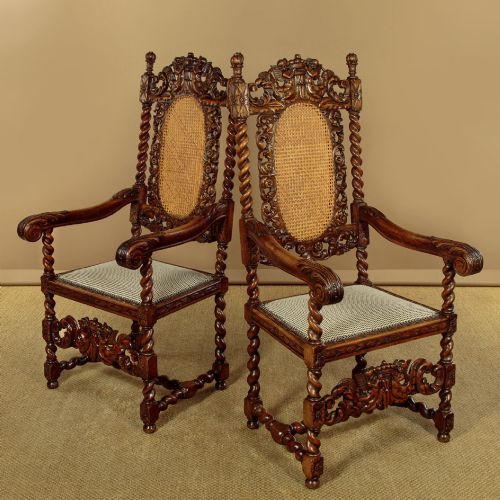
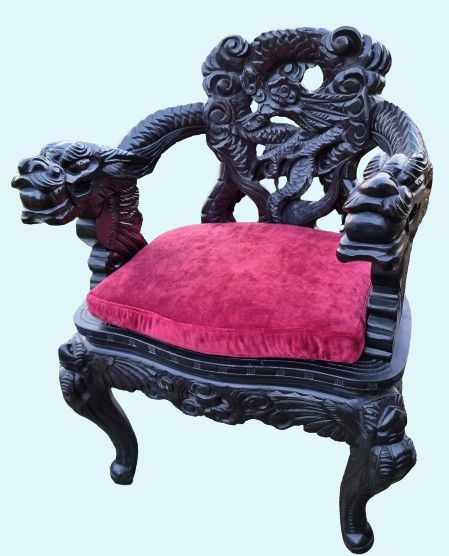
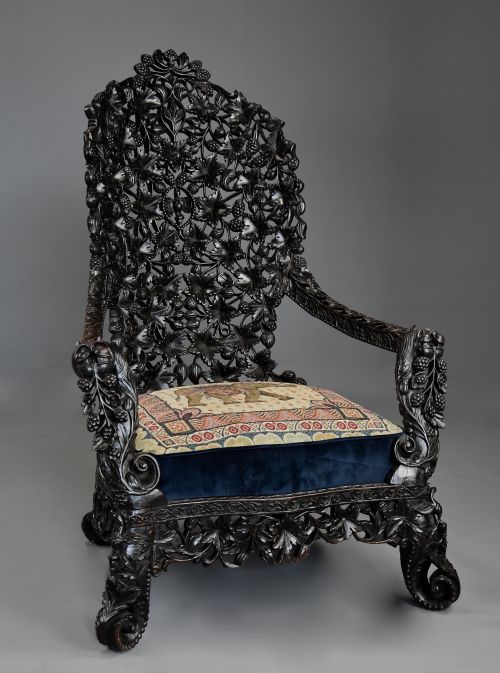
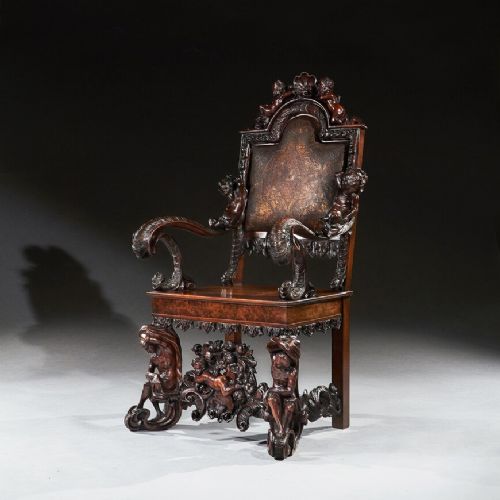
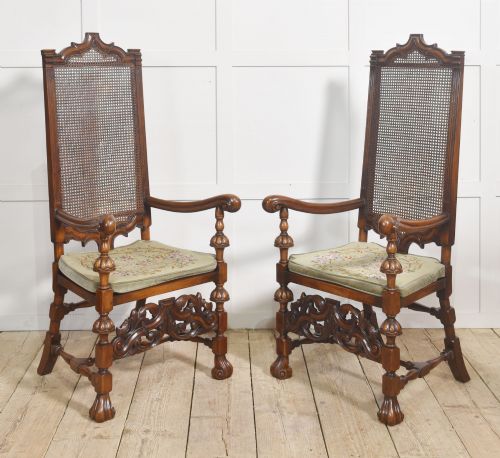
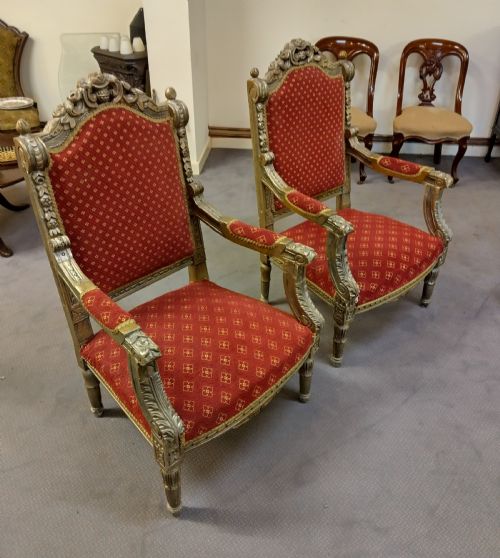
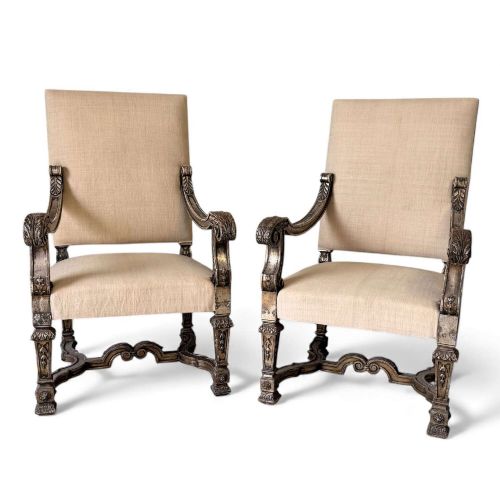
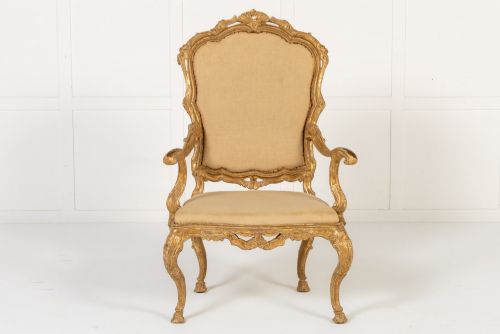
These ornate carved armchair examples offer deep relief and heavy timber frames, combining rich historical revival styles with domestic seating.
Ornate Carved Armchair
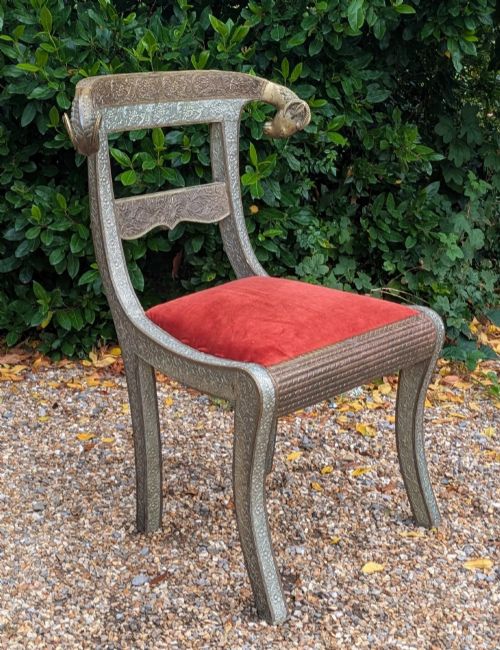
An ornate carved armchair sits at the heavier end of domestic seating, built to command a room rather than simply provide comfort. When searching for an ornate carved armchair, buyers encounter pieces originating from nineteenth-century European revivals alongside Anglo-Indian, Chinese, and Moroccan workshops.
The form stretches from walnut throne chairs and giltwood salon seats to robust oak hall chairs and Burmese peacock chairs. Walnut and oak dominate the European examples, whilst exotic hardwoods such as padauk, blackwood, and teak appear in colonial and eastern pieces.
Most selections date from the nineteenth century, encompassing Victorian Gothic and baroque revival movements, though eighteenth-century Italian giltwood and early twentieth-century painted variations also emerge.
How they were made
Carpenters constructed the primary frames using dense timbers like walnut, oak, and solid hardwoods, relying on mortise and tenon joinery to support heavy ornamentation. Woodcarvers then worked directly into the stock, chiselling deep relief foliage, figures, and animal motifs into the structural rails and crestings.
Surface finishes involved applied gilding over gesso, painted layers, or hand-polished timber waxed to reveal the grain. Upholsterers completed the seating using materials such as velvet, silk, leather, and plain fabric, secured with brass tacks over webbing.
Ornate Carved Armchair Retail Price Guide 2026
Typical asking prices for ornate carved armchair among the pieces listed under this phrase on Sellingantiques today, from the lower quarter to the upper quarter. They describe what is for sale here now, not the wider market.
Listings feature oak, walnut, teak, padauk, and giltwood across nineteenth-century and early twentieth-century periods.
What varies in quality
The depth and definition of the hand carving dictate the primary tier of craftsmanship, separating crisp, undercut foliage from shallow, mechanical moulding. Timber selection also defines the grade, with dense, figured walnut and heavy solid hardwoods holding intricate detail far better than softer substitute woods.
Cohesion of style marks the superior examples, where the proportions of the arms, legs, and backrest support the heavy ornamentation without appearing clumsy. Original surface treatments, whether patinated giltwood or polished hardwood, retain historical integrity that heavy modern refinishing obscures.
Andrea Brustolon
The Ornate Carved Armchair Glossary
- Giltwood
- Timber coated with a thin layer of gold leaf over a prepared gesso ground. This finish appears frequently on nineteenth-century baroque revival throne chairs.
- Baroque Revival
- A nineteenth-century style imitating the dramatic, heavy ornamentation of the seventeenth century. It utilises exaggerated curves, scrolls, and deep relief carving.
- Hardwood
- Timber derived from broadleaved deciduous trees, providing the dense substrate necessary for intricate carving. Padauk, walnut, and oak serve this function.
- Savonarola chair
- A folding chair formed of multiple intersecting wooden curves creating an X-shaped frame. Originating in the Renaissance, nineteenth-century revivals adopted the form.
Ornate Carved Armchair: Frequently Asked Questions
What periods do these armchairs come from?
The selection spans primarily the nineteenth century, taking in Victorian production alongside earlier eighteenth-century Italian examples and early twentieth-century adaptations. Revival styles dominate the dating.
Craftsmen during these eras drew heavily on baroque, rococo, and Gothic vocabularies, reinterpreting historical forms for contemporary domestic interiors.
How were these chairs used historically?
Many served as throne chairs or hall seating designed to impress visitors in grand reception rooms rather than function as everyday lounging furniture. Their heavy frames and ornate carvings signaled status.
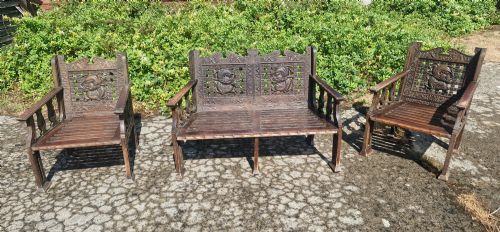
Others formed part of larger conservatory suites, salon groupings, or colonial seating sets intended for formal entertaining in diverse international residences.
What woods were used for the frames?
European pieces rely heavily on walnut and oak, whilst regional workshops utilised teak, padauk, and blackwood. Giltwood pieces employ underlying timber coated in gold leaf.
Selection depended on local availability and the need for a dense material that could support deep, undercut carving without fracturing.
How do I identify a revival style?
Revival pieces combine historical motifs like ram heads, Gothic tracery, or baroque scrolls with nineteenth-century construction methods. Tool marks and timber ageing help distinguish them from earlier originals.
Stylistic cues often mix regional interpretations, such as Anglo-Indian or French chateau influences applied to standard armchair frames.