


Ornate Brass Desk Light
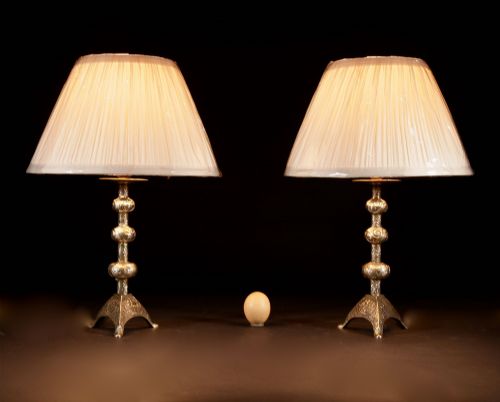
An ornate brass desk light brings warmth and period character to a workspace, offering heavy metal casting and decorative detailing.
Ornate Brass Desk Light
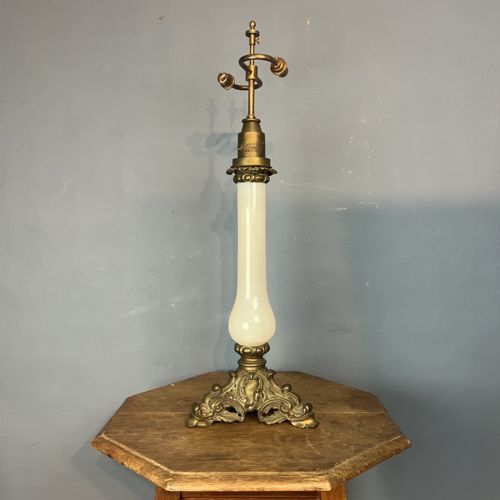
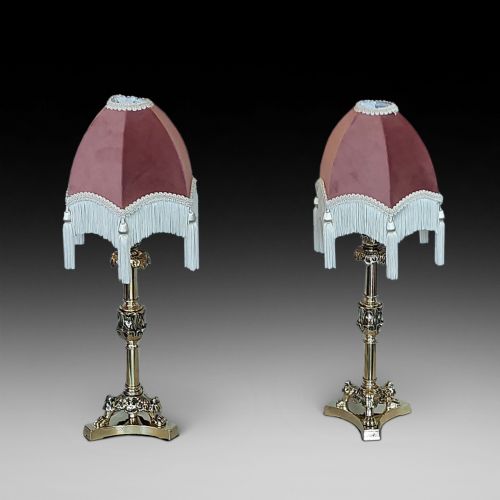
An ornate brass desk light is a functional task or accent illumination piece, frequently created by adapting earlier candlesticks, oil lamps, and candelabra into electric table lamps. These pieces span the nineteenth century and the early twentieth century, incorporating Victorian, Edwardian, and Rococo Revival design vocabularies into daily domestic settings.
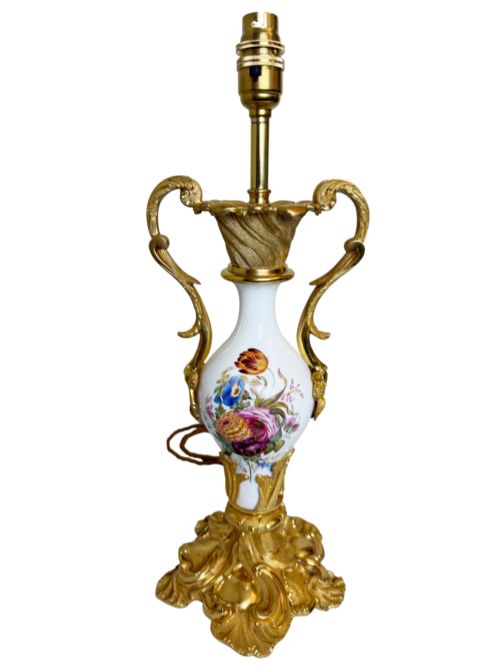
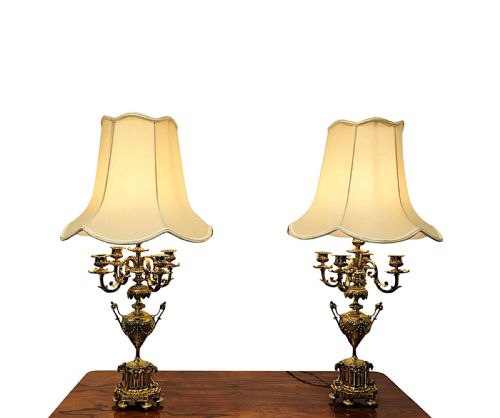
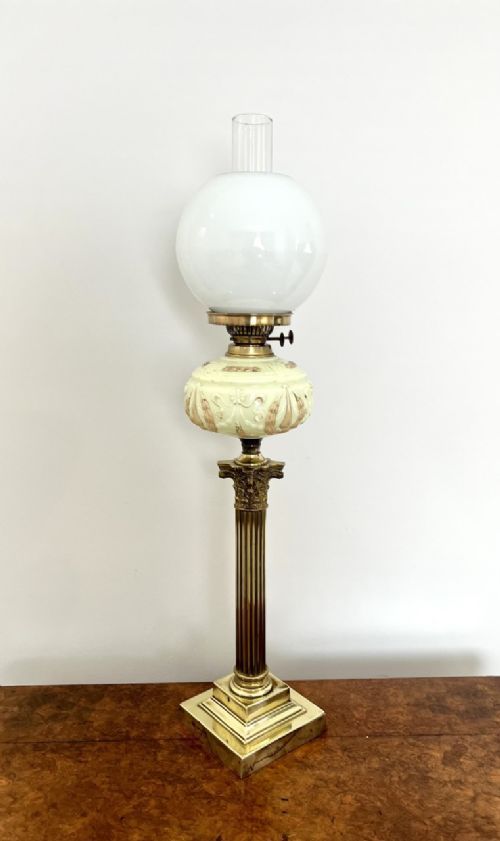
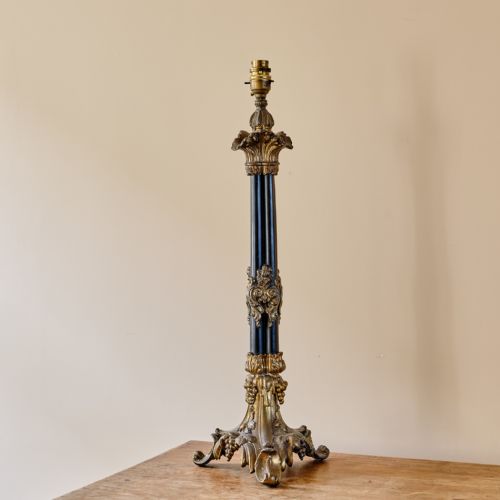
Buyers encounter numerous variations on this page, ranging from heavy Corinthian column lamps to French gilt bronze and ormolu pieces mounted on marble bases. Many items utilise mixed media, pairing cast brass frameworks with opaline glass shades or onyx plinths.
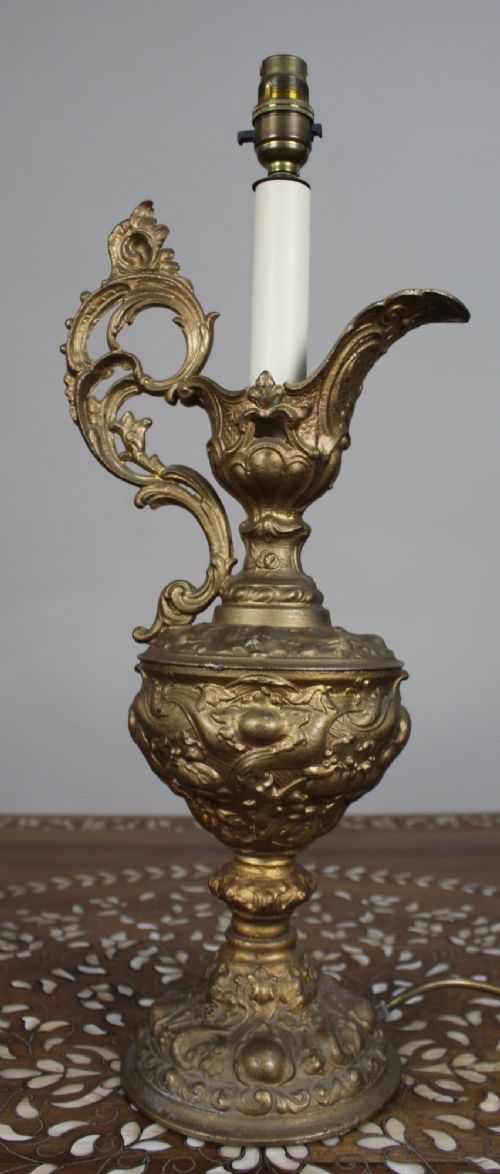
The assortment includes specialised reading lamps alongside converted ewers and amphora forms, reflecting the diverse manufacturing outputs of British, French, and international workshops across the 1880s, 1900s, and 1920s.
How they were made
Maker workshops utilised traditional foundry methods, casting brass, bronze, and gilt metal in moulds before hand-finishing surface details with chisels and files. Ormolu and gilt finishes required the application of gold leaf or chemical gilding over base metal cores to achieve rich metallic lustres.
Structural integrity relied on heavy turned columns, threaded rods, and weighted bases of marble or onyx to support taller fabric shades or multi-branch candelabra arms. Glass elements, particularly opaline reservoirs and shades, were mouth-blown and occasionally hand-painted or acid-etched.
Many survivors began life as oil lamps or ceremonial candlesticks before later workshop conversions integrated internal wiring and lamp holders without discarding the original cast metal ornamentation.
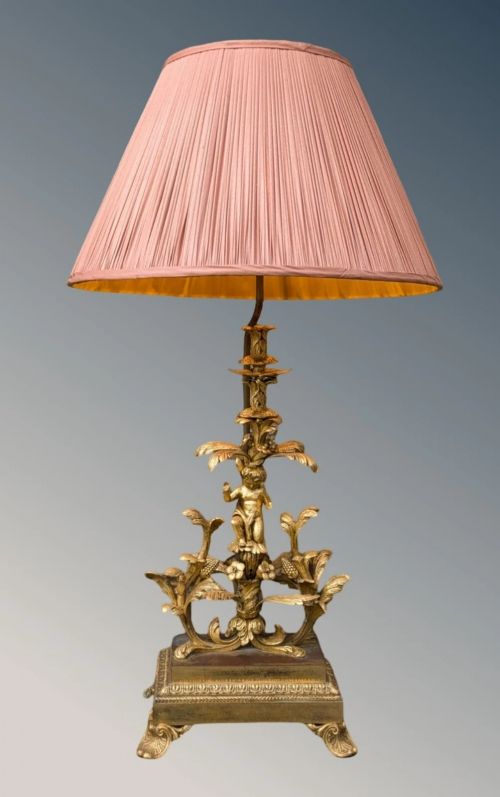
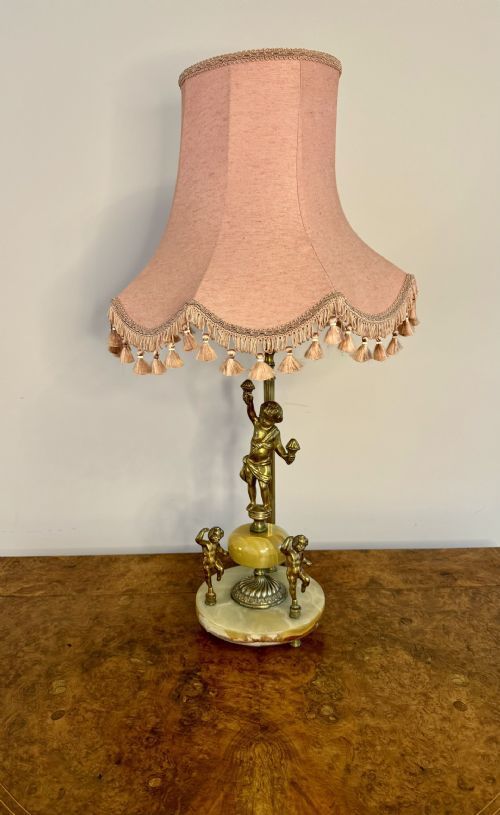
A solitary bronze cherub stands frozen mid-mischief, repurposed to hold a lightbulb instead of a candle.
What varies in quality
Quality separates mass-produced utility items from ambitious studio pieces through the crispness of the metal chasing and the depth of the original gilding. Finer examples display sharp relief work on acanthus leaves, cherubs, and classical fluting, whereas lesser versions rely on softer, shallower surface stampings.
The selection of secondary materials heavily influences the overall grade of the piece, with genuine marble, heavy onyx, and hand-blown opaline glass representing superior manufacturing standards over basic spelter or plain turned wood components.
Proportion and engineering also dictate standing value, seen in how securely a heavy multi-branch candelabrum or column mounts to its supportive plinth without listing or wobbling.
Wild and Wessel·Mc Gary
The Ornate Brass Desk Light Glossary
- Ormolu
- A method of applying finely ground high-carat gold to a bronze object using a mercury amalgam. This historic technique creates a warm, enduring golden surface.
- Opaline glass
- A pale, translucent glass type popular during the Victorian era for lamp shades and oil reservoirs. It diffuses light softly across a room.
- Spelter
- An alloy of zinc and lead used as a cheaper substitute for bronze or brass in decorative castings. It is softer and lighter than genuine bronze.
- Candelabra
- A branched candlestick designed to hold multiple light sources. Many antique examples were later converted to electricity for modern table use.
- Corinthian column
- An architectural column style featuring ornate capitals decorated with acanthus leaves. It is frequently seen on nineteenth-century table lamps.
Ornate Brass Desk Light: Frequently Asked Questions
What periods do these desk lights come from?
The pieces span the nineteenth century through the early twentieth century, taking in the Victorian and Edwardian eras.
Design influences range from French Rococo Revival and Neoclassical styles to Arts and Crafts interpretations.
Were these lights originally electric?
Many items began as oil lamps, kerosene burners, or candlesticks before undergoing later conversion to electricity.
Original mechanisms like burner galleries and switches often remain intact alongside modern wiring.
How do I care for antique brass?
Maintain the metal surfaces by dusting gently with a soft cloth to protect patinas and gilt finishes.
Avoid abrasive metal polishes that can strip away historic gilding or thin outer plating.
What is the difference between brass and gilt bronze?
Brass is an alloy of copper and zinc with a naturally bright golden metallic tone.
Gilt bronze, or ormolu, consists of a bronze base covered with a fine layer of gold.