




Classical Brass Figure Lamp
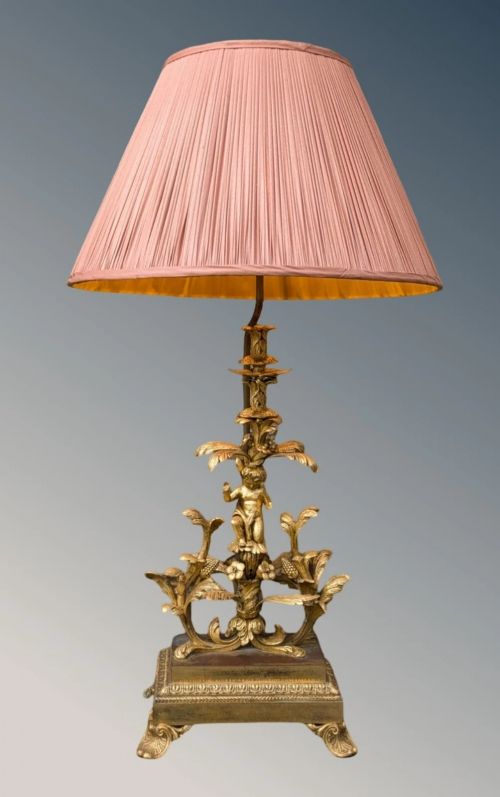
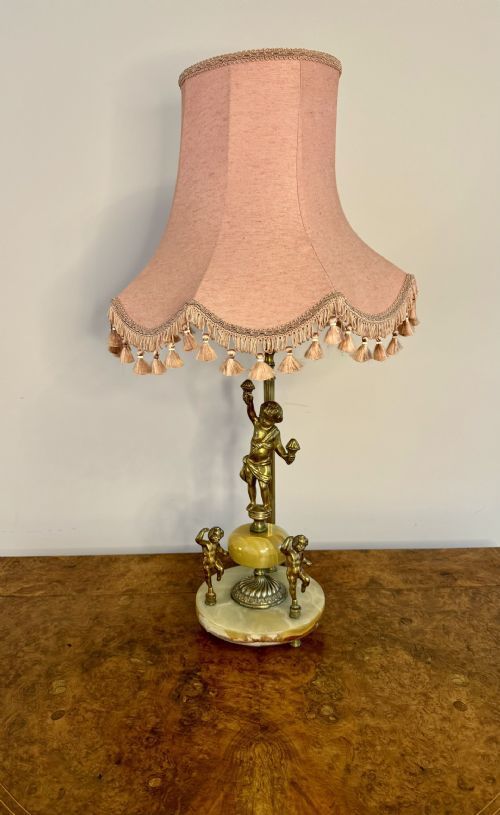
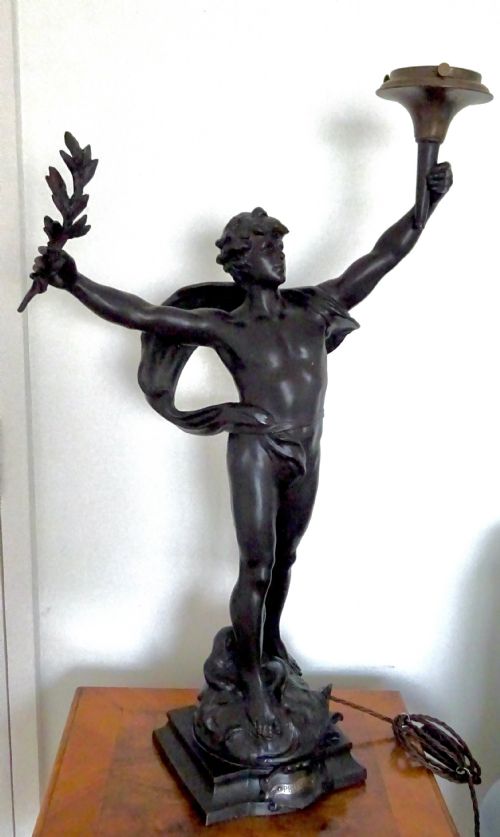
A classical brass figure lamp brings mythical figures, classical deities and cast metalwork straight into a room as practical illumination.
Classical Brass Figure Lamp
When you search for a classical brass figure lamp, you are looking at cast metal light fittings that incorporate human figures, classical motifs or allegorical subjects. The pieces on this page span the nineteenth century, the Victorian and Edwardian eras, and the early twentieth century up to nineteen twenty.
The forms divide mainly between table lamps and wall lights, utilising materials such as brass, bronze, gilt bronze, spelter, and occasionally wood or marble bases. You will encounter table lamps featuring figures like Atlas, Minerva, young girls and classical maidens, alongside pair brackets and wall lights in neoclassical, French empire, and art nouveau styles.
Victorian and Edwardian versions dominate the selection, often combining metal figures with fabric shades, opaline glass, or painted tole peinte elements. Some examples draw directly upon Greek revival porcelain or follow specific makers and historical revival aesthetics.
How they were made
The construction of these lamps relies heavily on metal casting, using brass, bronze, gilt bronze and spelter to form the structural figures and bases. Metal components are frequently gilded, painted, or combined with contrasting materials such as marble, onyx, wood, and opaline or frosted glass.
Many designs incorporate detailed figural sculpture produced by skilled foundries or artists, subsequently adapted for oil or electric lighting. Fabric and painted metal elements like tole peinte complete the upper portions, demonstrating a blend of sculptural art and functional engineering.
Materials recorded across the current selection include brass, bronze, gilt bronze, spelter, wood, marble, fabric, and painted tole peinte.
What varies in quality
The distinction between ordinary and superior pieces rests on the crispness of the metal casting and the depth of the figural modelling. Hand-finished details, heavier bronze or gilt bronze compositions, and high-grade materials like marble or onyx elevate the standing of a piece.
Artistic attribution also plays a role, as signed works from established makers or recognised foundries carry greater sculptural ambition. The integrity of the original patination, gilding, and integrated components separates mass-produced items from finer studio output.
L and F Moreau·Messenger·Samuel Alcock
The Classical Brass Figure Lamp Glossary
- Spelter
- An alloy of zinc and lead often used as a cheaper alternative to bronze for figural castings. It is frequently painted or electroplated to imitate richer metals.
- Tole Peinte
- Painted sheet metal, commonly used for decorative lamp bodies and shades during the nineteenth century. The painted surfaces often feature hand-applied details and rich colour palettes.
- Neoclassical
- A style inspired by the classical art and architecture of ancient Greece and Rome. It emphasises symmetry, proportion, and classical motifs such as urns, columns, and draped figures.
- Opaline glass
- A pale, translucent glass popular in nineteenth-century lighting. It diffuses light softly and appears in various pastel shades.
- Patina
- The surface sheen and coloration developed on metal through age and handling. A natural patina indicates uncompromised historical depth on brass and bronze elements.
Classical Brass Figure Lamp: Frequently Asked Questions
What is a classical brass figure lamp?
It is a decorative lighting fixture made from cast metals like brass, bronze, or spelter that incorporates human figures, deities, or classical motifs.
These pieces typically function as table lamps or wall lights, combining sculptural art with functional illumination across nineteenth and early twentieth-century revival styles.
How do I date a figure lamp?
Dating relies on identifying the prevailing aesthetic, such as Victorian, Edwardian, Art Nouveau, or French Empire, combined with material choices.
Evidence points to periods spanning the early nineteenth century through nineteen twenty, utilising material combinations like brass with opaline glass or onyx.
Were these lamps always electric?
Most nineteenth-century examples were originally manufactured for oil or gas before being converted to electricity later in their lifespans.
Original oil lamp components, such as burners or reservoirs, frequently survive alongside later electrical adaptations.
How do I clean a brass lamp?
Cleaning should be approached with caution to preserve the historic surface patination and any original gilding or painted finishes.
Light dusting with a dry cloth is usually sufficient, avoiding harsh metal polishes that can strip away aged surfaces.