
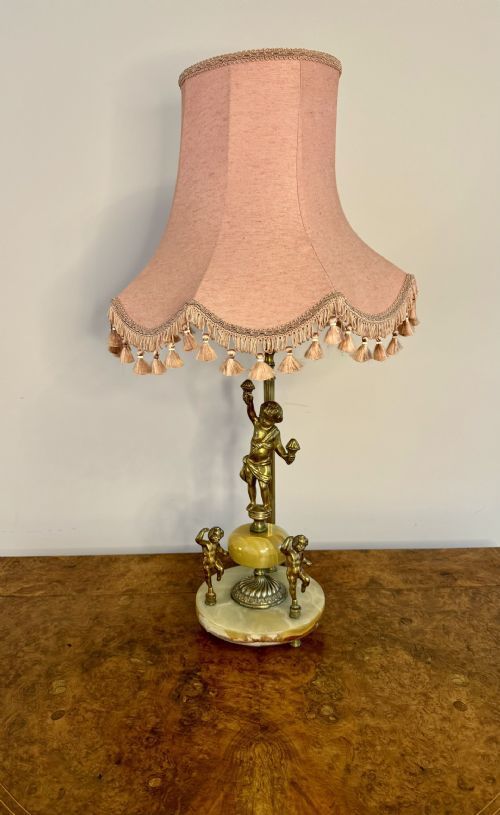


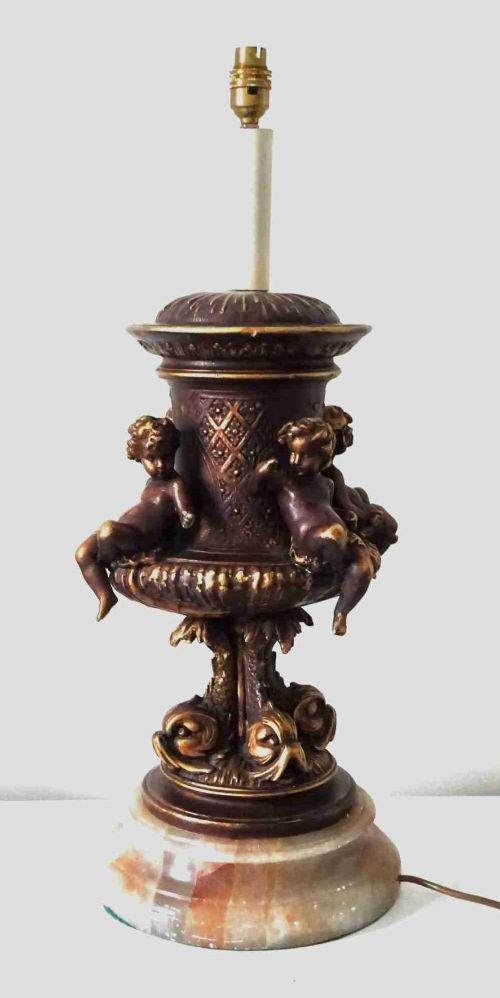
Onyx Base Desk Lamp
An onyx base desk lamp brings polished stone and warm metal to a work space, offering functional task lighting rooted in early twentieth century design.
Onyx Base Desk Lamp
An onyx base desk lamp is a table lamp featuring a stone foundation paired with metal mounts, columns or figural elements. These desk lamps emerge predominantly from the late nineteenth century through the 1930s, spanning Victorian, Edwardian and Art Deco periods.
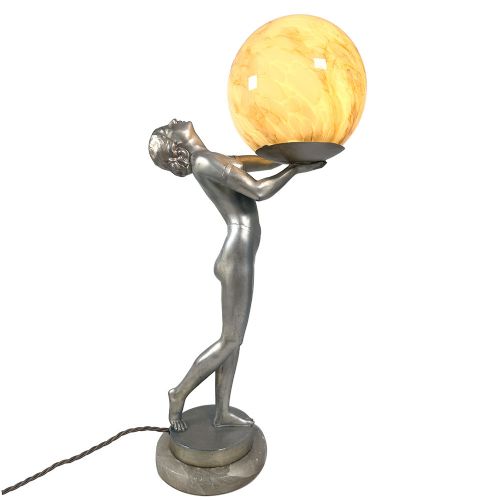
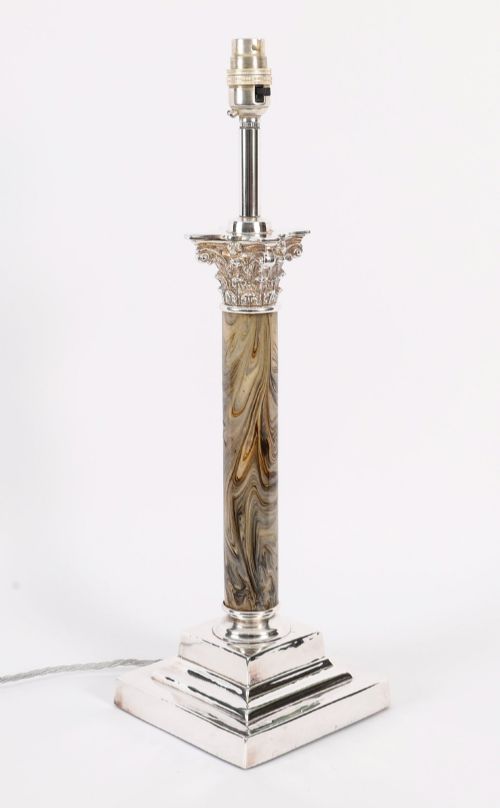
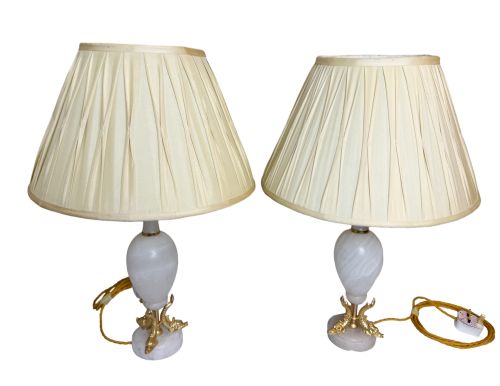
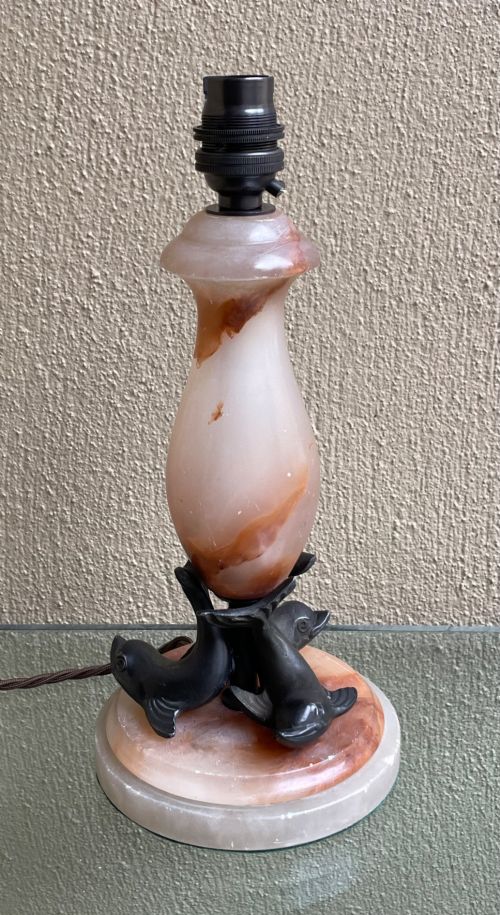
Buyers will encounter various forms on this page, including Corinthian columns, paired garnitures, and sculptural designs featuring cherubs or dolphins. Many pieces incorporate brass, gilt bronze or ormolu trim alongside the primary white or coloured onyx and alabaster structures.
How they were made
The construction combines turned or carved natural stone with cast metal components such as brass, gilt bronze and silver plate. Stonemasons shaped the onyx and alabaster bases, while metalworkers produced decorative capitals, mounts and figural accents.
Makers integrated weighted metal foundations to support the heavy stone and added fabric shades to complete the assembly.
Several lamps feature cheerful dolphins and cherubs perched alongside polished stone pillars to brighten a desk.
What varies in quality
Quality rests in the crispness of the metal casting and the depth of the stone figuring. Finer examples display cleanly chased ormolu mounts and substantial columns of solid onyx rather than thin veneers.
The harmony between the stone base and the bronze or brass elements dictates the overall merit of the piece.
The Onyx Base Desk Lamp Glossary
- Onyx
- A translucent banded variety of chalcedony or calcite used for decorative bases and architectural columns. It provides a smooth, polished surface with natural veining.
- Ormolu
- Gilt bronze produced by applying a finely ground high-carat gold mercury amalgam to a bronze object. This technique creates a rich golden finish on lamp mounts and decorative figures.
- Corinthian column
- A classical architectural order featuring an ornate capital decorated with acanthus leaves. Lamps often utilise this form for the main upright shaft.
- Alabaster
- A fine-grained, translucent stone softer than onyx, frequently carved into sculptural lamp bodies and figural motifs.
Onyx Base Desk Lamp: Frequently Asked Questions
What periods do these desk lamps come from?
The pieces span from the late nineteenth century into the 1930s. They include Victorian, Edwardian and Art Deco designs.
Most examples reflect the revival styles popular during the early twentieth century.
How do I identify an onyx base?
Onyx displays natural stone banding and a cool, polished touch. It is heavier than glass or synthetic alternatives.
Inspect the base where the stone meets the metal mount to see the natural strata.
What metals are used with the stone?
Makers combined onyx and alabaster with brass, gilt bronze, ormolu and silver plate. These metals form the capitals, bases and sculptural figures.
The metal elements often feature classical revival or rococo decorative details.
How do I place one in a room?
These lamps suit study desks, side tables and mantelpieces where their stone bases can catch the light. Pair them with traditional or eclectic interiors.
Ensure the weight of the stone base rests securely on a stable surface.