




Brass and Onyx Lighting
Brass and onyx lighting brings together heavy stone and polished metal to illuminate rooms with classical proportion and rich texture.
Brass and Onyx Lighting
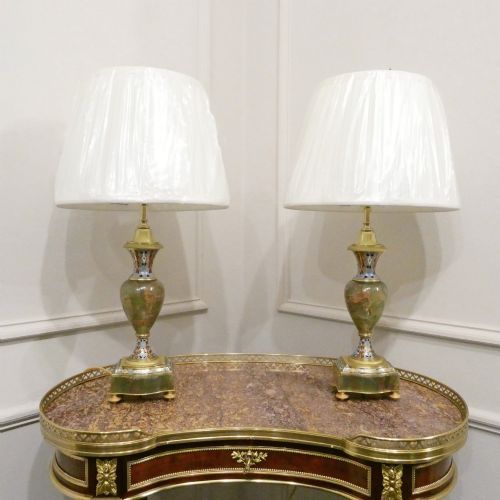
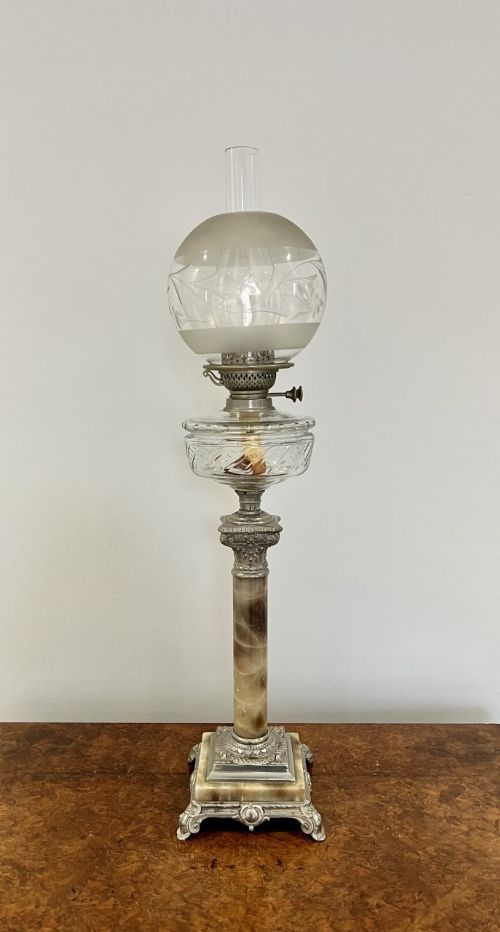
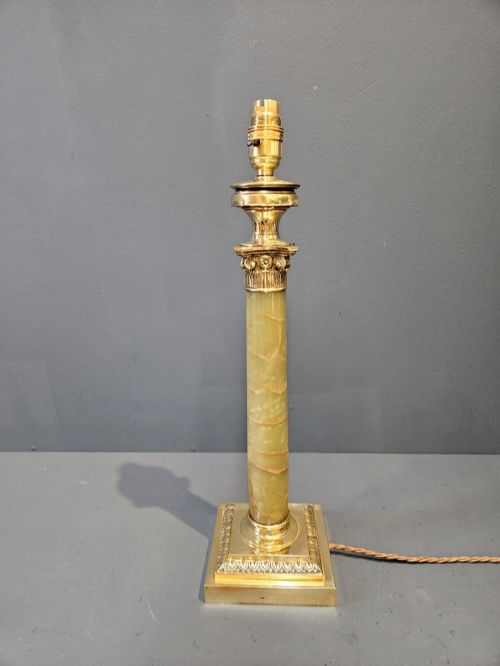
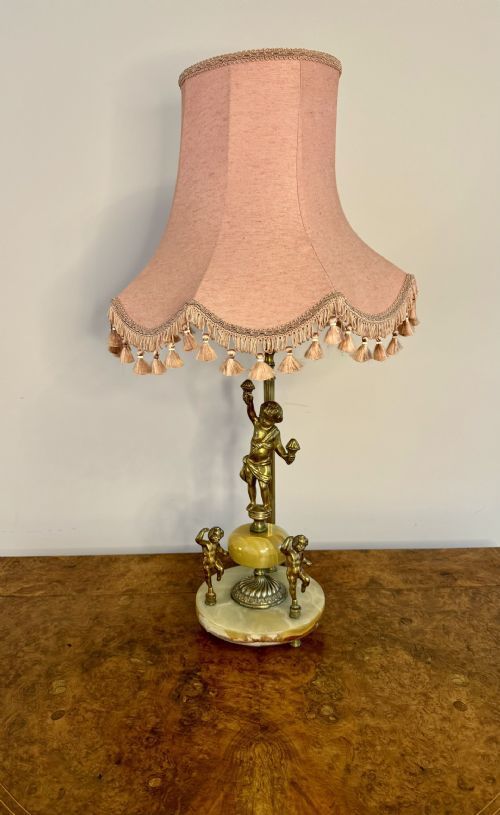
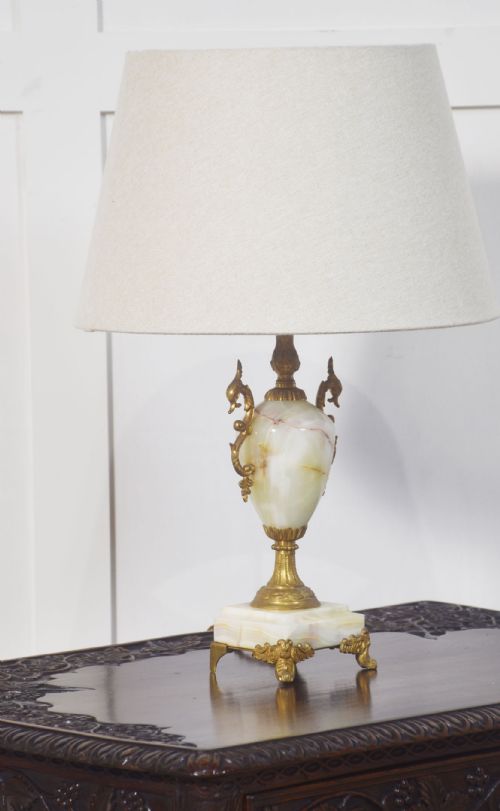
Brass and onyx lighting encompasses table lamps, floor lamps, standard lamps, oil lamps, candlesticks, and candelabras spanning the Victorian, Edwardian, and Art Deco periods. You are most likely to encounter table lamps and standard lamps fashioned from brass columns paired with natural stone bases and bodies.
The aesthetic draws heavily on French Neoclassical, Second Empire, and revival styles, often incorporating ornamental metalwork alongside the striated mineral body. Pieces range from modest domestic desk fittings to imposing floor-standing standards designed for principal reception rooms.
Materials and Technique
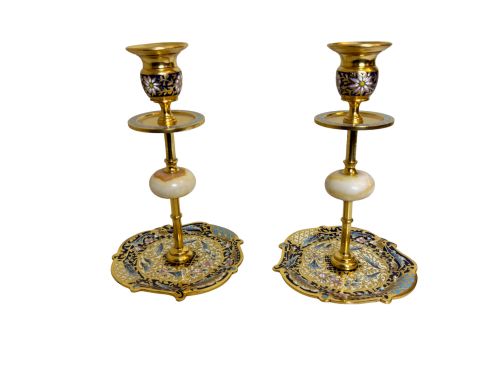
Makers utilised turned and cast brass, gilt bronze, and ormolu to construct the structural frames and decorative mounts, securing them to pedestals of genuine onyx or marble. Many examples integrate champleve enamel work or gilded metal details cast with classical motifs such as paw feet, columns, and foliate scrolls.
Lamps often started life as oil-burning apparatus before conversion to electricity during later decades, while others utilised fabric shades and multi-branch configurations to distribute illumination. The stone elements were shaped on lathes or carved by hand, displaying natural veining and varied tones from white to deep green.
The inventory spans the Victorian and Edwardian eras, alongside pieces attributed to the 1860s, 1880s, 1890s, 1900, 1910, 1920, and Art Deco periods.
Assessing Quality
Superior examples distinguish themselves through the crispness of the metal casting and the depth of the gilding, where hand-chased details remain sharp and defined rather than smooth or blurred. The weight and selection of the onyx or marble play a significant part, with dense, evenly figured stone carrying greater visual presence than patchy alternatives.
Proportion and structural integrity dictate the distinction between standard production items and exceptional works, particularly in tall floor lamps and Corinthian column designs where balance is paramount. Integrated decorative elements such as cherubs, dolphins, or champleve panels should fit seamlessly into the overall architecture of the piece.
The Brass and Onyx Lighting Glossary
- Ormolu
- A technique of applying finely ground, high-carat gold to a bronze base using a mercury amalgam. This historic process yields a warm, durable finish common on fine French metalwork.
- Champleve
- An enamelling method where troughs or cells are sunk into the surface of a metal object and filled with vitreous enamel powder before firing. It creates vibrant coloured patterns across candlesticks and lamp mounts.
- Cassolette
- A dual-purpose decorative vessel featuring a reversible lid that transforms the object from an urn into a burner or candle holder. French examples frequently appear in nineteenth-century interiors.
- Corinthian Column
- An architectural support order characterised by ornate capitals decorated with acanthus leaves. This classical form was frequently adapted for standard lamps and table bases.
- Standard Lamp
- A tall floor-standing lighting fixture designed to illuminate a room from standing height. These pieces often feature adjustable shafts and heavy weighted bases for stability.
Brass and Onyx Lighting: Frequently Asked Questions
How do I clean brass and onyx safely?
Dust the surfaces regularly with a soft, dry cloth to prevent the accumulation of grime in the carved details of the stone and metal.
Avoid using harsh chemical polishes or abrasive pads on both the brass and the onyx, as these substances will strip the original patination and etch the polished mineral surface.
Are these lamps converted from oil?
Many nineteenth-century and early twentieth-century examples began their lives as oil-burning lamps before receiving modern electrical conversions during subsequent decades.
Inspect the internal wiring channels and burner assemblies to understand how the transition from oil to electricity was managed by previous owners.
How do I date an onyx lamp?
Examine the styling cues, such as Corinthian capitals, paw feet, or champleve enamel work, which align with Victorian, Edwardian, or Art Deco design periods.
Check the construction methods of the brass fittings and the wiring ports, as older pieces often feature hand-threaded components and heavy cast bases.
Can I adjust the height of a floor lamp?
Certain standard lamps incorporate telescopic mechanisms or screw keys designed to alter the vertical reach of the column for different spatial requirements.
Take care when operating historical adjustment mechanisms to avoid straining internal wiring or stripping worn metal threads within the brass shaft.