


Victorian Putti Table Lamp
A victorian putti table lamp brings sculptural charm to a room, combining figural bronze or porcelain with warm illumination.
Victorian Putti Table Lamp
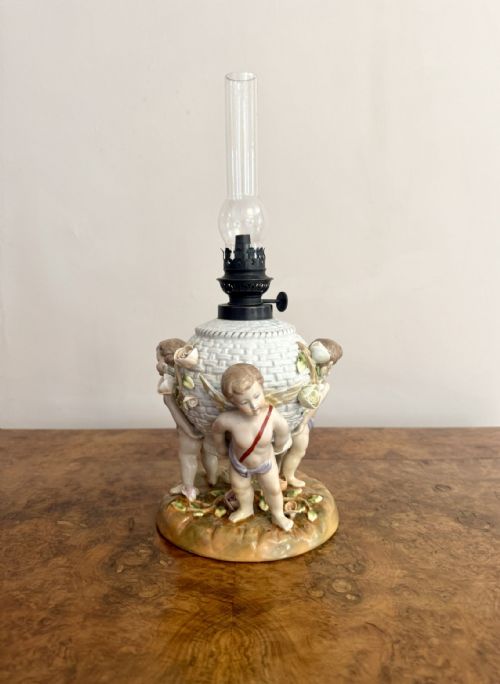
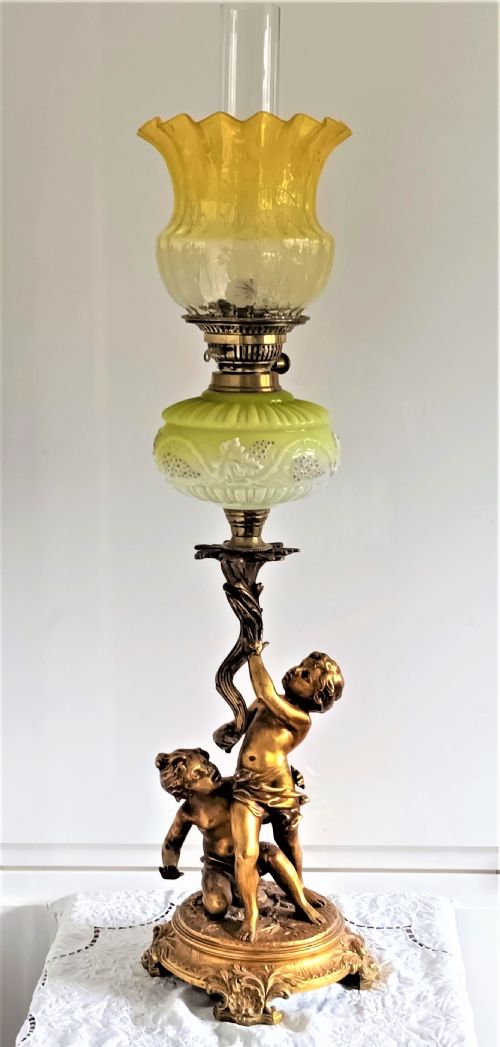
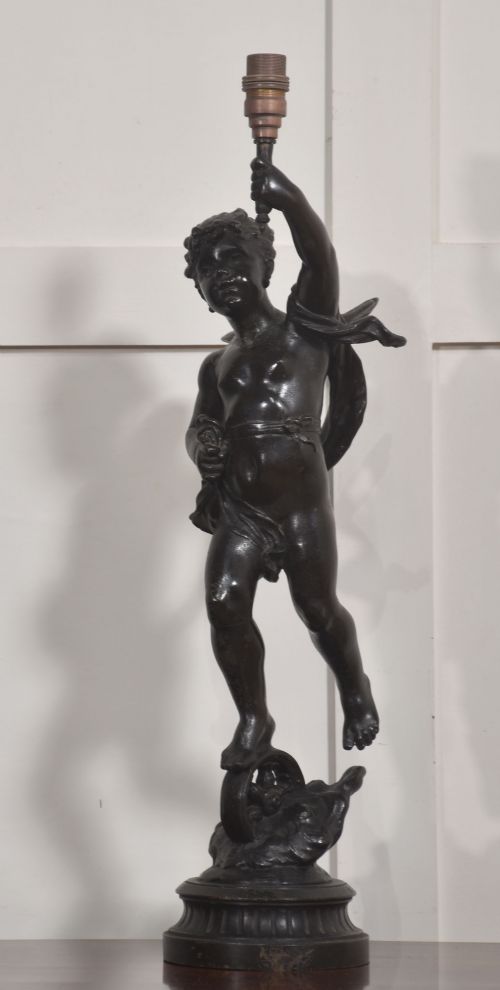
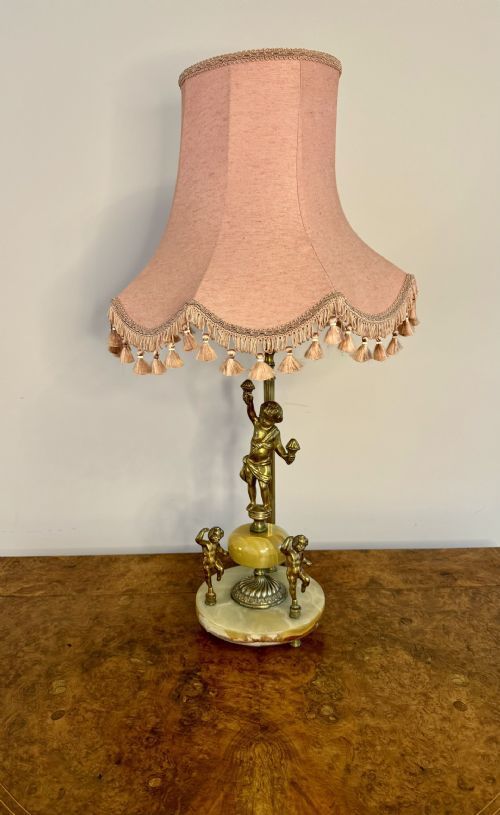
The forms on this page range from patinated and gilt bronze cherub statuettes to Sitzendorf and Meissen porcelain oil lamps with fabric shades. Buyers encounter both single lamp bases and balanced pairs, showing styles from Rococo Revival and Neoclassical to French Second Empire.
Many of these lamps integrate additional materials such as marble, onyx, brass, and glass alongside the central figural element. The sculptural putti or cherubs form the main decorative body, holding lamp fittings or standing beside columns and urns.
How they were made
Metal lamps utilise bronze, gilt bronze, or brass cast through traditional foundry methods, often finished with patination or fire gilding. Marble and onyx bases provide solid foundations, turned and polished to support the heavy metalwork.
Ceramic examples rely on moulded porcelain from European factories, decorated with hand-painted details and glazed surfaces. Many of these lighting pieces began life as oil lamps before later conversion to table lamps.
Listings feature items from the 1880s, 1890s, and early 1900s, uniting Victorian and Edwardian periods.
What varies in quality
The refinement of the casting and carving defines the better examples, where facial expressions and wing feathers on the putti remain sharp and detailed. Superior porcelain lamps display careful hand-painting and crisp moulding.
Material combination and weight separate standard production from finer work, particularly where solid bronze, matched marble, and original gilding come together. The integration of the electrical conversion relative to the original oil reservoir construction also dictates overall execution.
Aug. Moreau·Sitzendorf·Meissen
The Victorian Putti Table Lamp Glossary
- Putti
- Plumed or unwinged child figures used widely in decorative arts, often representing cherubs or cupids. They appear frequently supporting lamp columns or seated on bases.
- Ormolu
- Finely ground high-carat gold applied to a bronze base using a mercury amalgamation technique. This finish produces a warm, lasting golden sheen on nineteenth-century metalwork.
- Sitzendorf
- A German porcelain manufacturing town and factory known for ornate figural pieces. Their work often incorporates elaborate floral elements and delicate painted details.
- Patination
- The surface coloration developed naturally over time or applied chemically to bronze and brass. It adds depth and character to the metallic surfaces.
- Neoclassical
- A style drawing inspiration from classical antiquity, favouring symmetry, columns, and restrained ornamentation. It contrasts with the more asymmetrical curves of the Rococo Revival.
Victorian Putti Table Lamp: Frequently Asked Questions
What is a putti lamp?
A putti lamp incorporates sculpted figures of winged or wingless children into its base or column. These figures are typically cast in bronze or moulded in porcelain.
Most examples date from the nineteenth century and originate from French, German, or English makers. They function today as decorative table lamps, often adapted from older oil lamp designs.
Are these lamps converted oil lamps?
Many nineteenth-century table lamps began as burning oil lamps before electricity made conversion standard. The original reservoirs and burners were adapted to hold modern lamp holders and wiring.
This heritage accounts for the substantial proportions and heavy metal or ceramic bases found on these pieces. The conversion process preserves the decorative figural body while updating the utility.
How do I identify a Victorian lamp?
Victorian lamps show period materials such as patinated bronze, heavy brass, and hand-painted porcelain. Stylistic cues include Rococo Revival curves, Neoclassical symmetry, and French Second Empire ornamentation.
Dates cluster around the nineteenth and early twentieth centuries, encompassing Victorian and Edwardian production periods. Examining the casting quality and materials helps confirm the era.
Where should I place a bronze lamp?
Bronze and gilt metal lamps suit side tables, desks, or mantelpieces where their sculptural qualities can be appreciated. Their weight provides stability, making them practical for daily use.
Pronounced figural designs pair well with traditional interiors, drawing the eye as a focal point. Matching pairs work effectively on large pieces of furniture or flanking a mirror.