


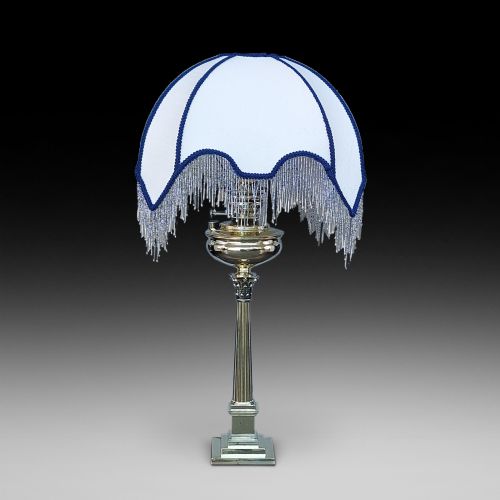


Beaded Fringe Shade
A beaded fringe shade tops a table lamp to cast a soft, textured pool of light.
Beaded Fringe Shade
A beaded fringe shade finishes a period table lamp or oil lamp, bringing a distinct layer of texture to a room. When you search for a beaded fringe shade, you are looking at illumination accessories paired with lighting fixtures from the Victorian, Edwardian, and Art Deco eras.
The selections on this page pair these shades with brass, bronze, silver plate, and porcelain lamp bases. Forms include Corinthian columns and figural designs from the nineteenth and early twentieth centuries.
How they were made
These pieces combine glass beads and fine fabrics such as silk, assembled upon structural frames of brass, bronze, or silver plate. Metal components involve casting, cold painting, and gilt finishing as seen in the period work.
Makers utilised durable base metals including spelter and brass to support heavy decorative shades and glass elements. The construction methods reflect the prevailing domestic lighting technology of their respective decades.
Listings feature items from the Victorian, Edwardian, and Art Deco periods utilising brass, bronze, glass, and silk.
What varies in quality
Quality rests in the finesse of the metalwork, whether a cast bronze cherub or a detailed brass Corinthian column. The precision of the assembly on both the lamp base and the shade determines the overall standard.
The choice of materials shapes the piece, moving from standard spelter and glass to heavier gilt bronze and fine silk components. Finer examples maintain their original finishes and structural integrity across the entire object.
The Beaded Fringe Shade Glossary
- Cold painted
- A method where bronze figures receive paint applications without subsequent kiln firing. This technique produces detailed polychrome finishes on sculptural bases.
- Spelter
- A zinc alloy utilised as a cost-effective alternative to bronze for decorative statuary and lamp bases. It takes gilding and patination well.
- Toleware
- Painted or lacquered metalware popular for decorative accessories and lamp components. It often displays rich surface colours.
Beaded Fringe Shade: Frequently Asked Questions
What periods do these lamps come from?
The lighting fixtures span the Victorian and Edwardian eras, extending into the nineteen-twenties and nineteen-thirties. You will find pieces reflecting nineteen-hundreds design movements alongside nineteenth-century examples.
Each period brings distinct material combinations, from heavy brass columns to cold-painted bronze figures.
How were these lamps used originally?
These fixtures served as primary domestic light sources on tables and desks, transitioning from oil burners to electric illumination over time. The fringed shades softened the glare of early electric bulbs while adding decorative warmth.
They stood in parlours and drawing rooms as both functional tools and ornamental centerpieces.
Can I use modern bulbs with them?
Most converted lamps accept standard modern bulbs, though you should check the fitting and wiring safety before regular use. Low-heat LED bulbs help protect delicate antique silk and glass components from thermal stress.
Consult a professional electrician if the wiring appears original to the period.
How do I identify a Corinthian column lamp?
Look for the distinct capital at the top of the metal shaft, adorned with carved acanthus leaves and scrolls derived from classical architecture. These columns are typically cast in brass or silver plate.
They became popular as table lamps during the late nineteenth and early twentieth centuries.