

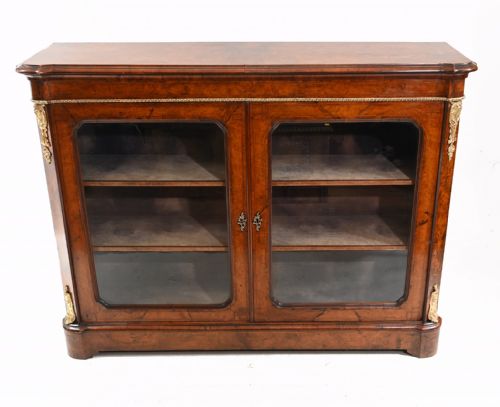


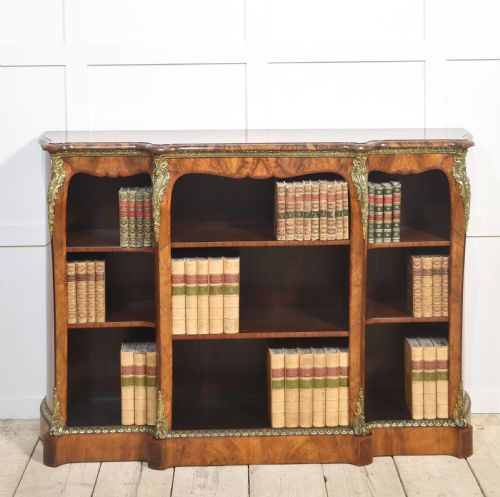

Ormolu Walnut Low Bookcase
An ormolu walnut low bookcase brings together rich timber and gilt mounts, offering a practical surface for display and storage.
Ormolu Walnut Low Bookcase
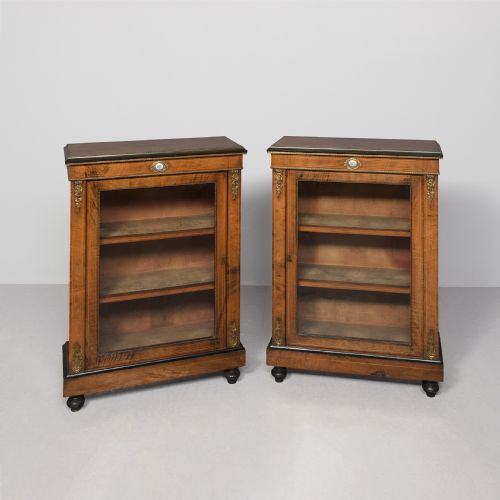
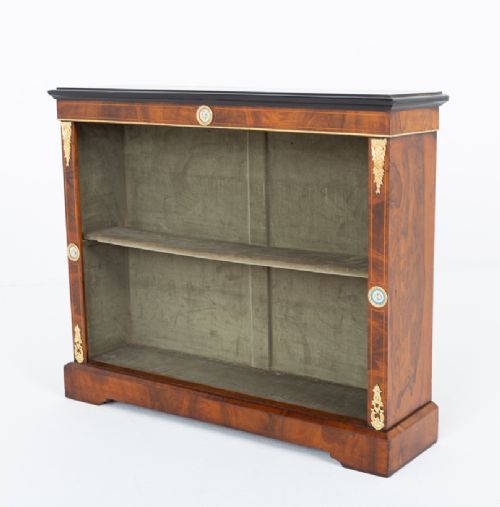
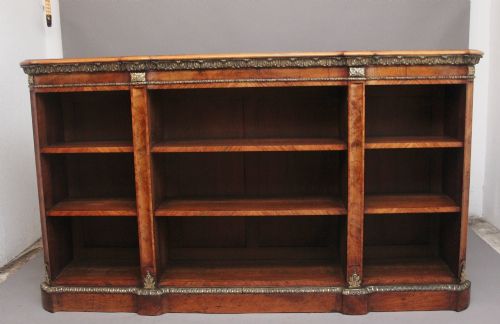
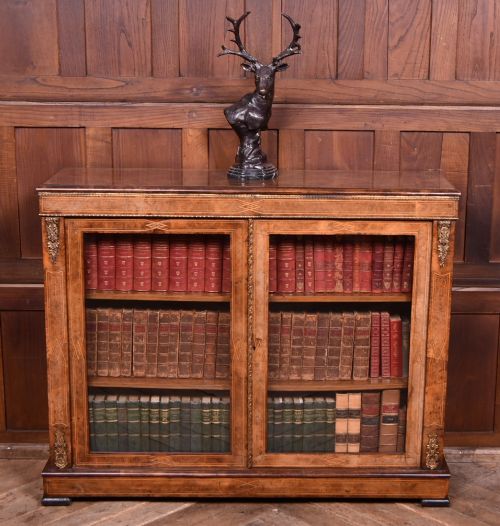
An ormolu walnut low bookcase combines open shelving or glazed doors with gilt bronze mounts and timber surfaces. These pieces serve as pier cabinets, display cabinets, and breakfront bookcases within domestic settings.
The pieces seen here date from the nineteenth century, including Victorian and Regency periods, alongside specific years such as eighteen-fifty, eighteen-sixty, and eighteen-eighty. Makers represented include Johnstone and Jeanes, alongside pieces attributed to Gillows.
Buyers meet forms ranging from single-door pier cabinets to large breakfront bookcases and open shelving units. Walnut appears alongside burr walnut, figured walnut, and kingwood, paired with glass, brass, boxwood, and velvet.
What varies in quality
The selection of timber grain defines the visual depth of each cabinet, with burr and figured walnut offering varied natural patterns. Marquetry execution and the crispness of brass and ormolu mounts indicate the standard of workshop production.
Structural joinery and the integration of glazed doors determine the durability of the piece over time. Attribution to workshops such as Johnstone and Jeanes or Gillows points to documented craftsmanship.
Ormolu Walnut Low Bookcase Retail Price Guide 2026
Typical asking prices for ormolu walnut low bookcase among the pieces listed under this phrase on Sellingantiques today, from the lower quarter to the upper quarter. They describe what is for sale here now, not the wider market.
Listings feature nineteenth-century furniture spanning Victorian and Regency periods, utilising walnut, burr walnut, figured walnut, ormolu, glass, brass, and velvet.
Johnstone and Jeanes·Gillows
The Ormolu Walnut Low Bookcase Glossary
- Ormolu
- Gilt bronze mounts applied to furniture as decorative enrichment. This technique creates metallic highlights against dark timber surfaces.
- Pier cabinet
- A low cabinet designed to fit wall spaces between windows. These pieces often feature glass doors for displaying collected objects.
- Marquetry
- Inlaid wood patterns arranged to form decorative motifs on cabinet doors and panels. Different timber species provide contrasting natural tones.
- Breakfront
- A piece of furniture where the central section projects forward from the flanking sides. This architectural form adds depth to bookcases and large cabinets.
- Burr walnut
- Timber taken from the growth excrescences of walnut trees, yielding complex swirling grain patterns. Cabinet makers prize this wood for veneering prominent surfaces.
Ormolu Walnut Low Bookcase: Frequently Asked Questions
Where do you put a low bookcase?
A low bookcase fits comfortably beneath windows or against living room walls without obstructing natural light. The top surface provides an ideal area for displaying lamps, clocks, and decorative objects.
These pieces sit lower than traditional library bookcases, keeping books and display items within easy reach. Their compact height helps maintain an open feel in smaller rooms.
How do you clean ormolu mounts?
Ormolu mounts require gentle dusting with a soft, dry cloth to prevent the buildup of dirt within the cast details. Avoid harsh chemical polishes that can strip the gilt finish from the bronze surface.
Water and abrasive cleaners will damage both the ormolu and the surrounding walnut veneer. Professional conservation is advisable if the mounts require deeper cleaning.
Are nineteenth-century cabinets sturdy enough for daily use?
Nineteenth-century cabinets are built from solid construction methods utilising traditional joinery and quality hardwoods. Shelves and doors support regular handling when treated with reasonable care.
Internal shelf heights in older bookcases often suit historical book sizes rather than modern volumes. Checking the depth and weight capacity ensures the shelving meets current storage needs.