



Ormolu Table Candelabra
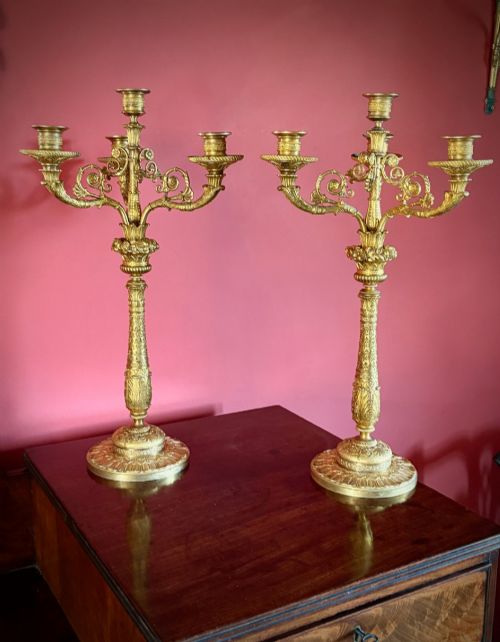
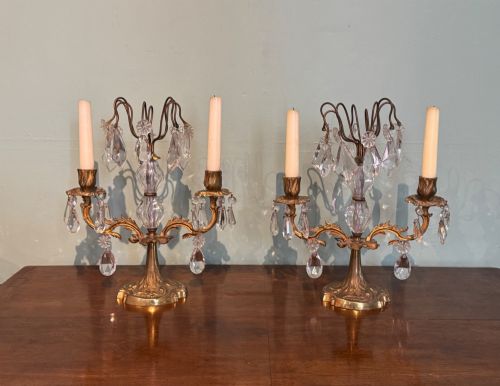
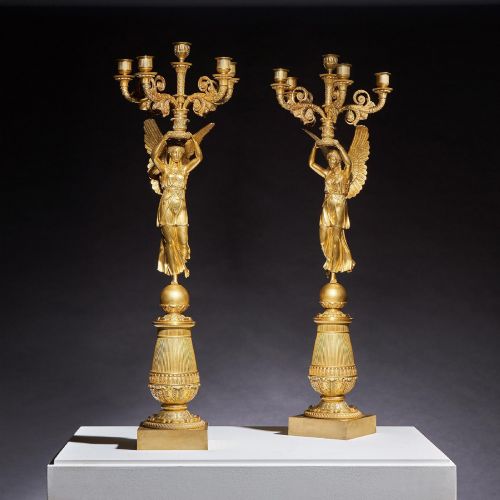
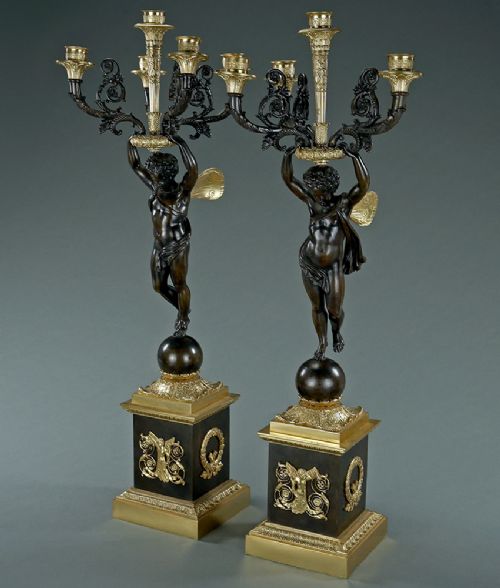
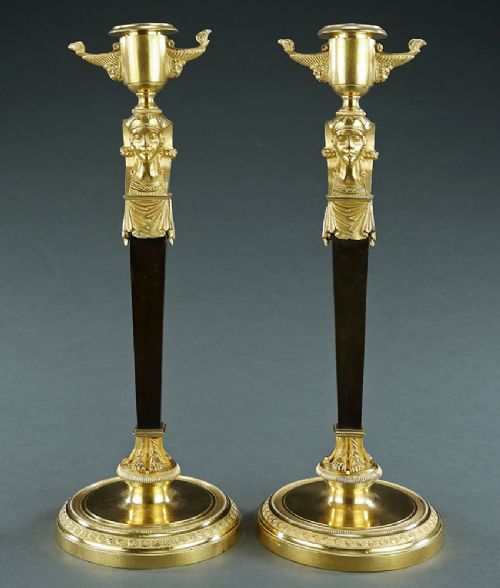
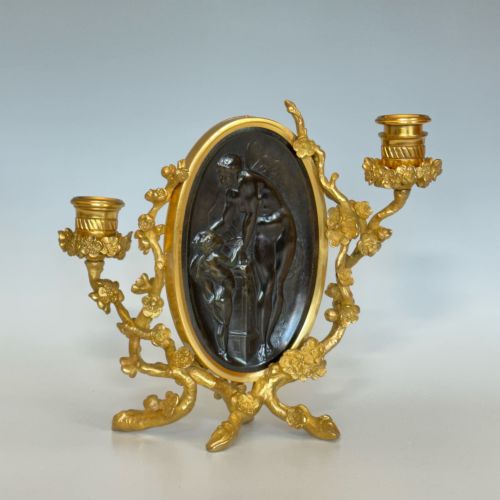
These ormolu table candelabra bring the warm, reflective glow of gilded metal and cast bronze to a dining table or mantelpiece.
Ormolu Table Candelabra
Ormolu table candelabra take the form of branched lighting stands designed to sit on furniture surfaces rather than floor pedestals. The examples found here span the nineteenth century, including Victorian, Regency, and various revival movements.
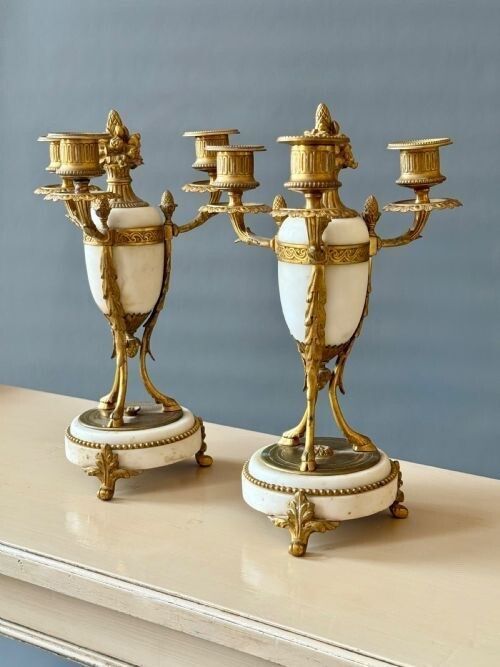
French workshops produced many of these pieces, alongside English and Swedish variants. Makers often combined the gilt metal branches with contrasting materials such as white marble bases or central porcelain figures.
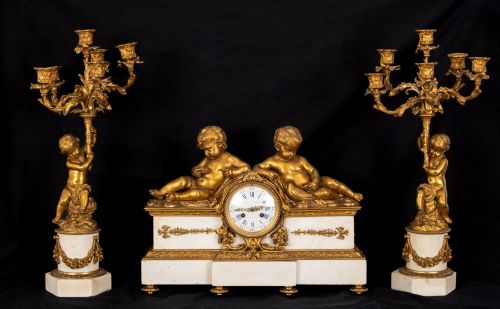
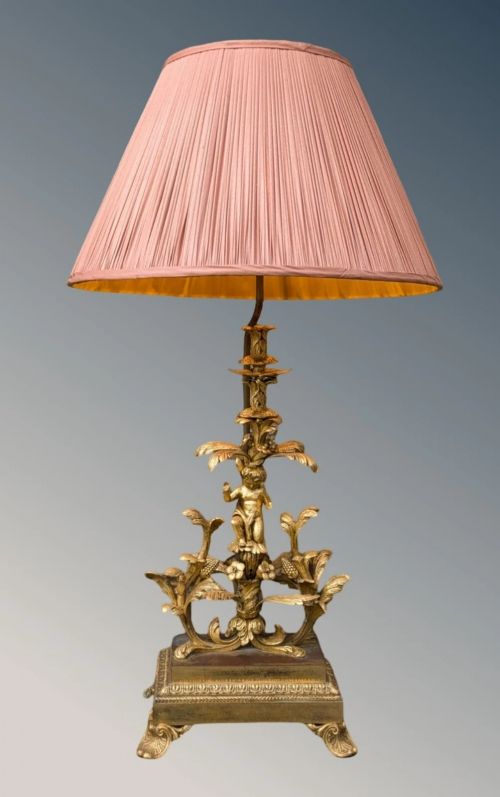
Alongside standard branch candelabra, buyers encounter related garniture pieces, clock sets, and table lamps adapted from earlier lighting fixtures. Pairs dominate the selection, offering symmetrical options for mantelpieces and side tables.
Materials and Technique
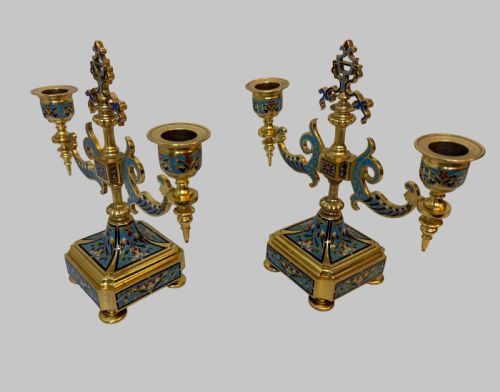
Foundry workers shaped the primary structure using cast bronze, brass, or gilt bronze, finishing the metal with mercury gilding or modern electroplating to achieve the distinctive ormolu surface. Artisans contrasted the bright gold finish with dark patinated bronze or champleve enamel details.
Stonemasons provided white marble and various other stones for the plinths and column shafts that support the metalwork. Glass makers added cut glass drops and lustres to catch the candlelight, while ceramicists contributed porcelain elements.
Listings feature nineteenth-century items incorporating gilt bronze, white marble, cut glass, and champleve enamel across various revival styles.
Craftsmanship and Detail
The precision of the metal chasing separates simpler production pieces from superior works. Skilled artisans carved crisp details into the cast bronze before gilding, defining facial expressions, drapery folds, and acanthus leaves with sharp edges.
The choice and combination of materials also indicate the grade of an object. Heavier cast components, dense marbles, and intricate multi-branch assemblies require greater labour and material cost than lighter brass and single-material constructions.
Pierre Philippe Thomire·Thiebaut Freres·Auguste Cain
The Ormolu Table Candelabra Glossary
- Ormolu
- Finely chopped gold amalgamated with mercury and applied to a bronze base, then heated to drive off the mercury. This historical fire-gilding technique creates a durable, warm golden finish.
- Garniture
- A set of matching decorative objects, typically consisting of a central clock flanked by a pair of candelabra or vases. These sets formed symmetrical centrepieces for nineteenth-century mantelpieces.
- Patinated bronze
- Bronze treated with chemical solutions to darken the surface tone. This dark finish creates visual contrast against bright ormolu mountings.
- Champleve
- An enamelling technique where troughs are dug into a metal surface and filled with coloured glass paste before firing. The resulting patterns sit flush with the surrounding metal frame.
- Candelabrum
- A branched lighting fixture designed to hold multiple candles. The plural form is candelabra.
Ormolu Table Candelabra: Frequently Asked Questions
How do I clean ormolu table candelabra?
Dust the surfaces gently with a soft, dry brush to remove particles without scratching the delicate gilt layer. Avoid chemical metal polishes entirely, as abrasive substances strip away the historic gold surface.
For stubborn grime, wipe the metal very lightly with a damp cloth and dry it immediately. Keep moisture away from any marble or fabric components integrated into the design.
Were these electrified later?
Many nineteenth-century pieces underwent conversion to electricity during the twentieth century to function as table lamps. Some retain their original configuration for wax candles, while others have hidden wiring routed through the central stem.
Buyers should examine the base and candle nozzles to determine the current wiring status. Professional electricians can reverse or update these alterations safely.
How do I distinguish French and English pieces?
French workshops frequently employed mercury-gilt bronze combined with white marble plinths and distinct Rococo or Empire revival motifs. Makers across the Channel often incorporated heavy brass or patinated bronze with restrained Regency styling.
Signature stamps on the bronze work or assembly markings inside the base often confirm the country of origin.
What is a clock garniture set?
A clock garniture pairs a central mantel clock with two matching side objects, such as candelabra or urns. These matched groupings created a cohesive decorative scheme for formal nineteenth-century rooms.
Individual pieces share identical casting styles, materials, and decorative themes across the complete set.