
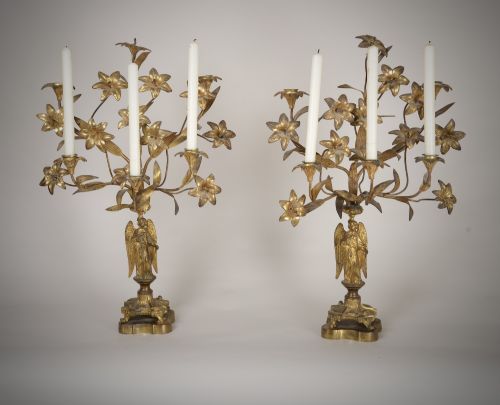


Floral Bronze Candelabra
These floral bronze candelabra bring genuine nineteenth-century French elegance and warm candlelight to any mantelpiece.
Floral Bronze Candelabra
Floral bronze candelabra are decorative lighting fixtures designed to hold multiple candles, combining sculpted bronze with botanical and figurative motifs. When you search for floral bronze candelabra, you encounter works primarily from the nineteenth century alongside eighteenth-century examples.
The pieces on this page span several distinct aesthetic movements including Louis XVI style, French Rococo revival, Gothic revival, and Neoclassical designs. Many examples incorporate figural elements such as cherubs, putti, and porcelain birds integrated among the metal foliage.
Forms range from standard multi-light candelabra and candlesticks to converted table lamps and table chandeliers. French workshops dominate the selection, frequently pairing the metalwork with marble bases or porcelain components.
How they were made
Maker's workshops cast these pieces using bronze, ormolu, and gilt brass, often employing both patinated and gilded finishes for textural contrast. The metal is shaped through traditional foundry methods to produce intricate floral stems, leaves, and scrolling arms.
Many items incorporate contrasting structural elements such as white marble bases, enamel detailing, and porcelain figures. Artisans mounted these components together using threaded metal fixings and pins, allowing for complex multi-tier compositions.
The listings show nineteenth-century French candelabra combining gilt bronze, white marble, and porcelain elements.
What varies in quality
Quality rests upon the crispness of the chasing and the depth of the original gilding or patina on the bronze surface. Finer examples display meticulous hand-finishing across every leaf and facial expression, whereas simpler pieces rely on softer cast details.
The integration of materials also defines the tier of the piece, such as heavy white marble plinths and incorporated Meissen porcelain figures rather than standard metal castings alone. Substantial weight and balanced proportions distinguish superior sculptural execution.
The Floral Bronze Candelabra Glossary
- Ormolu
- Gilt bronze produced by applying a mercury and gold amalgam to a bronze base and heating it until the mercury vaporised. This technique creates a durable, rich golden surface typical of fine French decorative objects.
- Patinated bronze
- Bronze treated with chemical solutions to alter its surface colour to dark brown, green, or black. This finish provides contrast against bright gilt highlights in sculptural candelabra.
- Louis XVI style
- A neoclassical design movement characterised by symmetry, straight lines, classical motifs, and restrained ornamentation. It draws inspiration from ancient Greek and Roman art.
- Putti
- Depictions of chubby male infants, often winged, used as decorative figures in art and furniture. They frequently appear clambering among the scrolling arms of nineteenth-century candelabra.
- Gothic revival
- An architectural and decorative style inspired by medieval forms, pointed arches, and ecclesiastical motifs. Pieces in this style offer a heavier, more austere alternative to rococo lightness.
Floral Bronze Candelabra: Frequently Asked Questions
How do I clean floral bronze candelabra?
Dust the metal gently with a soft, dry brush to prevent accumulation in the intricate floral recesses. Avoid commercial metal polishes, which can strip away historic gilt or patinated surfaces.
Keep them away from direct moisture and sources of heat to protect any integrated marble or porcelain elements. Gentle care preserves the original finish developed over centuries.
Were these candelabra originally wired for electricity?
These pieces were originally created solely to hold wax candles during the eighteenth and nineteenth centuries. Many surviving examples have since been adapted to function as table lamps.
Conversions are typically reversible if done carefully without damaging the main bronze structure. Collectors often appreciate both unmodified candelabra and period-appropriate adaptations.
How do I distinguish Louis XVI style from Rococo revival?
Louis XVI style pieces rely on strict symmetry, straight architectural lines, and classical urn or floral motifs. They present a more orderly and restrained appearance.
French Rococo revival designs feature asymmetrical scrolls, exuberant foliage, and organic, flowing curves. The overall composition feels much more dynamic and fluid than neoclassical work.
What is the significance of marble bases?
White marble plinths were utilised by French makers to provide weight, stability, and a refined neoclassical contrast to the gilt bronze work. They elevate the visual presence of the candelabra on a mantelpiece.
The quality of the marble grain and the precision of its cutting often indicate the general workshop standard of the piece.