

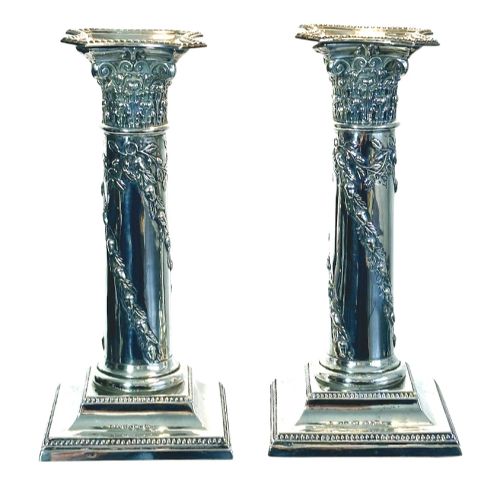

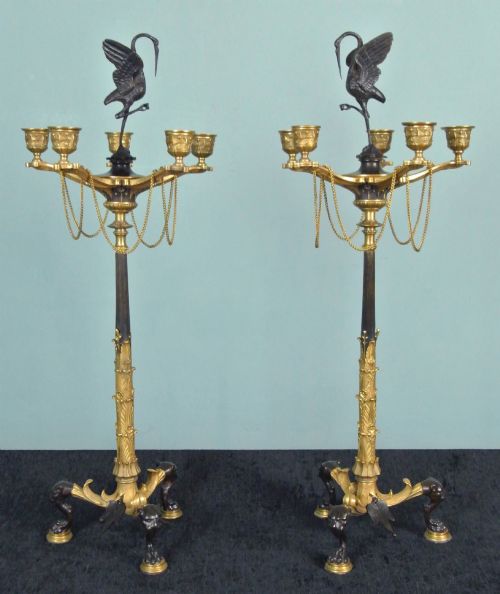
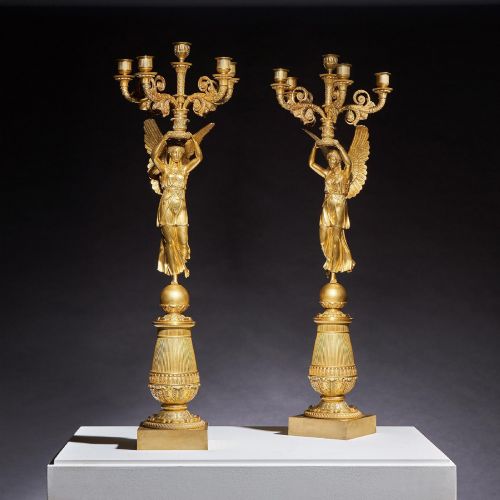
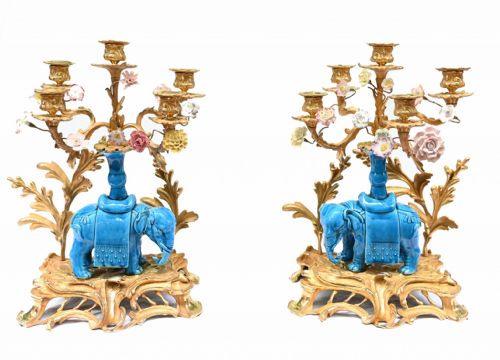


Pair of Decorative Candelabra
A pair of decorative candelabra brings symmetry and warm illumination to a room, drawing the eye with sculptural metalwork and period character.
Pair of Decorative Candelabra
A pair of decorative candelabra consists of matched lighting fixtures designed for multiple candles, created to stand upon tables or serve as wall sconces. When you search for this phrase, you encounter matched sets spanning the nineteenth century into the early twentieth century, with French Empire, Regency, and Rococo Revival influences appearing frequently.
The objects take various forms including multi-branched table pieces, wall lights, and pieces later converted to electric table lamps. Most examples originate from nineteenth-century workshops, utilising metals and stone to create imposing decorative statements for domestic interiors.
Materials and construction methods
Construction relies heavily on cast metals such as bronze, ormolu, brass, and gilt bronze, often paired with components of marble, carved wood, or porcelain. Foundries utilised lost-wax and sand-casting techniques to shape intricate foliage, figures, and scrollwork before applying gilding or patination to the surfaces.
The assembly of multiple branches required precise engineering to ensure balance and structural integrity across heavy arms. Additional elements like cloisonné enamel, toleware, and parcel gilt detailing were integrated to enhance the visual richness of the finished pieces.
Pair of Decorative Candelabra Retail Price Guide 2026
Typical asking prices for pair of decorative candelabra among the pieces listed under this phrase on Sellingantiques today, from the lower quarter to the upper quarter. They describe what is for sale here now, not the wider market.
Some nineteenth-century artisans concealed candle-extinguisher caps inside removable floral bobêches, keeping practical tools hidden within the sculptural foliage.
Distinctions in craftsmanship
Quality reveals itself in the crispness of the chasing and the depth of the casting detail across the metal surfaces. Finer pairs exhibit hand-finished ornamentation where every leaf, scroll, and figural element is sharply defined rather than softened by worn moulds.
The choice and combination of materials also set tiers apart, with genuine fire-gilt ormolu and dense statuary marble elevating a piece above simpler brass or painted wood constructions. Furthermore, the harmonious matching of both components in a pair indicates superior original manufacture.
Barbedienne·Pierre Philippe Thomire
The Pair of Decorative Candelabra Glossary
- Ormolu
- Gilt bronze created by applying a mercury-gilding amalgam to a bronze base. This technique produces a durable golden finish seen on many nineteenth-century pieces.
- Candelabra
- A branched candlestick holder designed to support multiple candles simultaneously. These fixtures frequently serve as prominent centrepieces on mantelpieces or sideboards.
- Regency
- An English design style dating from the early nineteenth century. It incorporates classical Greco-Roman motifs and bold ornamentation.
- Cloisonné
- An ancient technique for decorating metal object surfaces. Artisans solder wire partitions to the metal body and fill the resulting cells with enamel paste before firing.
- Patination
- The surface alteration or coloration that develops on metal over time through age and use. Intentional patination is often applied by makers to create depth and contrast against gilt elements.
Pair of Decorative Candelabra: Frequently Asked Questions
Are these candelabra wired for electricity?
Many examples remain in their original candle-holding format, while others have been adapted into table lamps over the years. Converted pieces retain their sculptural branches alongside modern electrical fittings.
Descriptions specify whether a set retains its original configuration or includes electrical wiring. Professional rewiring is recommended for older conversions to ensure safety in the home.
How can I tell French Empire from Regency style?
French Empire pieces often display militaristic motifs, classical figures, and rich fire-gilding influenced by Napoleonic taste. The forms tend to be monumental and strictly symmetrical.
Regency designs lean towards lighter, English interpretations of classical antiquity with slender reeded columns and delicate bronze mounts. Comparing the specific scrollwork and proportions helps clarify the stylistic origin.
Where should I place a large pair?
Large pairs suit prominent positions such as a grand mantelpiece, a heavy sideboard, or a console table in a hallway. Their height and reflective metal surfaces make them natural focal points in a room.
Ensure the supporting furniture is stable enough to bear the weight of heavy bronze and marble models. Placing them away from high-traffic areas protects delicate branches and hanging crystals from accidental bumps.