

Ormolu Rosewood Cabinet
An ormolu rosewood cabinet brings together rich, dark timber and gleaming cast bronze mounts in forms ranging from French revival vitrines to Regency side cabinets.
Ormolu Rosewood Cabinet
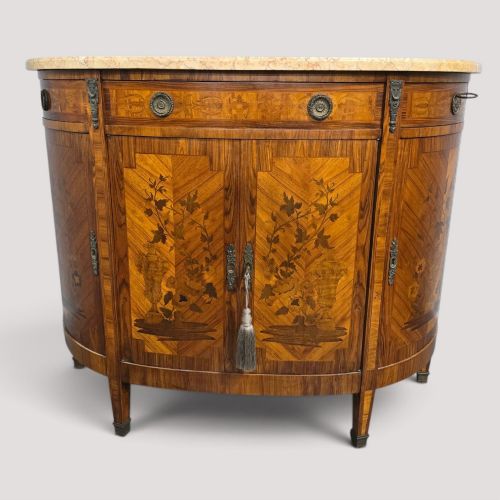
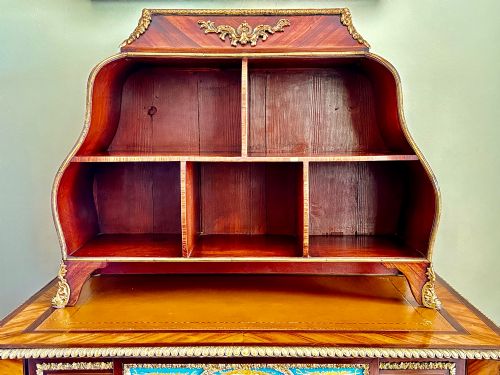
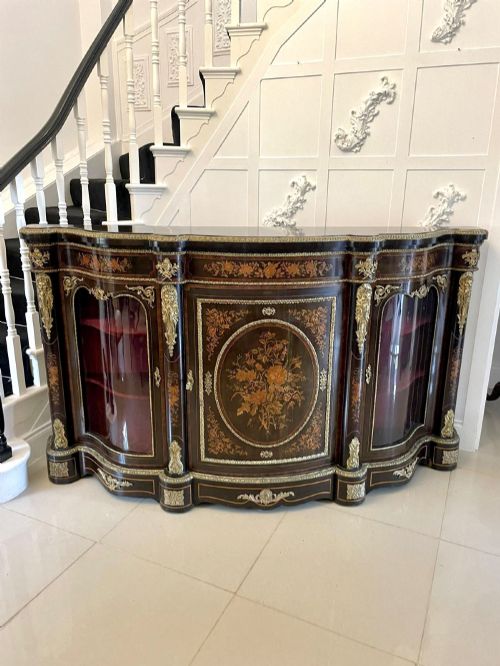
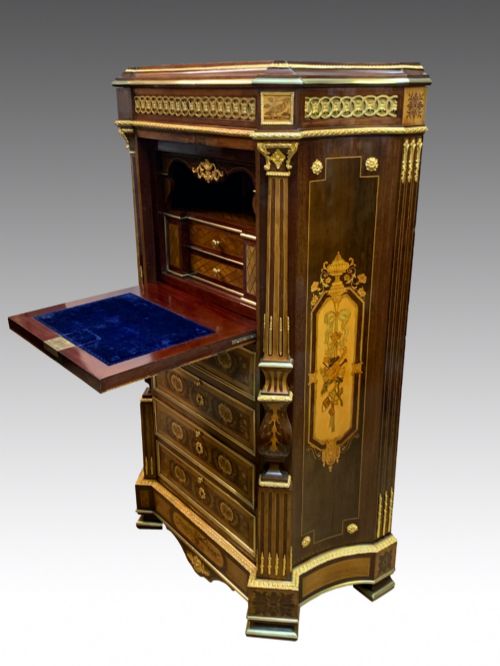
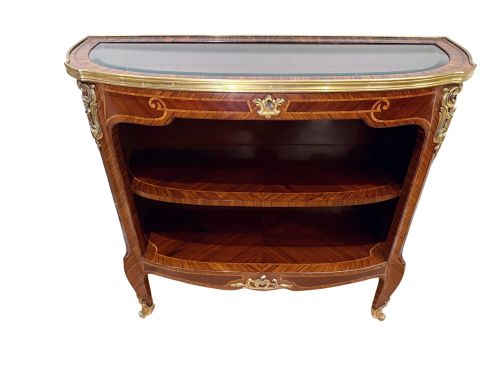
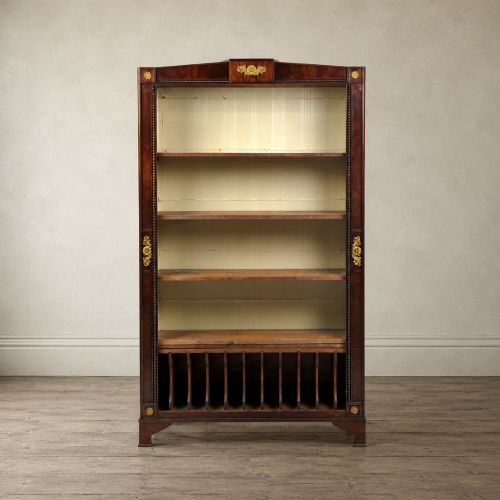
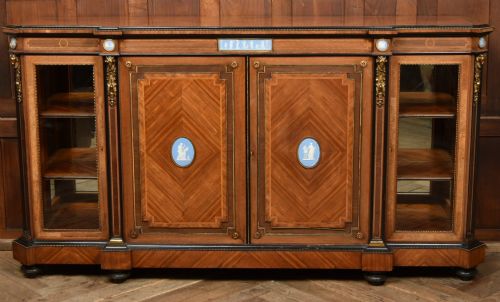
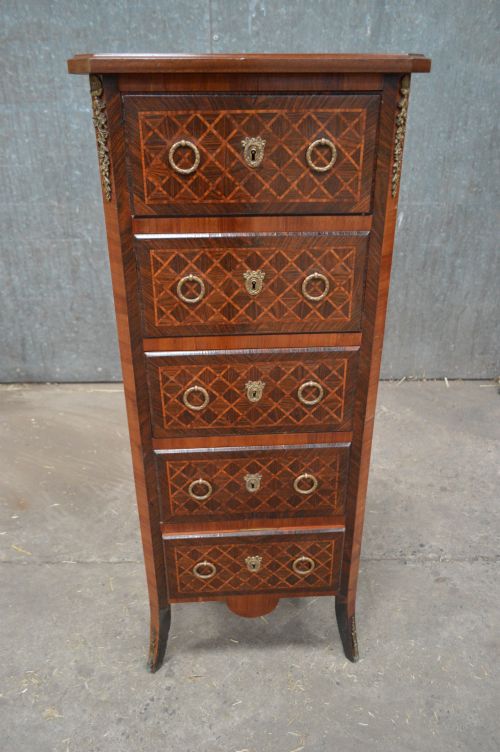
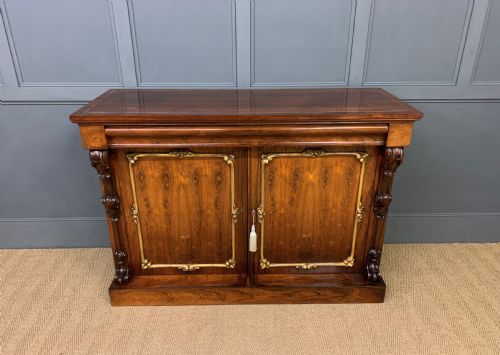
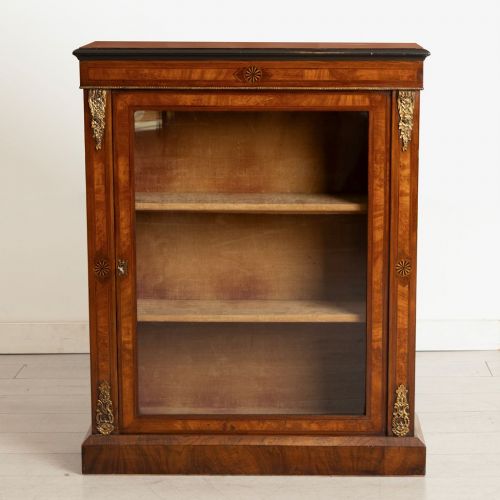
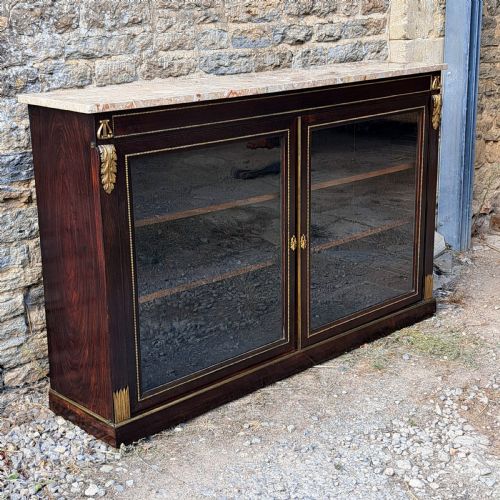
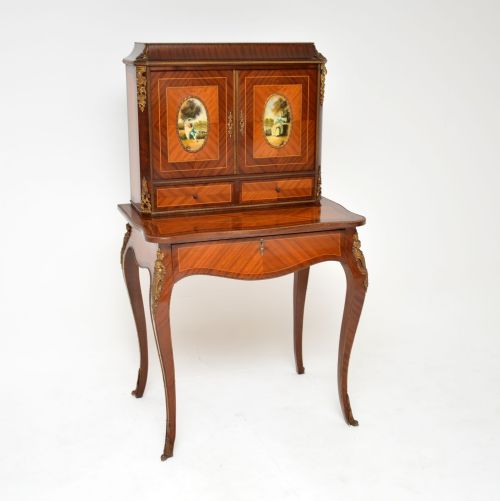
When searching for an ormolu rosewood cabinet, buyers encounter a diverse selection of nineteenth-century furniture, predominantly French and English in origin. The pieces span side cabinets, bookcases, vitrines, and writing desks, reflecting nineteenth-century revivals of Louis XV and Louis XVI styles alongside Regency designs.
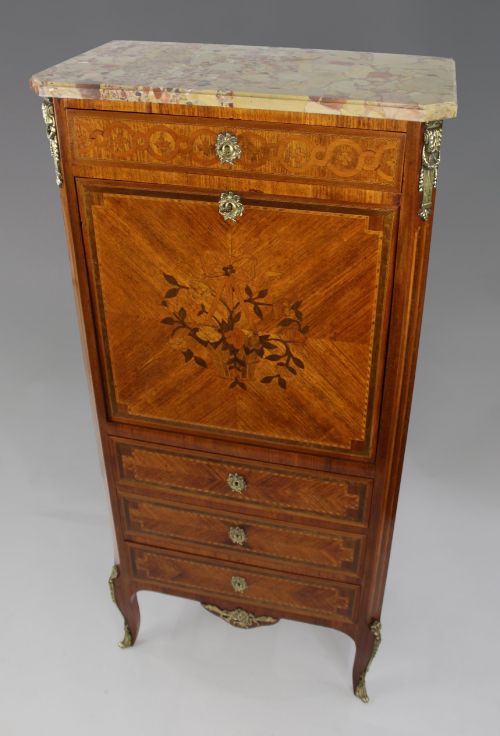
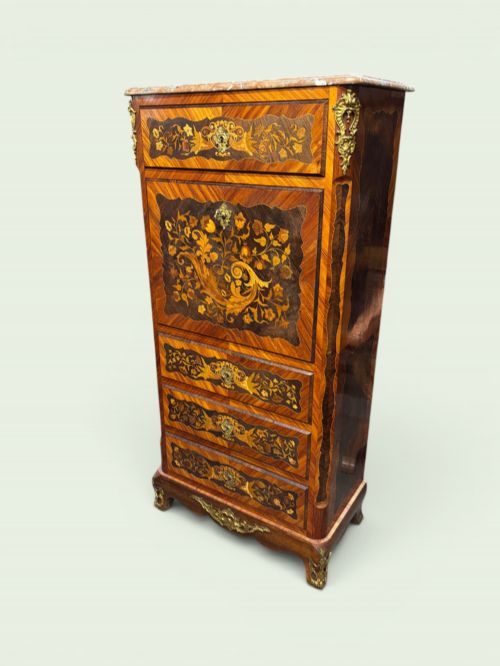
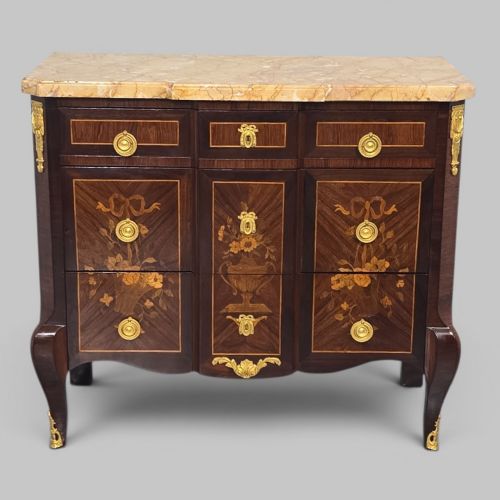
The most common examples on this page are French marquetry-inlaid cabinets, escritoires, and sideboards dating from the 1860s to the 1920s. These often incorporate marble tops, porcelain plaques, or glazed doors, designed originally for display and formal entertaining in period drawing rooms.
Materials and Technique
Cabinet makers utilised dense rosewood veneers applied to carcases of secondary timber, frequently enhancing the surfaces with floral marquetry or parquetry patterns in contrasting woods. Ormolu, or gilt-bronze, mounts were then cast, chased, and fixed to corners, feet, and friezes to accentuate the architectural lines.
Many items incorporate inset marble slabs, glass panels for vitrines, and detailed brass or bronze work. These elements required close collaboration between specialist joiners, bronze founders, and marquetarians.
Listings feature rosewood, kingwood, and satinwood veneers combined with marble, glass, and gilt bronze across nineteenth-century revival styles.
Standards of Craftsmanship
The distinction between ordinary production and top-tier work rests on the crispness of the ormolu chasing and the precision of the marquetry inlay. Finer examples display deeply sculpted, hand-finished bronze mounts rather than flat, mass-produced metalwork.
Structural integrity, the retention of original marble tops, and the subtlety of the rosewood grain configuration further separate standard furniture from exceptional cabinet-making attributed to workshops such as Maison Krieger or François Linke.
Maison Krieger·François Linke
The Ormolu Rosewood Cabinet Glossary
- Ormolu
- Gilded bronze mounts applied to furniture for decoration and protection. The technique involves applying a gold amalgam to cast bronze before heating.
- Marquetry
- Decorative veneer patterns assembled from thin slices of wood, shell, or ivory to form pictorial or geometric designs. Craftsmen cut these elements together to ensure tight joints.
- Vitrine
- A glass-fronted display cabinet intended for porcelain and curiosities. These pieces became prominent during nineteenth-century revival periods.
- Escritoire
- A writing cabinet featuring a fall-front desk surface concealing small drawers and pigeonholes. They often incorporate secret compartments.
- Secretaire Abbatant
- A tall wall-mounted or freestanding writing cabinet with a vertical drop-front panel. It provides a compact writing desk while concealing internal stationery sections.
Ormolu Rosewood Cabinet: Frequently Asked Questions
What is an ormolu rosewood cabinet?
An ormolu rosewood cabinet is a piece of nineteenth-century furniture constructed from rosewood veneer and adorned with gilt-bronze mounts. These cabinets function as display cases, sideboards, or writing desks.
Originating largely from French and English workshops, they often feature intricate marquetry and marble tops. Collectors value them for their combination of rich timber tones and detailed metallic ornament.
Where were these cabinets placed?
These cabinets served primarily in formal nineteenth-century reception rooms, drawing rooms, and libraries. Vitrines and side cabinets held prized porcelain, books, and curiosities.
Writing cabinets and escritoires provided functional surfaces for correspondence in private studies or ladies' boudoirs. Their decorative facades ensured they complemented high-status interior schemes.
How do I clean ormolu mounts?
Ormolu mounts require gentle dusting with a soft, dry brush to prevent the accumulation of dirt in recessed chasing. Avoid harsh metal polishes, which can strip the original gilding.
Professional conservation is recommended for tarnished or neglected surfaces. Regular low-intervention care preserves the historic finish of the bronze.
How to tell Louis XV style apart?
Louis XV style furniture is characterised by asymmetric curves, serpentine fronts, and naturalistic floral motifs. Ormolu mounts on these pieces typically wrap around corners with organic scrolls.
Later nineteenth-century revivals adopt these sweeping lines alongside rich rosewood veneers and marquetry. By contrast, Louis XVI revival pieces feature straighter, neoclassical geometric lines.