


Ormolu Porcelain Table Lamps
Ormolu porcelain table lamps combine glazed ceramic bodies with cast gilt metal mounts, bringing interior illumination to nineteenth-century drawing rooms.
Ormolu Porcelain Table Lamps
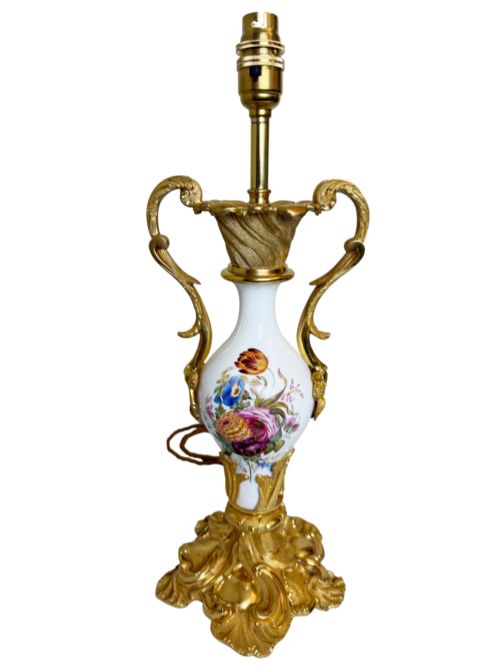
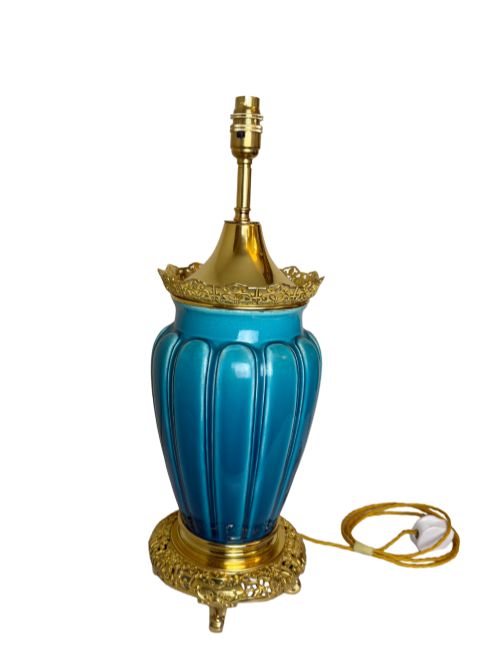
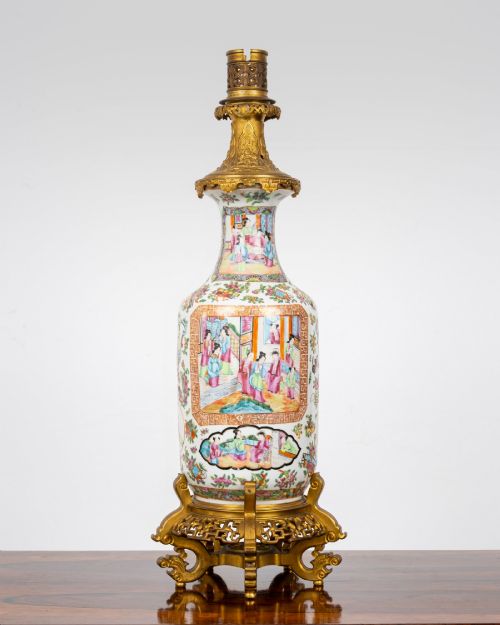
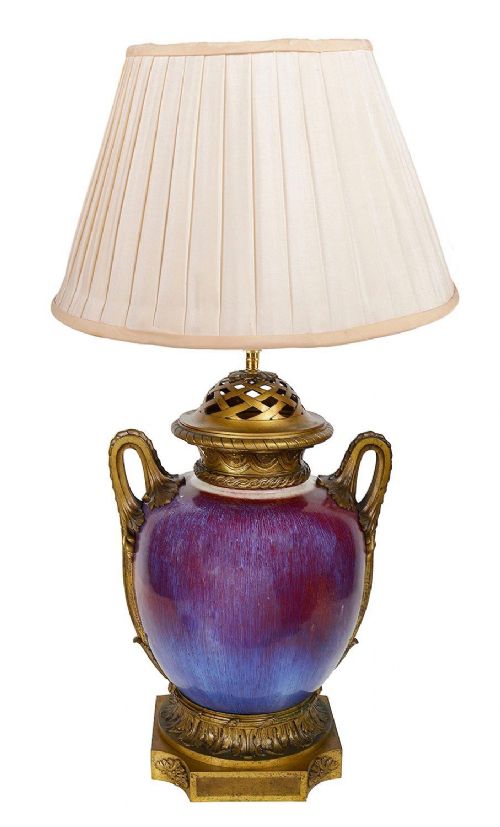
Ormolu porcelain table lamps unite European and Asian ceramic vessels with decorative metal mounts designed to hold electrical fittings or oil burners. These objects frequently originate from nineteenth-century France or China, taking the form of baluster vases, lidded jars, and urns adapted for domestic lighting.
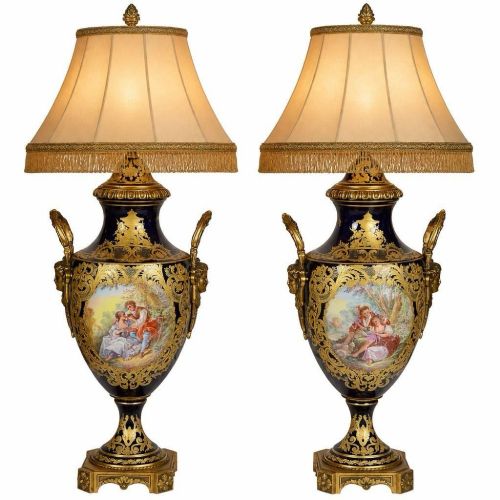
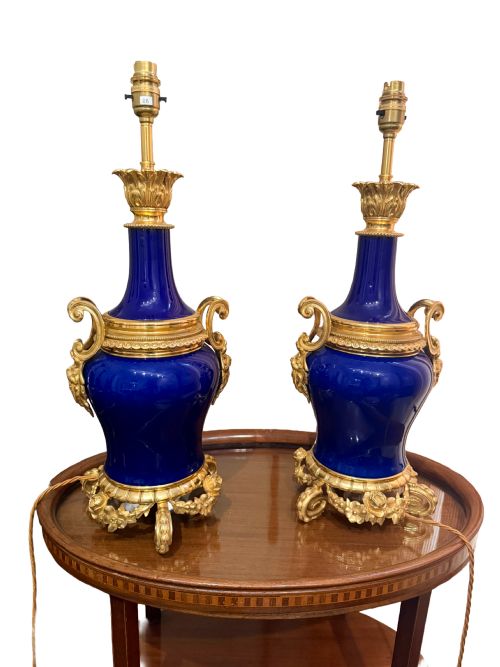
The ceramic components range from cobalt blue, turquoise, and bleu celeste glazed bodies to hand-painted pieces executed in French Sevres style or Chinese export traditions. Many examples incorporate Chinese Famille Rose, Famille Verte, and Japanese Imari palettes into French gilt bronze frameworks.
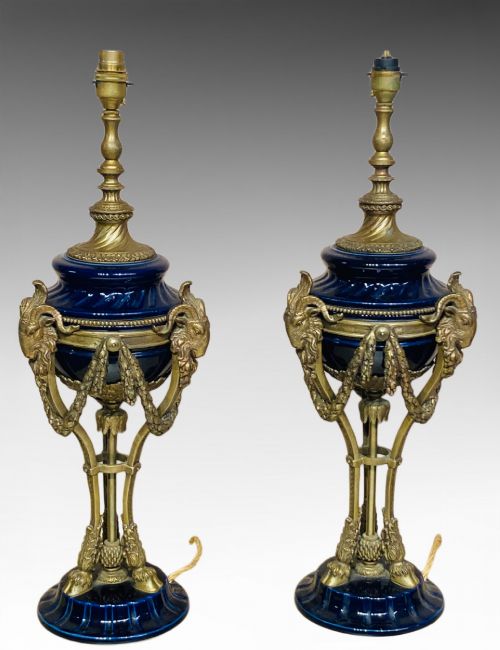
Buyers encounter single lamps and balanced pairs spanning the eighteenth to the twentieth centuries, with nineteenth-century French and Chinese export items forming the bulk of the selection. These pieces frequently demonstrate historical revivals including Louis XVI neoclassical, Rococo, and Chinoiserie aesthetics.
Materials and Construction
Makers utilised porcelain and glazed ceramic for the central body of each lamp, applying hand-painted motifs, cobalt underglazes, and specialised techniques such as pâtesur-pâte decoration. These ceramic vessels were often drilled or fitted during conversion into functional lighting.
Gilt bronze and ormolu form the structural and decorative mounts, framing the ceramic bases with cast handles, collars, and footed plinths. Brass and standard bronze components also appear alongside silk and fabric shade elements.
Metal mountings were secured to the porcelain bodies using pins, screws, or collars, often matching the French Chateau or Rococo Revival tastes prevalent during the nineteenth century.
Victorian households regularly repurposed precious Chinese export ginger jars into towering table lamps by strapping them in heavy French bronze.
Quality and Craftsmanship
The refinement of the ormolu mounts determines much of the distinction between pieces, with finely chased and fire-gilt bronze demonstrating superior metalworking skill compared to simpler cast brass alternatives. Crisp detailing in the acanthus leaves, scrollwork, and handles indicates higher workshop standards.
The quality of the porcelain body and the precision of its hand-painted decoration set individual pieces apart. Hand-painted Sevres style scenes and intricate Chinese export designs executed with clear enamels reflect greater artistic investment than mass-produced transfers.
Gien, France·Samson Porcelain
The Ormolu Porcelain Table Lamps Glossary
- Ormolu
- Gilded bronze achieved through the application of a mercury-gold amalgam to cast bronze, producing a deep and durable golden finish. This technique was widely employed in French furniture and mountings.
- Pâte-sur-pâte
- A ceramic decorating method where wet white porcelain slip is painted in successive layers onto a coloured clay background to create a low relief cameo effect. It gained popularity in nineteenth-century French manufacture.
- Sevres
- A famous French porcelain manufactory known for producing luxurious decorative wares with distinctive hand-painted panels and rich coloured grounds such as bleu celeste. Many later nineteenth-century pieces adopt this distinctive aesthetic.
- Famille Rose
- A Chinese porcelain palette introduced in the eighteenth century, distinguished by opaque pink enamel derived from colloidal gold. Pieces utilising this palette appear frequently in European mountings.
- Baluster
- A vase form characterised by a rounded lower body that tapers toward a narrow neck, resembling the architectural column of a banister. This shape provides the primary silhouette for many table lamps.
Ormolu Porcelain Table Lamps: Frequently Asked Questions
Were these always electric lamps?
Original nineteenth-century pieces started life as decorative vases, urns, or oil-burning lamps before receiving electrical conversions later in their lifespan.
Many antique vessels were drilled or fitted with brass and bronze hardware during the Victorian era or subsequent decades to adapt them for modern domestic illumination.
How do I identify Sevres style pieces?
Sevres style lamps typically feature rich coloured grounds like turquoise or cobalt blue combined with hand-painted pastoral scenes or floral cartouches framed by gilt metal mounts.
These decorative choices reflect the nineteenth-century revival of eighteenth-century French royal porcelain designs.
What is the difference between ormolu and bronze?
Bronze is the underlying metal alloy composed primarily of copper and tin, while ormolu refers specifically to the gilded surface treatment applied to that bronze mount.
In marketplace descriptions, the terms are often used interchangeably to describe the decorative metal parts fitted around the porcelain bodies.
How do I match a pair of lamps?
Paired lamps generally share identical ceramic vase dimensions, hand-painted motifs, and corresponding mirror-image ormolu mountings designed to balance symmetrically on either side of a mantelpiece or sideboard.
Small variations in hand-painted ceramic details often confirm the traditional handmade origin of nineteenth-century pairs.