


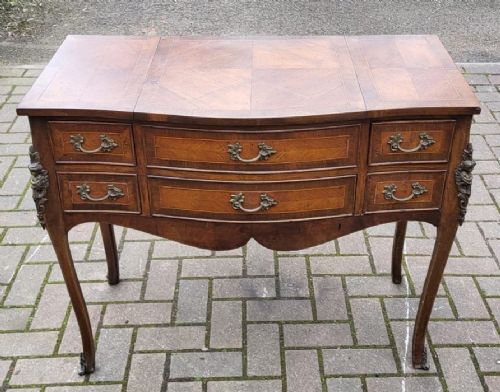

Ormolu Mounted Walnut Desk
An ormolu mounted walnut desk combines figured timber with gilt bronze enrichments, offering a sophisticated writing surface suited to nineteenth-century domestic interiors.
Ormolu Mounted Walnut Desk
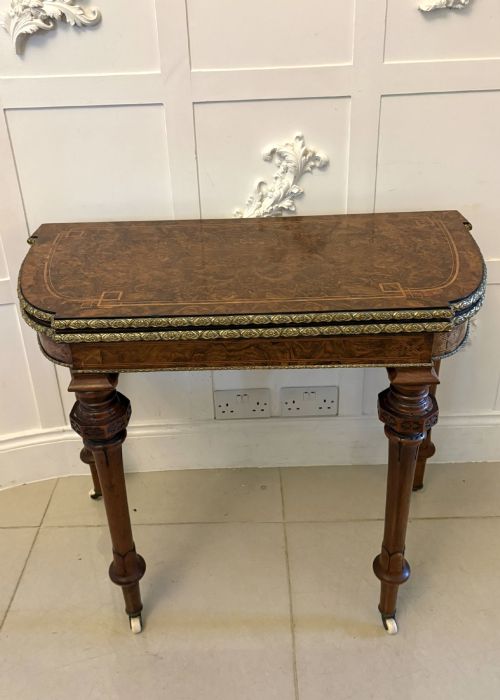
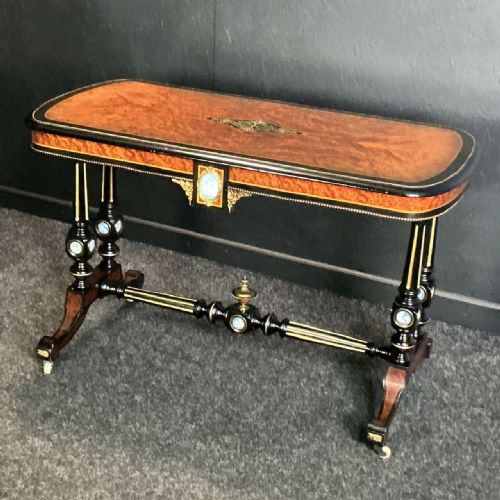
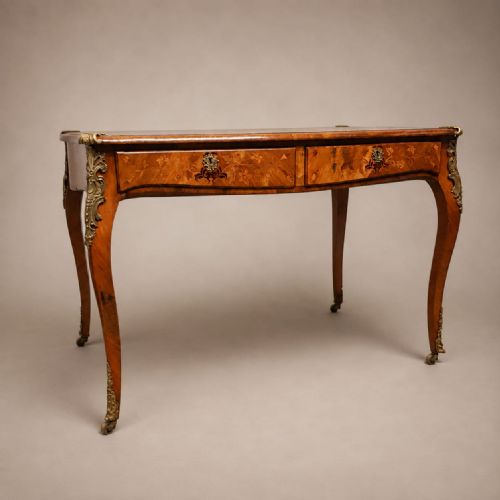
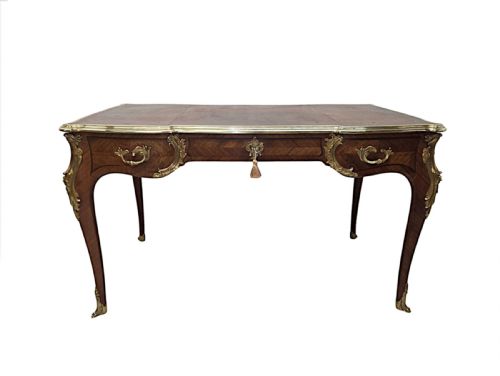
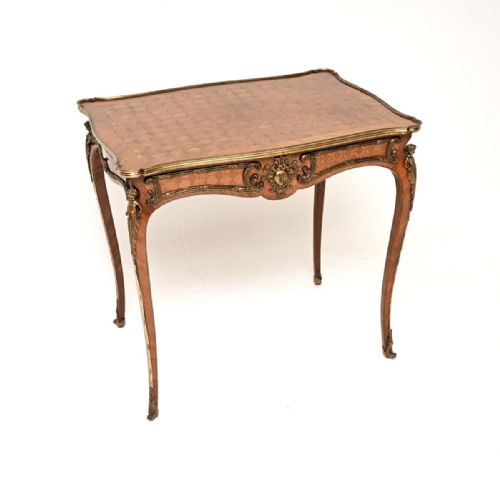
When you examine an ormolu mounted walnut desk, you are looking at nineteenth-century writing furniture rooted in Victorian and French revival aesthetics. The pieces on this page span writing tables, bureau plats, and pedestal desks produced primarily during the Victorian period and later nineteenth century.
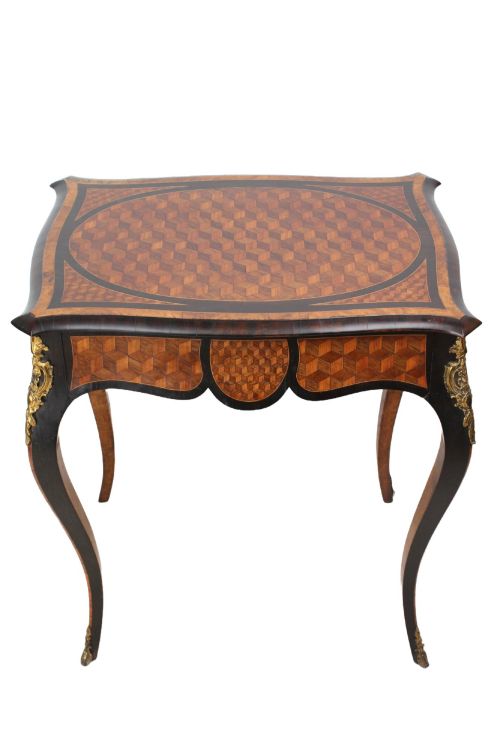
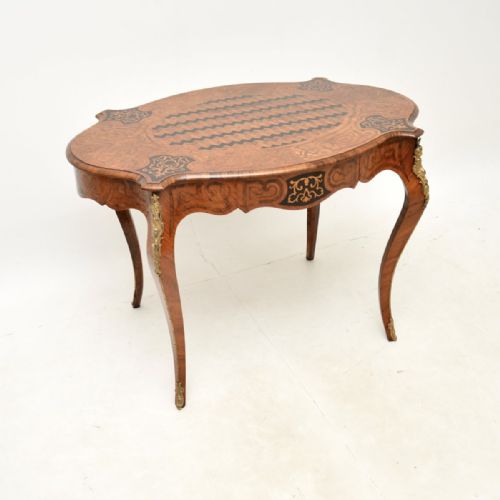
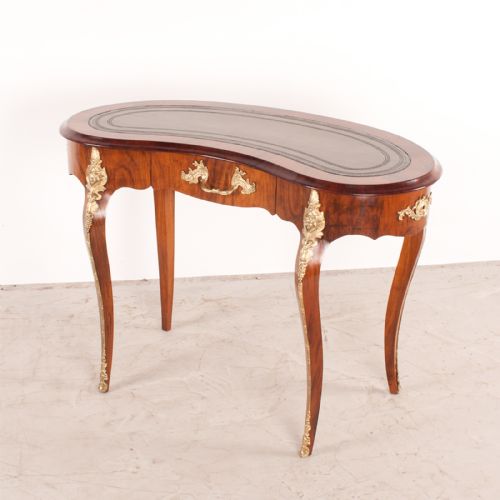
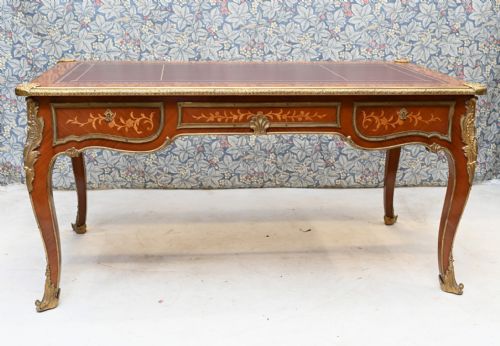
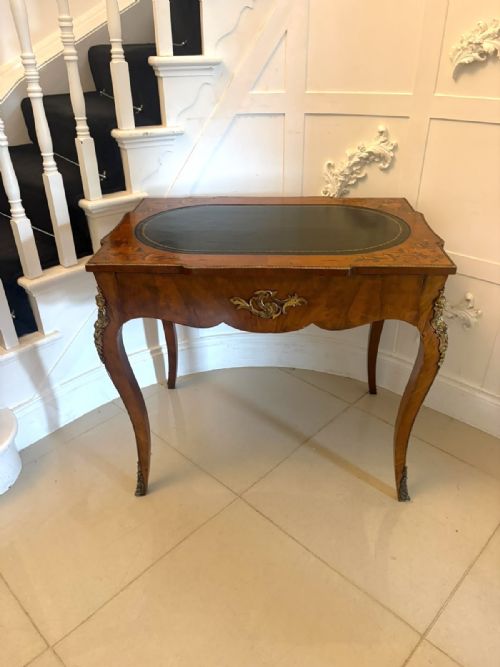
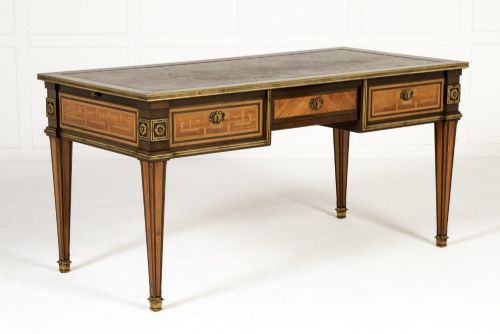
The most common form you will meet is the bureau plat or freestanding writing table, frequently shaped in kidney outlines or rectangular formats. These desks draw heavily on Louis XV and Louis XVI design vocabulary, integrating decorative parquetry and marquetry alongside metal mounts.
Materials and construction methods
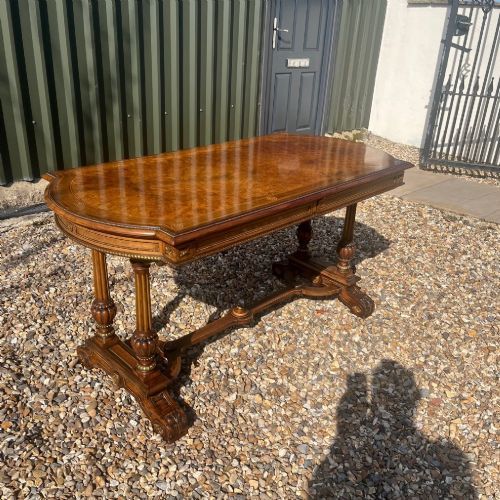
Cabinet makers utilised solid walnut and burr walnut veneers over secondary timbers, often incorporating contrasting woods such as kingwood and satinwood for intricate marquetry and parquetry panels. Leather inserts supplied the functional writing surfaces on bureau plats and library tables.
Cast ormolu and gilt bronze mounts were meticulously chased and applied to corners, legs, and apron rails to accentuate the curves of the woodwork. Brass details and inlaid stringing further structured the exterior decorative scheme of these desks.
Listings feature walnut, burr walnut, kingwood, and satinwood complemented by ormolu and gilt bronze mounts.
What separates grades of quality
The sophistication of the timber figure and the precision of the veneer work dictate the baseline quality of each desk. Highly figured burr walnut and complex geometric parquetry demand superior craftsmanship compared to plain timber surfaces.
The crispness and weight of the ormolu mounts signal the tier of manufacture. Finely chased gilt bronze with sharp relief and secure attachment points distinguishes superior workshop production from routine commercial output.
JAS Shoolbred·Lenzkirch
The Ormolu Mounted Walnut Desk Glossary
- Ormolu
- Gilt bronze mounts applied to furniture. The technique involves applying a finely ground gold-mercury amalgam to cast bronze before firing.
- Bureau plat
- A freestanding writing table fitted with drawers along the frieze. This form lacks the superstructure of a cabinet desk.
- Burr walnut
- Wood taken from the warted growths of walnut trees. It yields complex, swirling grain patterns prized for decorative veneering.
- Marquetry
- The art of forming decorative patterns using thin veneers of different woods. Artisans assemble these pictorial designs onto the furniture carcass.
- Parquetry
- Geometric wood inlay forming repetitive patterns such as cubes or chequers. It differs from marquetry by relying on angular, repeating motifs.
- Bonheur du jour
- A small ladies' writing desk featuring a small cabinet or set of drawers on top. The form gained popularity during the mid nineteenth century.
Ormolu Mounted Walnut Desk: Frequently Asked Questions
How do I identify a bureau plat?
A bureau plat is a freestanding writing table designed to be viewed from all sides, featuring a finished back and drawers integrated into the frieze.
These desks typically rest on cabriole or tapered legs adorned with ormolu mounts at the knees and feet.
Where should I place a freestanding desk?
Because these desks feature finished backs and detailed marquetry all around, they sit comfortably in the middle of a study or library rather than pushed against a wall.
Ensure the leather writing surface receives indirect natural light to prevent drying while maintaining visibility of the wood grain.
How do I care for nineteenth-century walnut?
Maintain the timber by applying a microcrystalline wax sparingly and buffing gently with a soft cloth to preserve the natural lustre of the walnut.
Avoid placing the desk near direct heat sources or in strong sunlight, which can dry out the burr walnut veneers and crack the leather.
What is the difference between a pedestal desk and a bureau plat?
Pedestal desks utilise two columns of drawers supporting the top, offering substantial enclosed storage beneath the writing surface.
Bureau plats rely on an open frame with a shallow frieze drawer, prioritising a lighter silhouette over heavy document storage.
How do I distinguish French revival styles?
Louis XV revival pieces exhibit asymmetrical curves, flowing ormolu mounts, and cabriole legs reminiscent of eighteenth-century rococo design.
Louis XVI revival versions introduce stricter symmetry, fluted straight legs, and neoclassical mounts based on architectural proportions.