


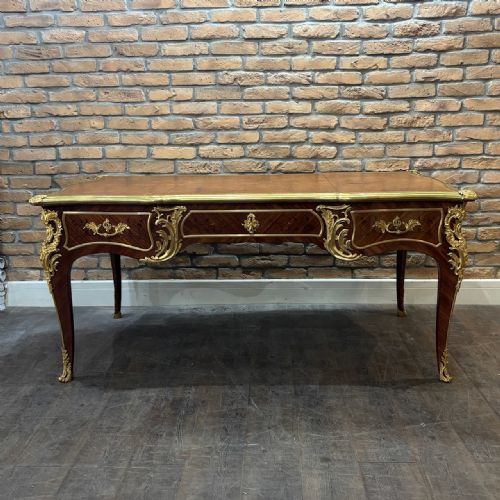

French Revival Writing Desk
When you search for a french revival writing desk, you enter a world of serpentine forms, rich veneers, and gilt mounts.
French Revival Writing Desk
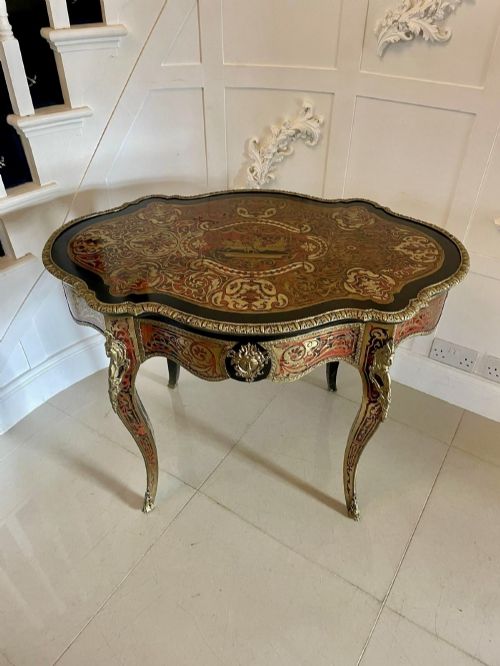
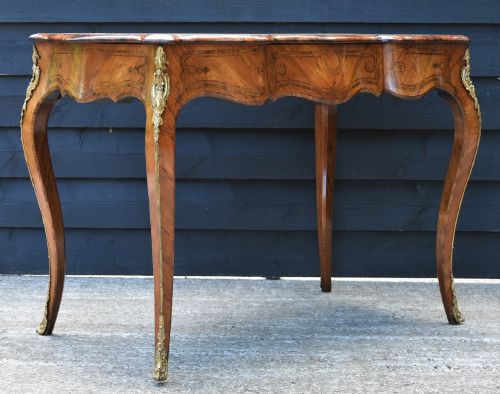
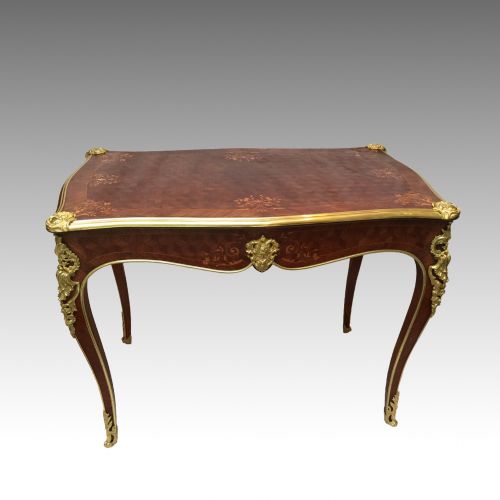
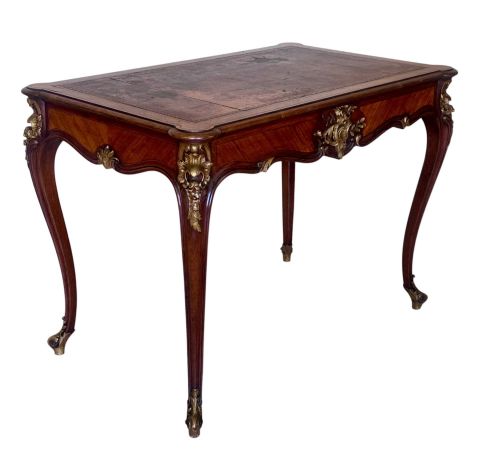
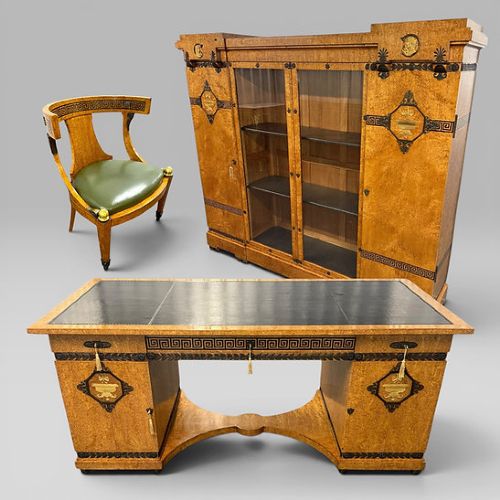
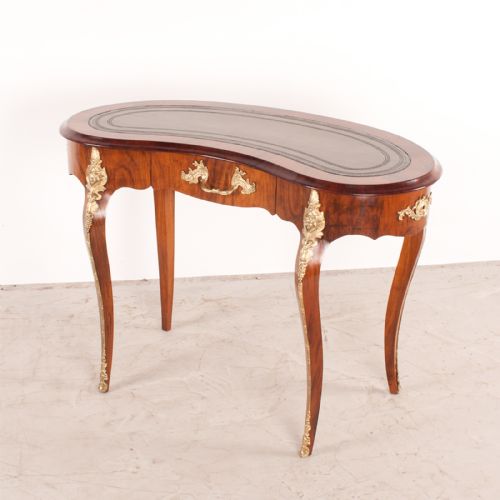
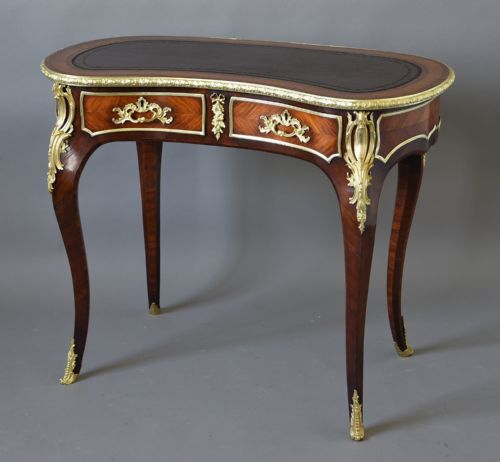
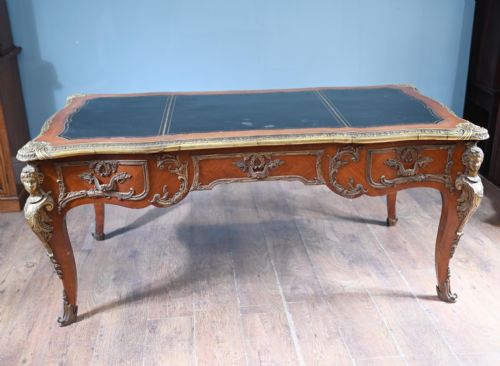
A french revival writing desk brings continental flair into nineteenth-century domestic interiors through varied forms including bureau plats, kidney-shaped tables, and compact bonheur du jours.
The selections span the nineteenth century, including specific decades such as eighteen eighty and eighteen ninety alongside Victorian interpretations of Louis XV and Louis XVI styles.
Makers and workshops across Britain and France produced these freestanding tables and cabinets to serve as functional writing spaces and decorative centrepieces.
Materials and technique
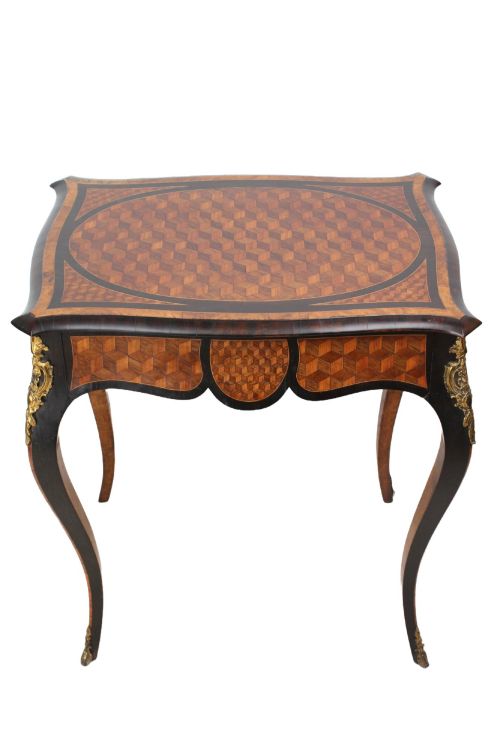
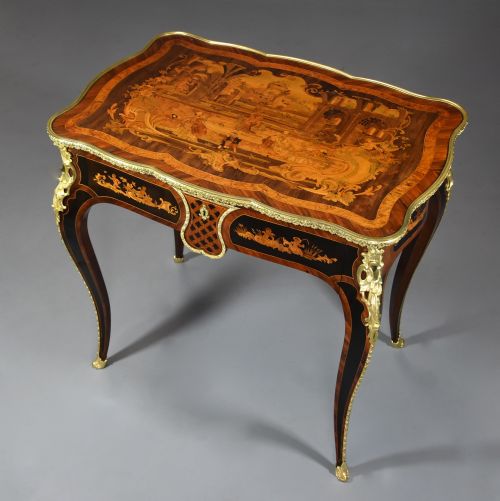
Cabinetmakers utilised exotic timbers like kingwood, rosewood, burr walnut, and satinwood, applying intricate parquetry and marquetry patterns across curved and serpentine surfaces.
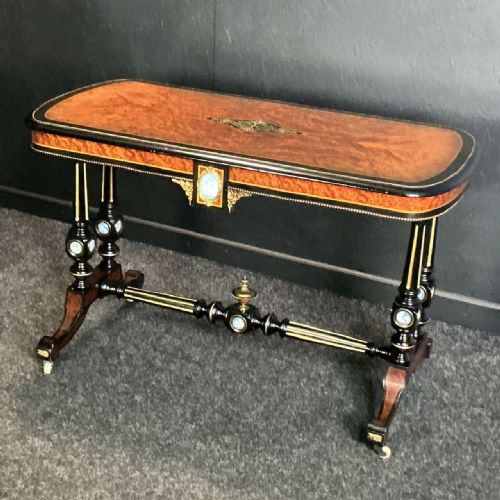
Gilded bronze or ormolu mounts, brass stringing, and inset leather writing surfaces complete the construction, often paired with hand-painted Vernis Martin panels or porcelain plaques.
The archive and active inventory record forms ranging from standard writing tables to secretaire cabinets and office sets.
Distinctions in quality
Quality rests upon the precision of the timber matching, the crispness of the cast ormolu mounts, and the complexity of the underlying carcase construction such as kidney shapes or serpentine fronts.
Finer examples bear workshop signatures or paper labels from notable makers, displaying superior hand-cut marquetry and well-figured veneers that distinguish standard production from exceptional studio work.
JAS Shoolbred·CH Jeanselme and Co·Mercier Freres·Donald Ross·Holland and Son·Alphonse Tahan
The French Revival Writing Desk Glossary
- Bureau plat
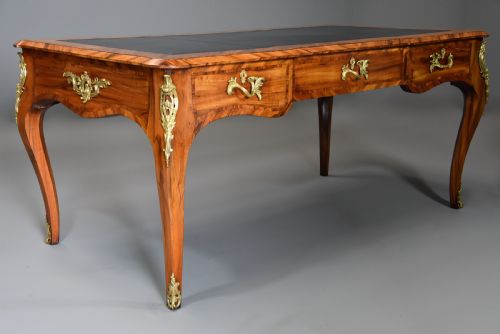
- A freestanding writing table fitted with one or more drawers in the frieze, typically finished on all sides for placement in the centre of a room.
- Bonheur du jour
- A light lady's writing desk featuring a small cabinet or set of shelves superstructure upon the main writing surface.
- Ormolu
- Gilded bronze used for decorative mounts, feet, and edging on high-status nineteenth-century furniture.
- Marquetry
- The art of applying pieces of veneer into a decorative pattern, often depicting floral or geometric motifs.
- Parquetry
- Geometric mosaic woodwork arranged in repeating patterns such as cubes or chequers across tabletops and drawer fronts.
French Revival Writing Desk: Frequently Asked Questions
What is a bureau plat?
A bureau plat is a writing table finished on all sides so it can stand in the middle of a room rather than against a wall.
These tables typically feature a leather-lined top and drawers integrated into the frieze.
Where should I place my desk?
Because many nineteenth-century revival desks feature finished backs and detailed marquetry, they suit central placements in studies or drawing rooms.
Smaller kidney-shaped variations also fit comfortably against walls or within window bays.
How do I identify the style?
The style reveals itself through curved cabriole legs, asymmetrical floral marquetry, and prominent ormolu mounts characteristic of eighteenth-century French revivals.
Victorian makers reinterpreted these motifs using local and exotic woods.
What woods were used?
Cabinetmakers selected dense exotic timbers including kingwood, rosewood, satinwood, and figured walnut for their rich natural grains.
These veneers provided the canvas for complex parquetry and contrasting stringing.